

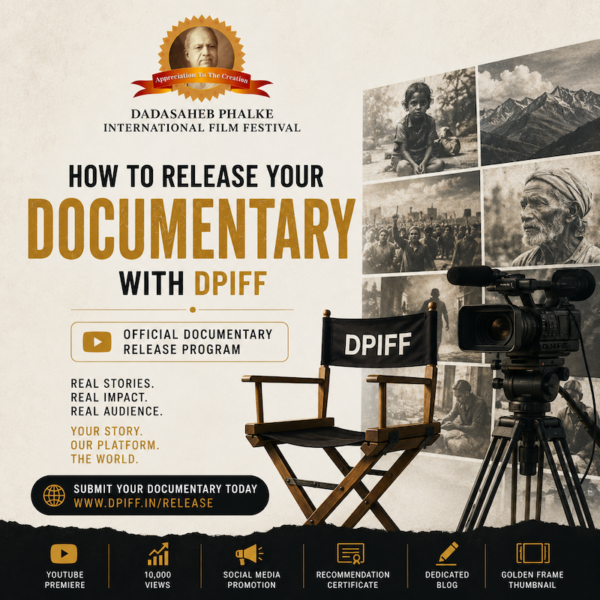
How to Release Your Documentary with DPIFF
Documentary Release Program Guide for filmmakers who have completed a nonfiction film and are ready to present it professionally to a wider digital audience.
Your documentary has already done the hard part: it found a story worth telling. The next decision is how that story should meet its audience.
A documentary is not only a film. It can be a record of a person, a community, a place, a memory, a culture, a question or a moment that might otherwise disappear from view.
That is why the release decision deserves the same care as the edit. A strong documentary can be beautifully made and still struggle to find viewers if its title, thumbnail, description, release timing and presentation are treated as afterthoughts.
You Have Finished the Documentary. Now What?
Finishing the final export can feel like the end of the filmmaking process. In reality, it is the beginning of another phase: deciding how the finished work will be presented, where it will live and how audiences will discover it.
For independent documentary filmmakers, there are several possible paths. A film may travel through festivals, community screenings, educational settings, broadcasters, distributors, a creator’s own channel or a structured digital release. These paths are not identical, and the right choice depends on the film, its rights, its audience and the filmmaker’s goals.
The International Documentary Association maintains resources covering documentary distribution, audience strategy, business and creative practice. Its guidance reflects an important reality: distribution should be considered as part of the documentary’s wider life, not as an afterthought. Explore IDA resources for documentary creators.
Why Documentary Release Strategy Matters
Putting a documentary online is easy. Presenting it well is a different task.
A release strategy brings together the film itself and the things that surround it: a clear title, a compelling thumbnail, an accurate synopsis, a useful description, accessible viewing, promotional assets and a destination that audiences can understand.
On YouTube, the title, thumbnail and description are important pieces of the viewing and discovery experience. YouTube’s own guidance recommends starting with these elements when optimizing a video and emphasizes that packaging should clearly represent what the viewer is about to watch. YouTube’s video optimization guidance is a useful reference for filmmakers preparing a release.
What Is the DPIFF Documentary Release Program?
The DPIFF Film Release Program is an official digital release pathway for completed Short Films, Documentaries, Music Videos and Animated Films. This article focuses specifically on documentaries.
Under the current program, approved projects can premiere through the official DPIFF YouTube channel and receive the program’s listed promotional and recognition benefits. The official release page states that payment of the release fee does not guarantee publication. Projects are reviewed and final release is at the jurors’ discretion. If a project is not approved, the full release fee is refunded.
The current application also asks filmmakers to provide the project link, thumbnail, poster, summary, suggested YouTube title and description, Instagram ID and a quote for the blog post, alongside their contact and project details.
Want to see the release destination before you apply? Visit the official DPIFF YouTube channel and explore its existing release seasons and film content.
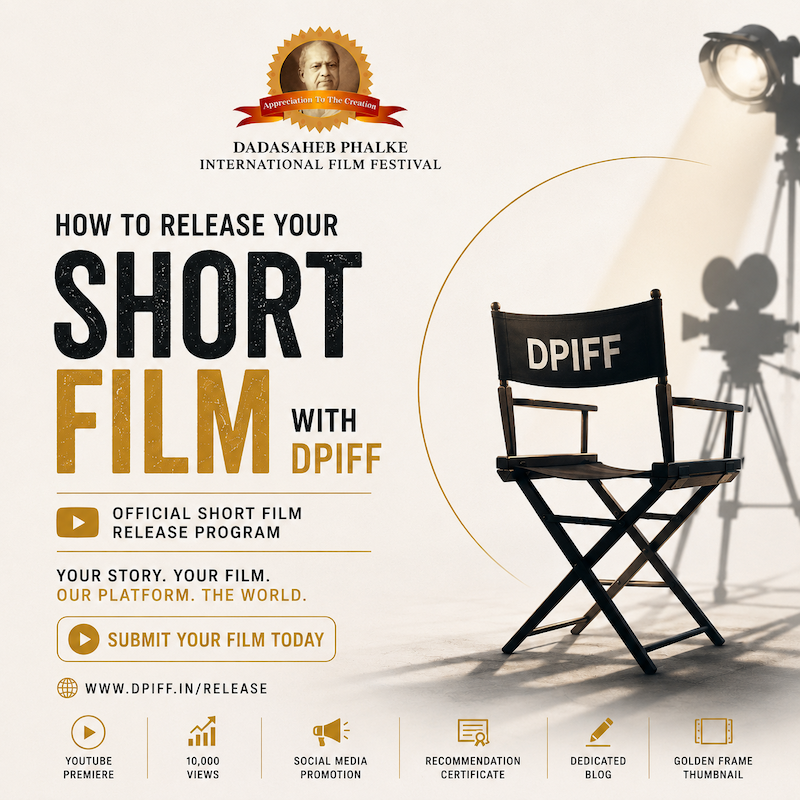
If you are new to the program, begin with the first DPIFF release guide: How to Release Your Short Film with DPIFF: Official Short Film Release Program. The guide explains the broader Release Program, while this article focuses on the specific considerations that matter when the project is a documentary.
See the destination before you apply. The official DPIFF YouTube channel is where approved Release Program projects can be presented to a digital audience. Explore the channel below and see the wider cinema environment in which your documentary could appear.

Picture your documentary here. An approved project can be released through the official DPIFF YouTube channel, subject to DPIFF review and approval.
Explore DPIFF YouTubeWho Should Consider the DPIFF Documentary Release Program?
The program can be relevant to documentary creators who already have a completed project and want a structured digital release environment rather than simply placing the film online without an editorial launch around it.
Independent Documentary Filmmakers
Creators who have completed a nonfiction film and want a professional digital presentation for the finished work.
Journalists and Researchers
Storytellers who have transformed reporting, research or field work into a finished documentary.
Social-Impact Creators
Filmmakers documenting communities, causes, people or real-world issues who want the film presented as a complete cinematic work.
Student and Emerging Filmmakers
Creators looking to present a finished nonfiction project professionally while beginning to build a public body of work.
The current DPIFF Release Program also accepts projects from international creators. The application form collects city and country information, while the program is presented as a digital platform for creators beyond a single geographic market.
What Makes a Documentary Release-Ready?
A release-ready documentary is more than a completed video file. It is a project that can withstand public viewing, can be clearly presented and has the necessary rights and permissions for the intended use.
- The final documentary has been exported and checked from beginning to end.
- The film title, director credit and other key credits are correct.
- The synopsis explains the documentary without misrepresenting the story.
- The thumbnail communicates the subject clearly at small size.
- The poster is high quality and correctly formatted.
- The screening link works without unexpected access restrictions.
- The music, archive, photographs and third-party materials have been cleared as needed.
- Interview and participant permissions have been handled appropriately for the intended release.
- The YouTube title and description are accurate and audience-friendly.
- The filmmaker is comfortable with the project being publicly released if approved.
What Can You Gain From Releasing Through DPIFF?
The current DPIFF Release Program lists a set of benefits for approved projects. These should be understood as program benefits, not guarantees of a particular audience outcome.
DPIFF YouTube Channel
An approved documentary can be released through the official DPIFF YouTube channel.
10,000 YouTube Views
The current program advertises 10,000 YouTube views as a benefit. This should not be interpreted as a promise of additional organic reach beyond the stated program benefit.
Instagram and Facebook Story Shoutout
The program currently lists a Story shoutout as part of its promotional support.
Dedicated Blog Feature
An approved project can receive a dedicated blog feature as part of the current release offering.
Recommendation Certificate
The program currently lists a DPIFF Recommendation Certificate for approved participants.
Golden Frame Thumbnail
The current program includes a Golden Frame thumbnail treatment for the release presentation.
DPIFF Release vs Self-Publishing
Self-publishing gives a filmmaker direct control over the upload. A structured release program adds another layer: review, editorial presentation and an established channel environment.
| Consideration | Your Own Channel | DPIFF Release Program |
|---|---|---|
| Upload control | Direct control by the creator | Release follows DPIFF review and approval |
| Audience destination | Your own YouTube channel | Official DPIFF YouTube channel |
| Editorial support | Depends on your own launch plan | Current program includes a dedicated blog feature |
| Social support | Creator-managed | Current program includes Instagram/Facebook Story support |
| Recognition | Creator-defined | Current program includes a Recommendation Certificate |
| Approval | Not applicable to your own upload | Required before DPIFF release |
These are not mutually exclusive strategies. The current DPIFF FAQ states that creators retain their rights and can upload the project on their own YouTube channel before or after its release with DPIFF. Always review the current consent terms before making a release decision.
How the DPIFF Documentary Release Process Works
Prepare the Finished Project
Finalize the documentary, verify the credits, check the master file and make sure the project is suitable for public viewing.
Prepare Your Release Assets
Keep the thumbnail, poster, synopsis, suggested YouTube title, YouTube description, Instagram ID and blog quote ready.
Submit Through the Official Form
Use the official DPIFF Release page and complete the documentary project details accurately.
Pay the Current Release Fee
The current release fee is INR 10,000. Payment does not guarantee publication. The project enters the review process.
DPIFF Reviews the Project
Final release is subject to DPIFF approval and jurors’ discretion. If the project is not approved, the full release fee is refunded according to the current program terms.
Approved Documentary Is Released
Once approved, the documentary can premiere on the official DPIFF YouTube channel and receive the listed promotional and recognition support.
What to Prepare Before Submission
The current DPIFF form is designed to collect both project information and the material needed to present the film online. Treat the form as part of your release package, not just administration.
| Requirement | What to Prepare |
|---|---|
| Project category | Select Documentary. |
| Creator information | Accurate name, phone, email, city and country. |
| Project name | Final documentary title. |
| Project link | A working screening link to the finished project. |
| Password | Provide it if the screening link requires one. |
| Thumbnail | 1280 x 720 pixels. |
| Poster | 720 x 1280 pixels. |
| File limits | Maximum 10 MB file size and up to 4 files on the current form. |
| Written copy | Summary, YouTube title, YouTube description and a quote for the blog post. |
| Social profile | Instagram ID as requested by the form. |
| Consent | Review and accept the current DPIFF terms and YouTube upload consent. |
Documentary Thumbnail and Poster Guide
Your thumbnail is often the first visual contact between a viewer and the documentary. It should communicate the film’s identity quickly without becoming a miniature poster overloaded with information.
YouTube recommends clear, representative packaging and notes that titles and thumbnails are important in helping viewers decide what to watch. Read YouTube’s thumbnail and title guidance.
Think Clickable, Not Crowded
Use one strong image or visual idea. Keep text short. Make the subject recognizable. Avoid tiny credits, long sentences and competing focal points.
Think Vertical Identity
Use the poster to establish the documentary’s title, subject and visual identity. Make sure it remains legible when viewed on a phone.
Five visual checks: Is the subject obvious? Is the title readable? Does the image create curiosity? Is the design consistent with the documentary? Does it still work when reduced to a small screen?
How to Write a Strong Documentary YouTube Title
A title should identify the film and give a viewer enough context to understand why it may be worth watching. Avoid turning the title into a string of keywords.
A useful title formula
Documentary Title | Short Descriptor or Core Subject
Example structure: The Last Weaver | A Documentary About Tradition, Memory and Change
The best title is still the actual identity of the film. Do not force a keyword into the title if it makes the documentary sound less authentic. YouTube also advises creators to make titles and thumbnails clear, consistent and representative of the content.
How to Write a Strong Documentary Description
The description should help the viewer understand the documentary before watching while leaving enough room for curiosity.
Open With the Core Story
In one or two sentences, explain who or what the documentary follows and what makes the story meaningful.
Add Context
Explain the wider issue, place, history, community or question without turning the description into an academic abstract.
Credit the Team
Include director, producer, cinematography, editing, music and other key credits where appropriate.
Keep It Accurate
Do not exaggerate the documentary’s findings, subjects, impact or claims simply to generate clicks.
YouTube’s official upload guidance currently allows substantial description space and treats the description as part of the video’s metadata and presentation. Review YouTube’s upload and video-detail guidance.
How to Present a Documentary So Viewers Understand Its Value
Documentary audiences are often interested in both the subject and the filmmaking. Your presentation should respect both.
Instead of starting with broad claims, introduce the person, place or situation that gives the documentary its emotional centre.
Give enough information to create context, but avoid revealing every discovery, turning point or conclusion.
“A film about a disappearing craft in a coastal community” is more informative than “A powerful documentary that changes everything.”
The promotional language should not sensationalize real people or vulnerable situations for attention.
Rights, Music, Archives and Permissions
Rights clearance is one of the most important release-readiness checks for a documentary because nonfiction films frequently combine interviews, archival material, photographs, music, locations, logos, artwork and third-party footage.
Before applying, make a simple rights inventory. For every element that did not originate entirely with your production, ask: Who owns it? What permission or licence do I have? Does that permission cover the intended public digital release?
- Interview recordings and participant permissions have been handled appropriately.
- Music and sound recordings are licensed or otherwise cleared for the intended use.
- Archival footage has the required permission or licence.
- Photographs and artworks have been cleared where necessary.
- Third-party clips and graphics have been checked.
- Location and access permissions have been reviewed where relevant.
- Brand, logo and identifiable third-party material have been considered.
- Credits and attribution requirements have been recorded.
- You can honestly confirm that you own or control the necessary rights for the release.
This is practical guidance, not legal advice. Copyright and permissions can depend on jurisdiction, contracts and the exact material involved. For background, the U.S. Copyright Office’s motion picture guidance and its resources on photographs can help creators understand basic copyright concepts. For documentary-specific industry resources, the International Documentary Association is also useful.
UNESCO’s Memory of the World work is another reminder of why documentary records and audiovisual materials can matter beyond their original moment: preservation, access and context are part of the wider cultural value of documentary heritage. Explore UNESCO’s Memory of the World Programme.
INR 10,000 Release Fee and Refund
The current DPIFF Release Program lists a one-time release fee of INR 10,000.
Payment should not be understood as a publication guarantee. The official DPIFF release page explicitly states that payment of the release fee does not guarantee publication, that the final release decision is at the jurors’ discretion, and that the full fee is refunded if the project is not approved.
Before You Pay
Read the current DPIFF Release Program page, review the current consent and release terms, confirm that your documentary is ready for public release and make sure your rights and permissions are in order.
Is There a Deadline?
The current DPIFF Release Program information states that there is no specific submission deadline and that submissions are accepted year-round.
That does not mean filmmakers should delay preparation. A documentary release is stronger when the film, thumbnail, poster, copy, rights documentation and promotional plan are ready before the application is submitted.
Can You Also Release the Documentary on Your Own Channel?
According to the current DPIFF release information, creators retain their rights and can upload the project on their own YouTube channel before or after its release with DPIFF. This gives filmmakers flexibility in building their own long-term digital presence.
However, the practical strategy should be considered carefully. If you want the DPIFF release to function as a distinct digital premiere, coordinate your own publishing schedule and promotional activity around the approved DPIFF release plan rather than publishing the same film without a strategy.
How to Maximize Your Documentary Release
A release is not a single upload. It is a moment you can build around.
Build Curiosity
Prepare a short teaser, stills, poster crops, a director quote and a simple explanation of why the documentary matters.
Be Present
Share the official DPIFF release link across your relevant channels. Invite collaborators and subjects to share it where appropriate.
Keep the Conversation Going
Share a behind-the-scenes moment, a production story, a research insight or a short reflection from the filmmaker.
Build Your Filmography
Keep the release link, blog feature and recommendation certificate organised as part of your professional project archive.
Do not measure the entire value of a documentary by one number. Audience retention, comments, shares, repeat interest, conversations and the quality of the people who discover the work can all matter to a filmmaker. The goal is not simply to publish. It is to make the film easier to discover, understand and remember.
Five Things to Check Before Releasing a Documentary Online
Can You Defend Every Claim?
Recheck names, dates, locations, statistics, captions and factual assertions.
Can Every Third-Party Element Be Cleared?
Check music, archive, photographs, footage, artwork, logos and other material.
Does the Film Work Without Your Explanation?
Watch it as a first-time viewer. Look for confusing transitions, missing context or unclear character introductions.
Does the Packaging Match the Film?
The title, thumbnail, poster and description should all communicate the same documentary identity.
Are You Ready for Public Conversation?
Once released, real subjects and real stories can generate questions and discussion. Be prepared to engage responsibly.
Common Documentary Release Mistakes
Uploading the Wrong Cut
A festival screener, rough cut or unfinished export is not the same as a public release master.
Weak Thumbnail
A technically correct thumbnail can still fail if the viewer cannot understand the subject at a glance.
Generic Description
“This documentary tells a powerful story” communicates almost nothing. Give the viewer real context.
Unclear Rights
Do not assume that because something was available online it is automatically cleared for your film.
Overpromising Impact
Avoid claims that your documentary will change society, reveal the truth or transform the audience unless the evidence supports the statement.
Ignoring the Release Moment
Publishing without preparing your audience misses the opportunity to create a meaningful launch around the film.
Documentary Release Readiness Checklist
- Final documentary master is complete and checked.
- Film title and all key credits are correct.
- Project link is working and accessible for review.
- Password is ready if the screening link is protected.
- Thumbnail is 1280 x 720 pixels.
- Poster is 720 x 1280 pixels.
- Files are within the current 10 MB per-file limit and up to 4-file limit.
- Synopsis is accurate, concise and compelling.
- YouTube title is clear and representative.
- YouTube description includes useful context and credits.
- Instagram ID is ready for the form.
- Quote for the DPIFF blog feature is prepared.
- Music, archive, photographs and third-party material have been checked.
- Participant, performer and location permissions have been considered where applicable.
- You have reviewed the current DPIFF consent and release terms.
- You understand that payment does not guarantee approval.
Where Documentary Release Fits Into Your Larger DPIFF Journey
The Release Program is separate from DPIFF’s award nomination pathways. If your documentary is eligible for festival competition, you can explore the Best Documentary Short Film Award 2027 article for information about the nomination category.
Filmmakers can also explore the wider Best Short Film Award 2027, Best Animated Short Film Award 2027, Best Student Short Film Award 2027 and Best AI Short Film Award 2027 categories where relevant.
For broader festival information, visit About DPIFF, explore DPIFF Awards, read the latest DPIFF News and browse the DPIFF Blog.
A Documentary Can Travel Further When Its Release Is Thought Through
Documentary filmmakers spend months, sometimes years, earning access, building trust, gathering material and shaping reality into a coherent cinematic experience. The release should respect that work.
That does not require an extravagant campaign. It requires clarity. A strong master. A clear thumbnail. Accurate copy. Cleared rights. A reliable viewing link. A thoughtful release environment. And a plan for what happens after the film goes live.
The DPIFF Release Program offers one structured route for creators who want an approved documentary to premiere through the festival’s official digital ecosystem. It is not a guarantee of success, and it is not a substitute for the filmmaker’s own audience-building work. It is a release opportunity that should be evaluated against your project’s goals, rights and preferred distribution strategy.
Ready to Give Your Documentary Its Next Audience?
Review the current program details, prepare your release package and submit your completed documentary through the official DPIFF Release Program.
Frequently Asked Questions
What is the DPIFF Documentary Release Program?
The DPIFF Release Program is an official digital release pathway for completed projects. The program accepts documentaries along with short films, music videos and animated films. Approved documentaries can premiere through the official DPIFF YouTube channel and receive the program’s listed promotional and recognition benefits.
How much does the DPIFF Documentary Release Program cost?
The current release fee is INR 10,000. Payment does not guarantee publication. The project is reviewed and final release is subject to DPIFF approval and jurors’ discretion.
Is the DPIFF release fee refundable if my documentary is not approved?
Yes. The current DPIFF release page states that if a submitted project is not approved, the full release fee is refunded.
Where will my approved documentary be released?
Approved projects can premiere on the official Dadasaheb Phalke International Film Festival YouTube channel.
Is there a deadline for the DPIFF Documentary Release Program?
The current DPIFF Release Program information states that there is no specific deadline and submissions are accepted year-round.
What thumbnail size is required?
The current DPIFF form lists 1280 x 720 pixels for the thumbnail and 720 x 1280 pixels for the poster. It currently lists a maximum file size of 10 MB and up to 4 files.
Can I also upload my documentary to my own YouTube channel?
The current DPIFF release FAQ states that creators retain their rights and can upload the project on their own YouTube channel before or after its release with DPIFF. Review the current consent terms when applying.
What rights should I check before submitting a documentary?
Check that you own or control the necessary rights and permissions for interview footage, music, archival material, photographs, third-party footage, artwork, locations and other material used in the documentary. This article provides practical guidance, not legal advice.
Your Story Is Finished. Your Release Is Next.
Give your documentary a release strategy that respects the story, the subjects and the work behind the film.
Review the current DPIFF Release Program page and consent terms before submitting. Program details can change.