

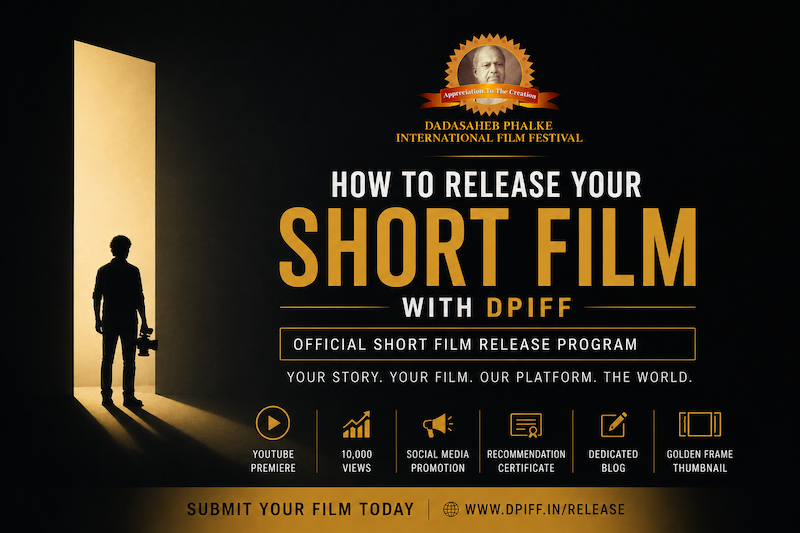
How to Release Your Short Film with DPIFF: Official Short Film Release Program
You made the film. Now give it a release strategy. Discover how the DPIFF Short Film Release Program can help present a completed short film through an official digital premiere, editorial coverage and promotional support.
A finished short film should not have to disappear into a private Drive folder, an unshared link or an overcrowded video catalogue.
For independent filmmakers, the release is part of the film’s journey. The title, thumbnail, poster, description, platform, timing and promotional context all influence how the finished work is presented to an audience.
That is where an organised digital release can become useful.
The DPIFF Official Film Release Program gives completed projects an opportunity to be considered for an official digital release through the DPIFF YouTube channel, supported by the promotional and editorial elements currently listed by DPIFF.
You Finished Your Short Film. What Comes Next?
Many filmmakers reach picture lock and immediately face a difficult choice. Should they submit to festivals? Upload to their own channel? Wait for a distributor? Keep the film private? Build a digital premiere?
There is no single route that works for every project. But the decision should be deliberate.
Package the Film
Prepare a professional title, thumbnail, poster, synopsis and description before the public release.
Choose the Right Route
Decide whether your immediate objective is awards, festival circulation, a filmmaker-owned upload or an official digital release.
Create a Release Moment
A premiere gives the film a specific moment around which cast, crew and audiences can communicate.
Support Discovery
Use social communication, editorial context and the official viewing link to make the release easier to find and share.
Why Short Film Release Strategy Matters
A strong short film can still struggle to find viewers when it is presented without context. A vague title, weak thumbnail, incomplete description or inaccessible screening link can create friction before anyone reaches the opening frame.
YouTube’s own creator guidance recommends paying attention to titles, descriptions and thumbnails when presenting videos. Its guidance also explains that tags play a much smaller role in discovery than the core presentation of the video.
That is why a professional release should be treated as an extension of the filmmaking process, not as an afterthought.
A release strategy cannot guarantee an audience or viral growth. What it can do is create a clearer, more professional path between a completed film and the people who may want to watch it.
For practical platform guidance, filmmakers can review YouTube’s official guidance on video optimisation.
What Is the DPIFF Short Film Release Program?
The DPIFF Official Film Release Program is a digital release pathway for completed creative projects. The current DPIFF release page lists four categories: Short Films, Music Videos, Documentaries and Animated Films. This article focuses specifically on Short Films.
The current DPIFF page states that approved projects can premiere on DPIFF’s official YouTube channel and be promoted across DPIFF’s social media platforms. It also lists a release fee of Rs 10,000.
The program is different from DPIFF’s awards and nomination process. If your objective is to compete for an award, visit the official DPIFF nomination page. If your objective is to explore an official digital release for a completed project, the Release Program is the relevant route.
Important: payment does not guarantee publication.
The current DPIFF release page explicitly states that payment of the release fee does not guarantee publication. Projects are reviewed, final release is at the jurors’ discretion, and if a project is not approved, the full release fee will be refunded.
See Where Your Film Could Be Released
One of the biggest advantages of a digital release is knowing exactly where the audience will encounter the film. Approved projects in the DPIFF Release Program are released through the festival’s official YouTube channel — the same public-facing channel through which audiences discover DPIFF’s cinema, award moments, performances and film content.

This is the viewing environment your audience knows. The official DPIFF YouTube channel currently shows 33.96 Million views across 720 videos and 125K subscribers. The screenshot above shows the channel home page as supplied for this article. It gives filmmakers a visual reference for the platform where an approved release can be presented.
Once a project is approved, the film is not simply hidden inside a submission system — it becomes part of an official DPIFF digital publishing environment, subject to the program’s review, release and scheduling process.
Important: this visual is a reference to the current channel environment, not a promise that every approved film will occupy a particular position on the YouTube homepage. YouTube placement, recommendations and ordering can change.
DPIFF Short Film Release Program at a Glance
| Feature | Current DPIFF Information |
|---|---|
| Program | DPIFF Official Film Release Program |
| Category covered here | Short Film |
| Official release platform | DPIFF’s official YouTube channel |
| YouTube | youtube.com/@dpiff |
| Release fee | Rs 10,000 |
| Publication | Subject to project approval |
| Approval decision | Final release is at the jurors’ discretion |
| If not approved | Full release fee refunded |
| Current availability | Current DPIFF FAQ states submissions are open year-round |
| Advertised view benefit | 10K+ YouTube views |
| Social promotion | Instagram/Facebook Story shoutout and digital/social promotion |
| Editorial support | Dedicated blog post |
| Recognition | Recommendation Certificate |
| Creative presentation | Golden Frame thumbnail treatment |
| Digital premiere | Official DPIFF YouTube premiere for approved projects |
Program details can change. Always verify the live DPIFF Release Program page before submitting or making payment.
Why Release a Short Film Through DPIFF?
The value of a release program is not simply that another channel hosts the video. It is the combination of presentation, release context and promotional support around the film.
Official Digital Premiere
Approved projects can premiere on DPIFF’s official YouTube channel, creating a defined public release moment.
Dedicated Blog Feature
The current program lists a dedicated blog post as part of the promotional package, giving the film editorial context beyond the video itself.
Social Media Promotion
DPIFF currently lists Instagram/Facebook Story support and promotion through its digital and social ecosystem.
Recommendation Certificate
Approved participants can receive the Recommendation Certificate currently listed as a program benefit.
Golden Frame Treatment
The program currently lists Golden Frame thumbnail treatment for the release presentation.
10K+ YouTube Views
The current program materials list 10K+ YouTube views as a benefit. It should not be expanded into promises of unlimited future audience growth.
Who Should Consider the DPIFF Release Program?
The program is designed for creators who have a completed project and want to explore an official digital release route.
- Independent directors with completed short films.
- Producers looking for a structured digital release for a finished project.
- Film-school graduates and emerging filmmakers with completed work.
- Established filmmakers seeking an additional digital release route.
- Creators moving a film from a private or festival phase toward a wider online audience.
- Filmmakers who want editorial and social support around the release rather than simply uploading the film without a launch strategy.
What Kind of Short Film Can You Submit?
The current DPIFF Release Program lists Short Film as one of its project categories. The program page separately lists Documentaries, Music Videos and Animated Films.
For this Short Film route, submit a completed cinematic project that you are prepared to make available publicly if it is approved.
Before applying, consider whether the project is genuinely ready for release. A rough cut, incomplete sound mix, unfinished credits or unresolved rights issues can undermine an otherwise strong film.
If your project is primarily a documentary or animated film, you can review the relevant category on the official Release Program page.
DPIFF Release Program vs Uploading to Your Own YouTube Channel
| Consideration | Your Own Channel | DPIFF Release Program |
|---|---|---|
| Publishing channel | Your YouTube channel | DPIFF’s official YouTube channel after approval |
| Release fee | No DPIFF release fee | Rs 10,000 |
| Approval | You control publication on your own channel | Project review and juror approval required |
| Editorial support | You arrange it | Dedicated blog post currently listed |
| Social support | You build your campaign | Social promotion currently listed |
| Recommendation | Self-managed | Recommendation Certificate currently listed |
| Thumbnail treatment | Self-managed | Golden Frame treatment currently listed |
| Audience benefit | Depends on your own audience and strategy | 10K+ YouTube views currently listed as a program benefit |
These are different strategies, not necessarily competing choices. Your decision should depend on your release objectives, audience, rights position and timing.
How the DPIFF Short Film Release Process Works
Prepare the finished film
Make sure the version you submit is the version you are prepared to release publicly if approved.
Prepare your release materials
Have the project title, summary, thumbnail, poster, screening link, YouTube title, description, Instagram ID and blog quote ready.
Complete the official application
Use the official DPIFF Release application and enter accurate creator and project information.
Submit your project link
The current form includes a project-link field and a password field if your link is protected.
Pay the release fee
The current listed release fee is Rs 10,000. Payment completes the submission but does not guarantee publication.
Project review
DPIFF reviews the project. Final release is at the jurors’ discretion.
Release if approved
Approved projects can proceed to an official DPIFF YouTube premiere with the current program’s promotional and recognition benefits.
Refund if not approved
The current release page states that the full release fee will be refunded if the project is not approved.
Ready to submit?
Use the live DPIFF Release Program page for the current form, terms, fee and consent requirements.
Open Official DPIFF Release ProgramWhat You Need Before Applying
The current DPIFF application form asks creators for the following information and materials:
- Project category.
- First name and last name.
- Phone number and email address.
- City and country.
- Project name.
- Project link.
- Link password, if applicable.
- Project thumbnail and poster.
- Summary of the project.
- YouTube title for the project.
- YouTube description for the project.
- Instagram ID.
- Quote for the blog post.
- Release fee.
- Consent to DPIFF’s terms and YouTube upload.
Make Your Short Film Release-Ready
Before submitting, watch the film from the perspective of someone encountering it for the first time.
Picture Lock
Confirm the edit is final and no major changes are still pending.
Sound
Check dialogue, music, ambience, effects and overall loudness on headphones and speakers.
Credits
Check every name, role, production credit, music credit and end title.
Subtitles
Proofread spelling, timing and readability wherever subtitles are used.
Rights
Confirm you have the necessary permissions for music, footage, artwork, performances and third-party material.
Public Release
Make sure you are genuinely ready for this version of the film to become publicly available online.
How to Create a Strong YouTube Thumbnail
The thumbnail is the first visual invitation to watch. It should communicate the film’s identity quickly, especially on mobile screens.
DPIFF currently requests a 1280 x 720 pixel YouTube thumbnail and a 720 x 1280 pixel poster. The current form lists a maximum file size of 10 MB and up to 4 files.
For broader YouTube optimisation, consult YouTube’s official thumbnail guidance.
How to Write a Better YouTube Title
Your title should identify the film clearly and create curiosity without misleading the viewer.
A useful structure is:
Film Title | Short Film | Director or Meaningful Hook
This is a framework, not a mandatory format. Keep the actual film title prominent and use only accurate descriptors.
Avoid turning the title into a list of search keywords. Search optimisation works best when the title remains understandable to a real viewer.
How to Write the YouTube Description
The description should give viewers enough information to understand what they are about to watch while also providing useful context for search and sharing.
- Begin with a concise hook.
- Explain the central story without revealing the ending.
- Name the director and key creators where appropriate.
- Add genre or thematic information naturally.
- Credit music, production partners and other contributors correctly.
- Explain the DPIFF release context.
- Use relevant keywords naturally rather than repeating them.
- Proofread every name, title and link.
Filmmakers can also review YouTube’s official video optimisation guidance when preparing the release.
Test Your Film Link Before You Submit
A broken or restricted screening link can create unnecessary friction during review.
Open the exact project link in a private browser window or another device. Confirm that the complete film loads, the password works if required, audio plays correctly and the reviewer does not need access to your personal account.
The current DPIFF application specifically asks for a Project Link and provides a field for a Link Password, If Any.
Rights, Copyright and Permissions
A public release requires more than simply owning the final edit. You should be confident that you have the necessary rights and permissions for the material contained within the film and for the release activity you are authorising.
Review music licences, archival footage, photographs, artwork, locations, performances, brand appearances and other material that may require permission.
The current DPIFF consent language requires the applicant to agree to DPIFF’s terms and allow DPIFF to upload the Short Film or Project to its official YouTube channel. DPIFF’s current release FAQ and terms should be reviewed carefully before submission.
The U.S. Copyright Office’s general copyright resources can provide useful background, but they are not a substitute for legal advice for a specific production.
Release Fee and Refund Policy
The current DPIFF Release Program fee is Rs 10,000.
| Question | Current DPIFF Information |
|---|---|
| Does payment guarantee publication? | No. |
| What happens after payment? | The project enters DPIFF’s review process. |
| Who makes the final release decision? | Final release is at the jurors’ discretion. |
| What happens if the project is not approved? | The full release fee is refunded. |
| Is there a specific submission deadline? | The current DPIFF FAQ states submissions are open year-round. |
What Happens After Your Application?
The application and payment do not automatically create a public upload. The submitted project is reviewed first.
If approved, the project can proceed to its official digital premiere on the DPIFF YouTube channel and receive the promotional and recognition benefits currently listed by DPIFF.
If it is not approved, the current program states that the full release fee is refunded.
Once a release is approved and scheduled, the filmmaker should also participate in the launch. Share the official release link with cast, crew, collaborators and your existing audience. Use the release as an opportunity to tell people about the film, not simply to announce that a link exists.
How to Maximize the Value of Your Digital Premiere
Announce the release
Use your existing social channels to tell your audience when and where the film will be available.
Share the official link
Once live, direct people to the official DPIFF YouTube release rather than creating competing copies.
Activate your team
Give cast, crew and collaborators the official link and a simple message they can share.
Tell the story behind the story
Share a production insight, creative decision, behind-the-scenes moment or filmmaker note.
Continue the conversation
Respond to genuine audience comments and keep the film part of your communication after premiere day.
Archive the achievement
Keep the official release link, blog feature, promotional material and Recommendation Certificate in your professional film portfolio.
Common Short Film Release Mistakes
1. Releasing an unfinished cut
Do not rush the public version while picture, sound, subtitles or credits are still changing.
2. Treating the thumbnail as an afterthought
A thumbnail is part of the release package. It should make the film immediately identifiable.
3. Stuffing keywords into the title
Write for viewers first. Keep the film title clear and accurate.
4. Writing almost nothing in the description
A good description gives the audience context and makes the release easier to understand and share.
5. Submitting a broken link
Always test the link and password outside your normal logged-in environment.
6. Ignoring rights
Unresolved music, footage, artwork or performer permissions can become a serious release problem.
7. Expecting the platform to do everything
A platform can create an opportunity for discovery. The filmmaker still has a role in communicating the release.
8. Confusing release with awards
A digital release and an award nomination have different objectives. Choose the route that matches your current goal.
Complete DPIFF Short Film Release Checklist
DPIFF Release Program or DPIFF Awards?
The two routes serve different purposes.
If your primary goal is award consideration, visit the DPIFF nomination page and review the relevant category.
If your goal is to explore a digital release for a completed project, visit the DPIFF Release Program.
If you are considering awards as well as release, these DPIFF guides provide useful next steps:
- Best Short Film Award 2027: Submit Your Short Film to DPIFF
- Best Documentary Short Film Award 2027: Submit Your Documentary to DPIFF
- Best Animated Short Film Award 2027: Submit Your Animation to DPIFF
- Best Student Short Film Award 2027: Submit Your Student Film to DPIFF
- Best AI Short Film Award 2027: Submit Your AI Film to DPIFF
More DPIFF Resources for Filmmakers
Continue exploring the festival’s editorial and filmmaking resources through the DPIFF Blog, follow current updates through DPIFF News, and learn more about the organisation through the DPIFF About Us page.
For filmmakers specifically interested in seeing how short films can be presented to an online audience, explore 10 Short Films to Watch Online.
Frequently Asked Questions
What is the DPIFF Short Film Release Program?
The DPIFF Official Film Release Program is a digital release pathway through which completed projects can be considered for an official release on DPIFF’s YouTube channel. The current program covers Short Films, Music Videos, Documentaries and Animated Films.
How much does the DPIFF Release Program cost?
The current release fee listed by DPIFF is Rs 10,000.
Does paying the release fee guarantee publication?
No. DPIFF states that payment does not guarantee publication. The submitted project is reviewed, final release is at the jurors’ discretion, and the full fee is refunded if the project is not approved.
Where will my short film be released?
Approved projects can premiere on the official Dadasaheb Phalke International Film Festival YouTube channel at youtube.com/@dpiff.
Is the DPIFF Release Program open throughout the year?
The current DPIFF release FAQ states that there is no specific deadline and submissions are open year-round.
What thumbnail size does DPIFF require?
The current form specifies a 1280 x 720 pixel YouTube thumbnail and a 720 x 1280 pixel poster. It lists a maximum file size of 10 MB and up to 4 files.
Can I upload my film on my own YouTube channel too?
DPIFF’s current release FAQ states that creators retain their rights and can upload the project on their own YouTube channel before or after its DPIFF release. Review the current terms for the precise conditions applicable to your project.
Do filmmakers retain ownership of their project?
DPIFF’s current release FAQ states that creators retain ownership of their project. The consent terms provide DPIFF with the rights specified for uploading and promotional use. Review the live terms before submitting.
Your Film Is Finished. Now Give It a Release.
If your short film is complete and you want to explore an official digital premiere through DPIFF, prepare your release package, review the current terms and submit your project for consideration.
APPLY FOR THE DPIFF RELEASE PROGRAM