


Rajkumar Hirani foresees films made entirely with AI, AI as a game changer, and advocates a mixed approach
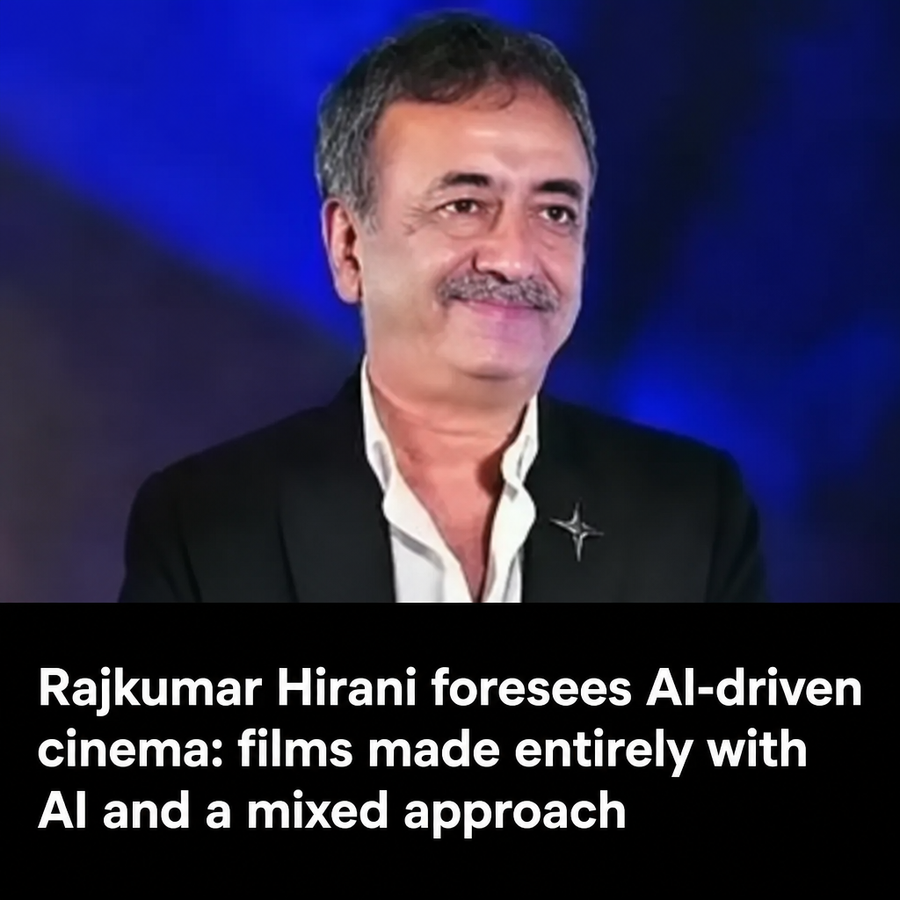
Rajkumar Hirani has publicly stated that artificial intelligence could someday enable making films entirely with AI. In remarks drawn from a conversation with authors Sucheta Dalal and Debashis Basu in their updated Pathbreakers: How 10 Visionary Leaders Transformed India, the filmmaker described AI as a total ‘game changer’ that is ‘getting better and better’ with each passing day.
AI in cinema: Hirani’s view
Hirani’s comments arrive as he discusses his latest project, described as an AI-crafted film titled Kathni Karni Ek si, commemorating Bajaj company’s 100-year journey. The film features members of the Bajaj family who today lead some of India’s largest businesses. The production underscores AI’s transformative potential not only in business but as a powerful medium for creativity and storytelling.
In laying out his evolving view of the technology, Hirani acknowledged that AI is still developing. He said, “There is no way but to adapt to it (AI). I feel some day you will make your films entirely on AI… It will reduce the cost and effort, you may be able sit in an air-conditioned room and make films.”
He elaborated on the practical realities of translating ideas into visuals: “You have to research extensively to translate what’s in your head into an image. You may have to draw the start image and end image in order to create one shot — it is quite an effort.” While AI cannot always replicate exact expressions or performances, Hirani argued it can still create the world around an actor with remarkable ease and imagination. He added, “AI is growing so fast that I don’t think it is going to be difficult to create all that we want. If we start treating AI as a friend and using it, I think it is going to be extremely beneficial.”
Comparing AI’s rapid evolution to earlier cinematic shifts, the director drew a parallel with the introduction of green screens, saying, “Remember, when green screens were discovered, it changed the way we shot films. This too will change the way we make films.” For the moment, he advocates a pragmatic, mixed approach: “use some AI, do some shooting — and to quickly learn to adapt.”
Pathbreakers, the series of long-form conversations with achievers across industries, serves as the platform for these disclosures. The 2026 updated edition also features in-person interviews with Mukesh Ambani, KV Kamath, Deepak Parekh, Uday Kotak, Sanjeev Bikhchandani, Satish Magar and Hirani. The book, published by Rupa and priced at Rs 695, is currently available for purchase across online and offline stores.
Hirani’s remarks arrive amid broader discourse on AI’s role in storytelling and film production, underscoring a cautious optimism about the technology’s capabilities while underscoring the need for deliberate, research-driven use. The conversation with Dalal and Basu situates Hirani among a cadre of leaders who are foregrounding AI not only as a tool but as a potential paradigm shift in the cinematic process.
For readers seeking more context on AI’s footprint in contemporary cinema, related material is available through the following external sources:
Watch the AI-centric discussion
Hindustan Times coverage on Ranabaali teaser
India Today on Ranabaali teaser
Submit a nomination to recognize standout talents, explore upcoming releases, read more news, and visit the DPIFF Newsroom using the internal DPIFF links below: Submit a nomination, Explore upcoming releases, Read more news, Visit the DPIFF Newsroom.



Share this link via



Share this link via

Share this link via

Share this link via