


Ranveer Singh vs Ranbir Kapoor: DPIFF’s Box Office Comparison
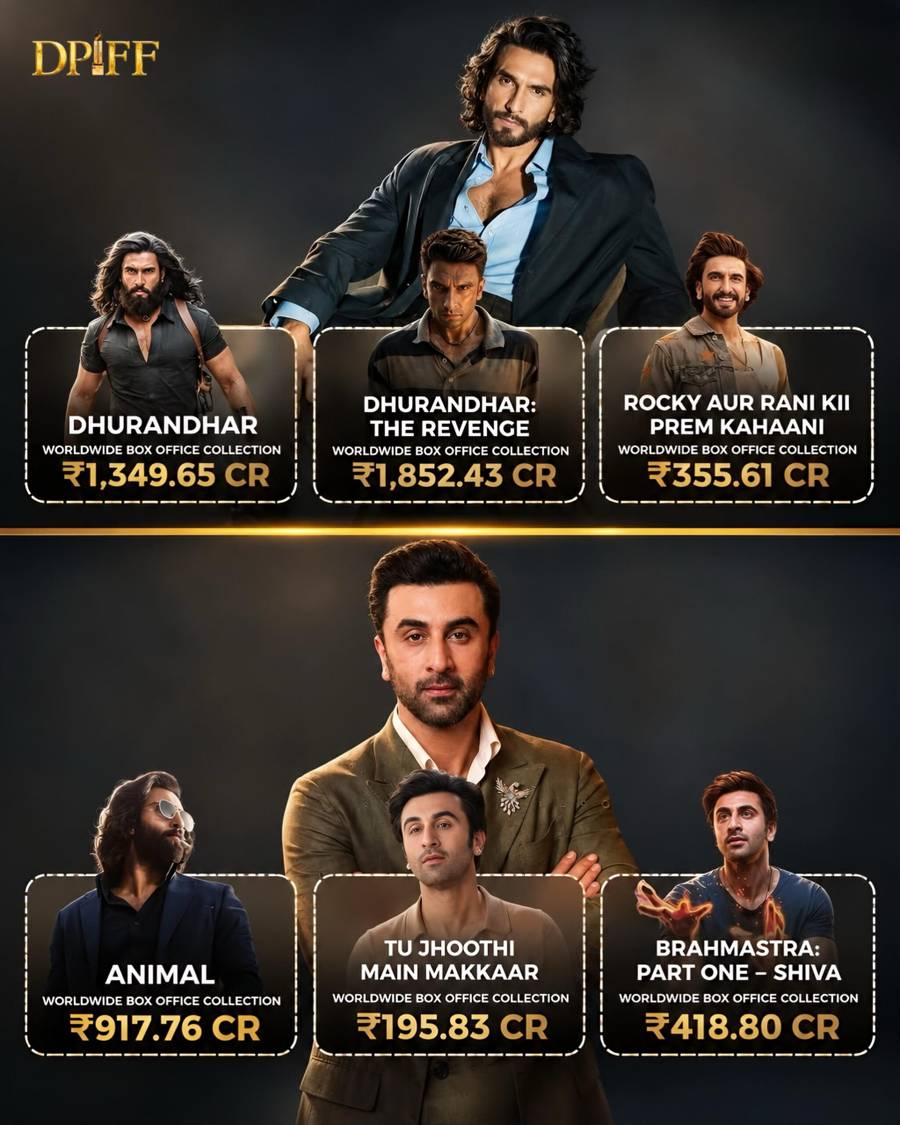
Ranveer Singh has emerged ahead of Ranbir Kapoor in a box-office comparison shared by Dadasaheb Phalke International Film Festival (DPIFF), based on the worldwide figures listed for three films on either side. The comparison gives Ranveer’s selected titles a combined total of ₹3,557.69 crore, while Ranbir’s selected films account for ₹1,532.39 crore.
The figures featured in the DPIFF post place Ranveer Singh more than ₹2,000 crore ahead in this particular selection. However, the result should be read as a comparison of the films listed in the post rather than a definitive ranking of the actors’ complete careers.
How the comparison was calculated
For Ranveer Singh, the post includes Dhurandhar at ₹1,349.65 crore, Dhurandhar: The Revenge at ₹1,852.43 crore and Rocky Aur Rani Kii Prem Kahaani at ₹355.61 crore. Together, these titles total ₹3,557.69 crore.
Ranbir Kapoor’s side includes Animal at ₹917.76 crore, Tu Jhoothi Main Makkaar at ₹195.83 crore and Brahmāstra: Part One – Shiva at ₹418.80 crore. Their combined figure is ₹1,532.39 crore.
These totals are arithmetically consistent with the numbers presented in the original post. They are also based on a limited group of films, meaning that the comparison does not represent the actors’ complete filmographies or an official industry-wide box-office ranking.
Why the result has attracted attention
Ranveer Singh and Ranbir Kapoor represent two different but equally prominent strands of contemporary Hindi cinema. Ranveer has frequently moved between large-scale action, period drama, comedy and romance, while Ranbir has built a commercially successful screen image through romantic dramas, coming-of-age stories, fantasy spectacle and more intense character roles.
The selected films also reflect the range of projects associated with both actors. Rocky Aur Rani Kii Prem Kahaani is a colourful romantic family drama, while Animal is a darker and more confrontational action drama. Brahmāstra: Part One – Shiva belongs to the fantasy-adventure space, and Tu Jhoothi Main Makkaar combines romance with mainstream comedy.
Ranveer’s listed total is strongly influenced by the two Dhurandhar titles included in the comparison. That makes the selection especially important to the final result: removing or adding even one major release would substantially change the overall gap. The result, therefore, is best understood as a snapshot of selected worldwide grosses rather than a measurement of acting ability or long-term stardom.
Box-office comparisons need a consistent method
Worldwide gross figures can vary between trade reports because distributors, tracking services and media publications may use different methods for recording overseas earnings, taxes, re-releases and final reported totals. A meaningful comparison should ideally use the same source, the same definition of gross and the same release-period methodology for every film.
Release scale and market conditions also matter. A film’s performance is shaped by its release date, ticket prices, screen count, competition, language versions, international distribution and audience reception. Comparing films from different years without accounting for those factors can make a headline figure look more conclusive than it really is.
For readers looking for background on the two stars, the Ranbir Kapoor profile and Ranveer Singh profile provide useful career overviews. Film-specific context is also available through entries for Rocky Aur Rani Kii Prem Kahaani and Animal. These references are useful for general film information; the box-office totals discussed here remain the figures presented in the DPIFF comparison post.
What the comparison says about the two careers
The main takeaway is not that one actor has permanently surpassed the other, but that both continue to anchor commercially significant Hindi film projects. Ranveer’s total in the post benefits from two high-grossing action releases, while Ranbir’s selection demonstrates the strength of Animal alongside successful theatrical runs for Brahmāstra and Tu Jhoothi Main Makkaar.
Audience interest in this comparison also reflects how Bollywood stardom is now discussed. Box-office performance, opening-weekend figures, worldwide gross, streaming reach and social-media visibility often become part of the same public conversation. Yet theatrical success is only one measure of an actor’s impact. Performance, role selection, cultural recall and the ability to work across genres remain important parts of a broader career assessment.
DPIFF’s original comparison post
“Ranveer Singh vs Ranbir Kapoor: Who rules the box office?”
Read the original DPIFF Instagram post for the film selection and worldwide figures featured in the comparison.
Recent Coverage from DPIFF
DPIFF’s newsroom continues to publish editorial coverage of Indian cinema, performers, filmmakers, awards and major developments across the entertainment industry. Readers can explore the latest verified stories through the DPIFF news section, while the festival’s wider institutional information is available on the official DPIFF website.
Because the three most recent newsroom articles can change as new stories are published, the DPIFF news index is the appropriate source for the current sequence of coverage rather than reproducing unverified titles or links here.
About Dadasaheb Phalke International Film Festival
Dadasaheb Phalke International Film Festival is an Indian film festival and entertainment platform that celebrates cinema, television and the wider creative community. Its editorial and festival initiatives highlight artists, filmmakers, technicians and significant developments across Indian entertainment. Through its official website and social channels, DPIFF shares film-related news, recognition and industry-focused stories with audiences in India and beyond.
On the figures featured in this comparison, Ranveer Singh takes the lead. The broader question of who ranks as the stronger contemporary superstar, however, depends on how audiences weigh commercial performance against range, longevity and the lasting impact of individual films.



Share this link via



Share this link via


Share this link via