Suman Kalyanpur Passes Away at 89: The Voice Behind ‘Aajkal Tere Mere Pyar Ke Charche’ Falls Silent
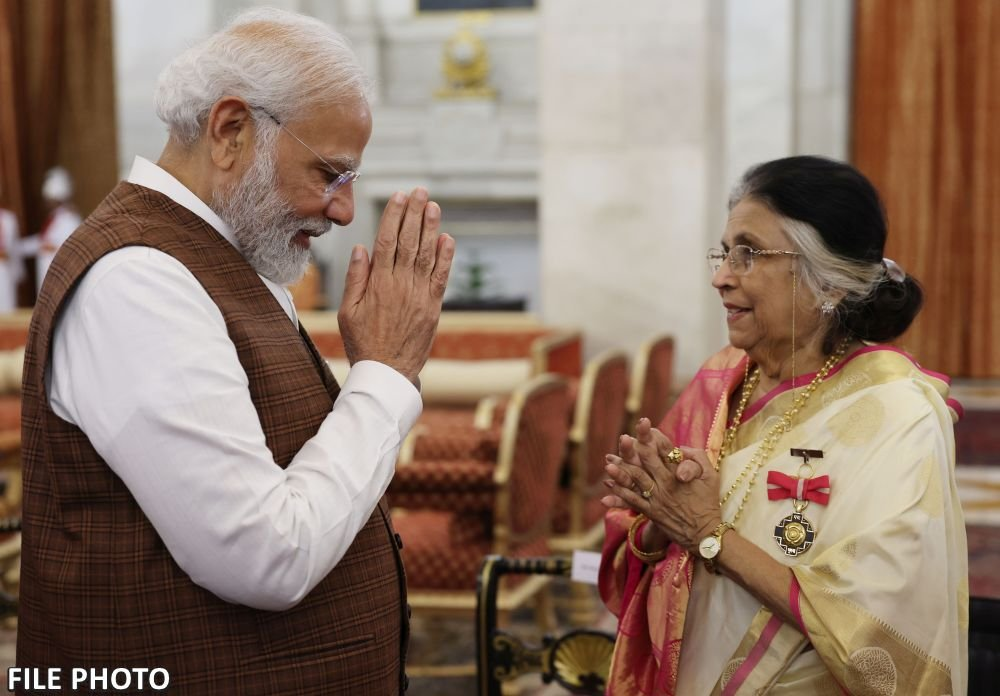
Sad News! Suman Kalyanpur, one of the most remembered voices of Hindi film music, passed away on June 1 at her Mumbai residence. She was 89. According to family members and author Mangala Khadilkar, the singer died due to age-related health issues and passed away peacefully at home.
For many listeners, Suman Kalyanpur’s songs were a part of everyday life. Whether it was “Aajkal Tere Mere Pyar Ke Charche,” “Tumne Pukara Aur Hum Chale Aaye,” “Na Na Karte Pyar Tumhin Se,” or “Dil Ek Mandir Hai,” her voice became closely associated with an important period of Hindi cinema.
Born on January 28, 1937, in Dhaka, then part of British India, Suman Kalyanpur spent her early years in a large family before moving to Mumbai. Music became an important part of her life from a young age. She took classical training and slowly entered the world of playback singing in 1950.
Her journey in films started at that point when playback music was dominated by influential names in Indian cinema.
Over the years, she has worked with some of the most respected music directors of the era, including Naushad, Shankar-Jaikishan, O.P. Nayyar, Kalyanji-Anandji and Ravi. She also sang alongside the legend Mohammed Rafi in several songs that stay popular to this day.
One of the interesting chapters of her career was her frequent collaborations with Rafi. Many listeners often discussed how well their voices blended together, resulting in songs that continued to be played on radio stations, television channels and music platforms decades later.
Hindi songs brought her nationwide recognition, but her work was never limited to one language. She recorded in Marathi, Bengali, Kannada, Assamese, Odia and several other Indian languages. She also recorded bhajans, ghazals and non-film songs.
Suman Kalyanpur largely stayed away from the spotlight in later years. Her focus remained on music rather than public appearances. Yet her songs continued to find new listeners through every generation.
According to Mangala Khadilkar, who wrote the Marathi biography Suman Sugandh, the singer spent her final days listening to her own songs. It was a quiet ending to a life that had been dedicated to music for more than six decades.
She is survived by her daughter, Charu. Her last rites will be held in Mumbai.
With Suman Kalyanpur’s passing, Indian music loses a voice that travelled across decades, languages and generations. Her songs remain part of the history of Hindi cinema and continue to be heard in homes, on radio stations and on playlists across the country.
For many people, her voice was never just a song in a film. It became a memory attached to a moment, a person or a time in life. That is why even as the singer is gone, the music remains.


Share this link via



Share this link via

Share this link via