


Salman Khan’s Matrubhumi Trailer Draws Mixed Audience Reactions
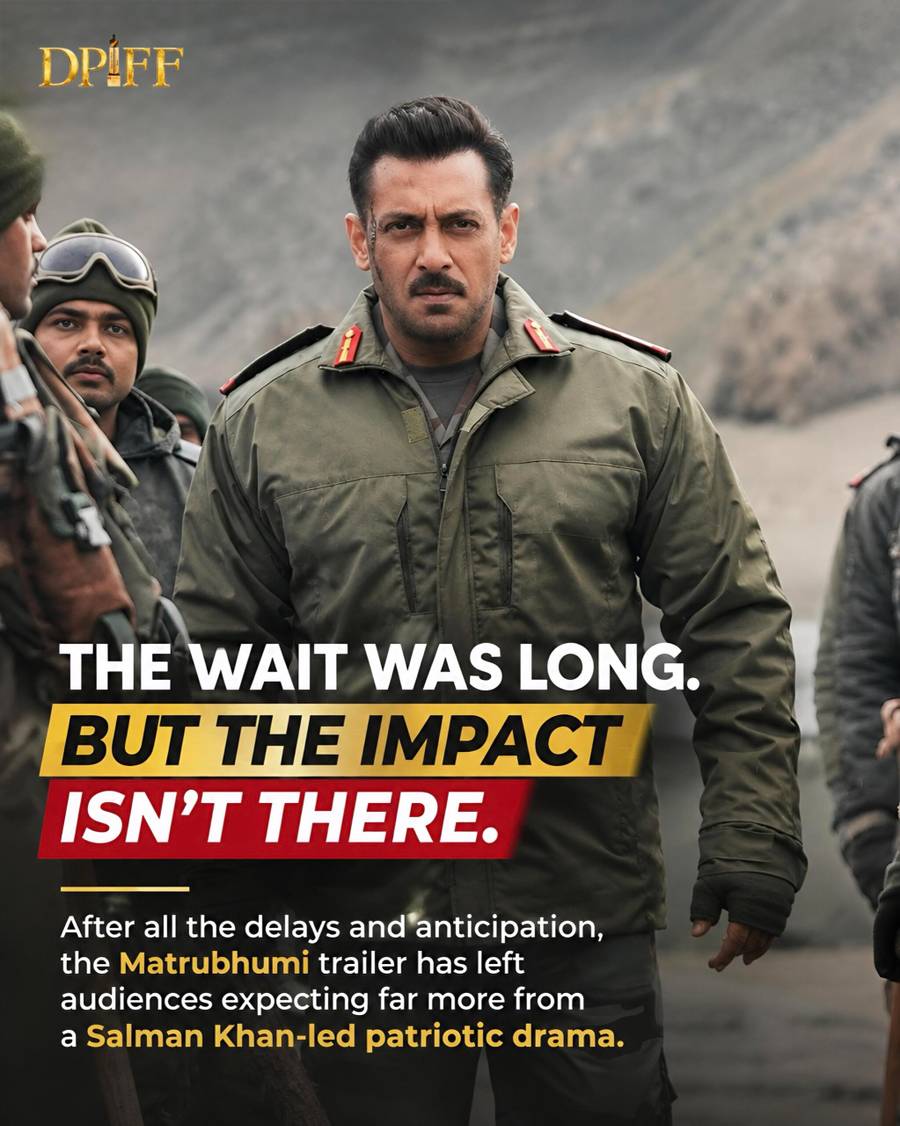
The trailer for Matrubhumi, the Salman Khan film discussed in DPIFF’s latest Instagram post, has received a mixed response from viewers. The reaction comes after a period of delays and growing anticipation around the project, raising questions about whether the full film can deliver a stronger emotional and cinematic experience than its trailer currently suggests.
DPIFF’s post highlights several areas that appear to have influenced the early response: Salman Khan’s portrayal of an Army officer, the film’s dialogue, and the quality of its visual effects. Rather than presenting the trailer as an unqualified success, the post reflects the disappointment of viewers who expected a more powerful first impression from a patriotic drama led by one of Hindi cinema’s most recognisable stars.
Why the trailer response matters
Trailers play an important role in shaping the audience’s expectations before a major Hindi film arrives. They introduce the story’s central conflict, establish the tone and offer the first substantial look at the performances, production design and technical scale. For a film built around patriotism, military duty and national identity, viewers generally expect a strong emotional core alongside spectacle.
That expectation is particularly significant in the case of a Salman Khan-led project. His screen presence has often been a central part of the marketing conversation around his films, and audiences tend to look for a combination of star power, memorable dialogue and moments that can connect beyond the action. If those elements do not come through clearly in a trailer, the conversation can quickly shift from anticipation to uncertainty.
The discussion also reflects the changing standards applied to patriotic cinema. Films in this space are not judged only by their subject matter. Viewers increasingly expect credible performances, convincing military settings, technically polished effects and a narrative that treats its themes with seriousness. The genre’s emotional impact depends on how naturally these elements work together.
Dialogue and emotional impact remain central
One of the concerns identified in the DPIFF post is the perceived lack of emotional force in the dialogue. In a military or patriotic drama, dialogue often carries the responsibility of communicating sacrifice, responsibility and personal conflict. However, such moments are effective only when they emerge from the characters and situation rather than appearing designed solely for applause.
The trailer’s early reception does not determine the final quality of Matrubhumi. A preview is a carefully edited marketing presentation, and the completed film may contain additional context, quieter character moments or narrative developments that are not visible in the promotional footage. At the same time, the response is an important signal for the filmmakers because it shows where audience expectations currently stand.
Visual effects and the challenge of scale
Patriotic dramas frequently rely on large-scale visuals, including military operations, battle environments and digitally created backgrounds. These sequences must appear convincing enough to support the emotional stakes of the story. When visual effects seem unfinished or inconsistent, they can distract viewers from the characters and reduce the sense of immersion.
The concerns raised about the trailer’s effects should therefore be understood within the broader challenge of producing event-scale Indian cinema. Audiences are now familiar with sophisticated international and domestic productions, and comparisons are inevitable. A film seeking to position itself as a major patriotic spectacle must meet expectations not only through its subject but also through its craft.
What the film still needs to establish
For Matrubhumi to recover momentum, the film will need to offer more than a familiar patriotic framework. Its strongest opportunity may lie in defining the Army officer played by Salman Khan as a complete character, with personal stakes and meaningful choices rather than relying exclusively on heroic imagery.
The film’s eventual reception will also depend on factors that cannot be fully judged from the current trailer, including the screenplay, supporting performances, music, pacing and the balance between action and emotion. The early conversation is mixed, but it remains an opening chapter in the film’s public journey rather than a final verdict.
Readers can view the original DPIFF Instagram post on the Matrubhumi trailer reaction for the complete visual reference. Further film and entertainment updates are available through the DPIFF news section.
Recent Coverage from DPIFF
DPIFF’s official news archive brings together the festival’s latest editorial updates, film-related developments and coverage of the Indian entertainment industry. Readers should refer to the archive for the three most recently published articles and their full summaries, as the publication schedule continues to change.
The Dadasaheb Phalke International Film Festival website also provides institutional information and updates connected with the festival’s activities. Its coverage spans cinema, filmmakers, artists and developments that contribute to the wider conversation around Indian film.
About Dadasaheb Phalke International Film Festival
Dadasaheb Phalke International Film Festival is an Indian film festival and entertainment platform named after Dadasaheb Phalke, widely regarded as the father of Indian cinema. DPIFF recognises creative contributions across Indian cinema and presents a platform for celebrating films, artists and professionals from the industry. Through its official channels, the organisation also shares editorial updates and developments relevant to film audiences.
For now, the response to the Matrubhumi trailer underlines the gap that the finished film will need to bridge between anticipation and impact. The next stage of the project will depend on whether its full narrative provides the emotional depth, technical polish and character-driven drama that viewers expected from its first major preview.


Share this link via


Share this link via
Share this link via
Share this link via