


Ranbir Kapoor and Vicky Kaushal: Two Distinct Forces in Hindi Cinema
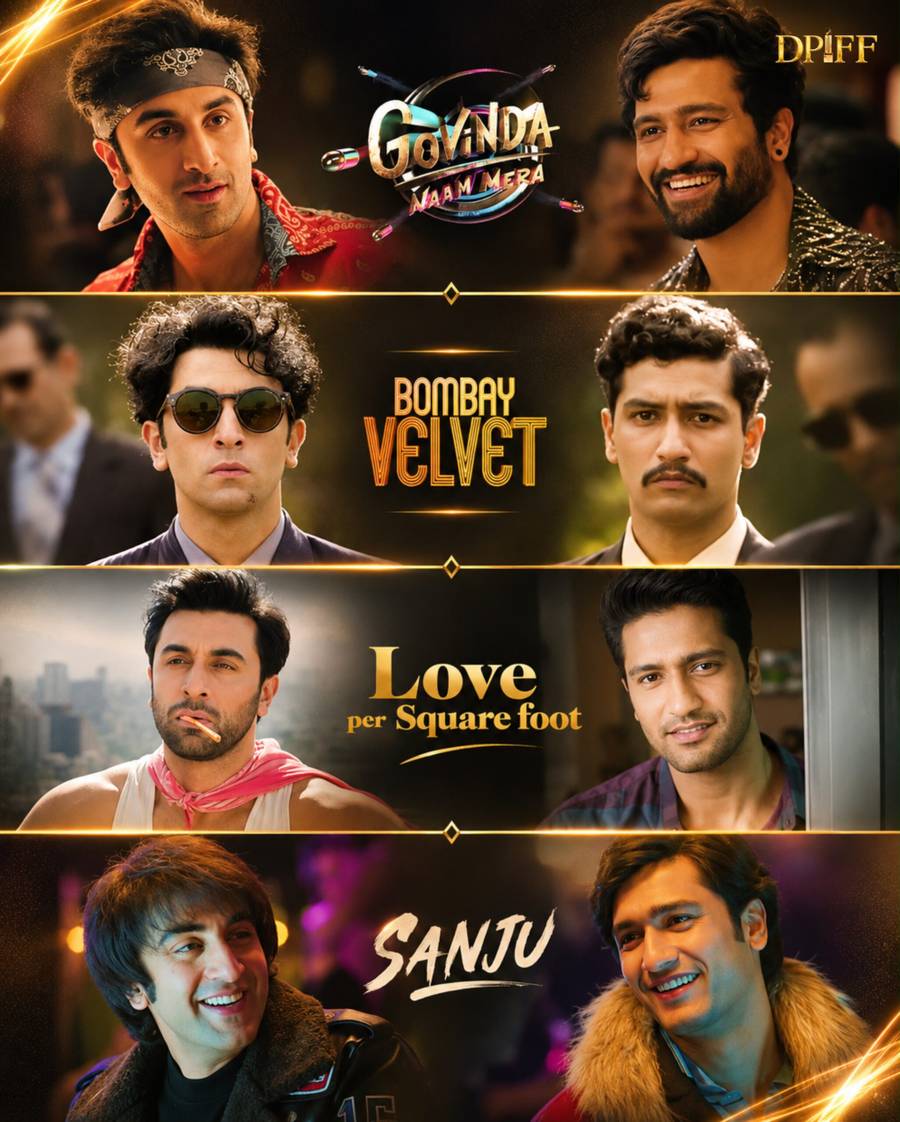
A recent DPIFF Instagram post highlights the versatility of Ranbir Kapoor and Vicky Kaushal, two performers who have built very different but equally compelling identities in contemporary Hindi cinema. From romantic leads and comic characters to emotionally demanding dramatic roles, both actors have repeatedly moved beyond a single screen image.
The post brings together films including Bombay Velvet, Love Per Square Foot, Govinda Naam Mera and Sanju. These titles do not represent a shared filmography between the two actors; rather, they reflect the range of roles each performer has taken on across different projects. That distinction is important because their careers demonstrate two contrasting routes to versatility.
Ranbir Kapoor’s career has been shaped by reinvention
Ranbir Kapoor made his acting debut with Saawariya in 2007 and soon established himself as an actor willing to play characters with uncertainty, vulnerability and emotional complexity. Films such as Wake Up Sid, Rocket Singh: Salesman of the Year and Rajneeti showed that his appeal was not limited to conventional romance.
His work in Rockstar, Barfi!, Tamasha and Sanju further strengthened that reputation. Each performance required a different physical and emotional register, from the rebellious musician of Rockstar and the expressive, largely non-verbal Barfi to the troubled actor Sanjay Dutt in Sanju. The Ranbir Kapoor filmography reflects a career built around shifting between idealistic, flawed, comic and intensely dramatic protagonists.
Bombay Velvet was another significant departure. Set against the world of 1960s Bombay and directed by Anurag Kashyap, the film placed Kapoor in the role of a street fighter whose ambition gradually draws him into organised crime. Although the film divided audiences, its scale and stylised period setting made it an important example of Kapoor choosing material outside the safest commercial template.
Vicky Kaushal has brought texture to supporting and leading roles
Vicky Kaushal’s rise followed a different path. After beginning with parts in films such as Luv Shuv Tey Chicken Khurana and Bombay Talkies, he received major critical attention for Masaan. His portrayal of Deepak, a young man dealing with grief, social prejudice and the limitations of his circumstances, announced an actor capable of conveying emotion with restraint.
Kaushal continued to take on varied work in films including Raman Raghav 2.0, Raazi, Manmarziyaan, Uri: The Surgical Strike, Sardar Udham and Sam Bahadur. His performances often rely on physical transformation, controlled intensity and a strong sense of the character’s social world. The Vicky Kaushal filmography also shows how he has moved from ensemble and supporting roles into leading parts without abandoning the grounded quality that first distinguished his work.
In Love Per Square Foot, Kaushal played a middle-class professional navigating ambition, romance and the practical pressures of finding a home in Mumbai. The film used humour and urban realism to tell a familiar story, while giving the actor space to show a lighter and more accessible side.
What the selected films reveal about their range
Govinda Naam Mera allowed Kaushal to explore broad comedy and insecurity through a character caught between personal frustration, professional failure and a complicated domestic life. The role was notably different from the historical figures and serious dramatic characters associated with several of his earlier performances.
Sanju is the clearest point of connection between the two actors. Kapoor played the central role of Sanjay Dutt, while Kaushal portrayed Kamlesh “Kamli” Kanhaiyalal Kapasi, a character inspired by Dutt’s close friend Paresh Ghelani. Their shared screen space created a distinct relationship within the film: Kapoor’s performance carried the burden of a highly publicised life story, while Kaushal provided emotional steadiness and an important counterpoint.
The contrast between their approaches is part of what makes the comparison worthwhile. Kapoor is often associated with internal conflict, romantic idealism and characters searching for identity. Kaushal, meanwhile, has developed a reputation for anchoring performances in physical detail, social realism and an understated emotional force. These are broad tendencies rather than fixed limitations, and both actors have repeatedly challenged them.
Why the comparison matters to Hindi cinema
The careers of Ranbir Kapoor and Vicky Kaushal reflect a wider change in Hindi filmmaking. Mainstream actors are increasingly expected to move between theatrical entertainers, intimate dramas, biographical projects, comedy and streaming-oriented storytelling. Audience recognition can open the door, but sustained interest depends on the ability to make each character feel distinct.
For viewers, their filmographies offer two useful examples of how stardom and performance can coexist. Kapoor’s choices show the value of emotional and tonal shifts within a leading-man career, while Kaushal’s journey illustrates how a performer can move from acclaimed ensemble work to commercial visibility without losing credibility.
The DPIFF post serves as a concise reminder of that range. It is an appreciation of two actors whose strongest work has come not from repeating one successful formula, but from taking on different shades of storytelling.
DPIFF Instagram Reference
Read the original DPIFF post featuring Ranbir Kapoor and Vicky Kaushal on Instagram.
Recent Coverage from DPIFF
Readers can explore the latest verified stories and announcements through the DPIFF News archive, which serves as the festival’s central editorial index. The archive provides access to recent coverage of Indian cinema, artists, awards and festival-related developments.
For broader institutional context, the official DPIFF website brings together information about the festival, while the festival’s About Us page outlines its purpose and positioning within India’s film and cultural landscape. These official pages are the most reliable starting points for readers seeking further DPIFF updates.
About Dadasaheb Phalke International Film Festival
Dadasaheb Phalke International Film Festival is a platform dedicated to recognising and celebrating contributions to Indian cinema. Named after Dadasaheb Phalke, widely regarded as the father of Indian cinema, the festival connects established artists, emerging talent and audiences through film-focused programmes and honours. DPIFF’s editorial and social channels also document notable developments across the Indian entertainment industry.
By placing Kapoor and Kaushal in the same conversation, DPIFF’s post draws attention to an important quality in contemporary Hindi cinema: the ability of performers to keep evolving while remaining closely connected with audiences.



Share this link via



Share this link via
Share this link via
Share this link via