Rishi Kapoor Remembered: The Enduring Legacy of Bollywood’s Evergreen Star
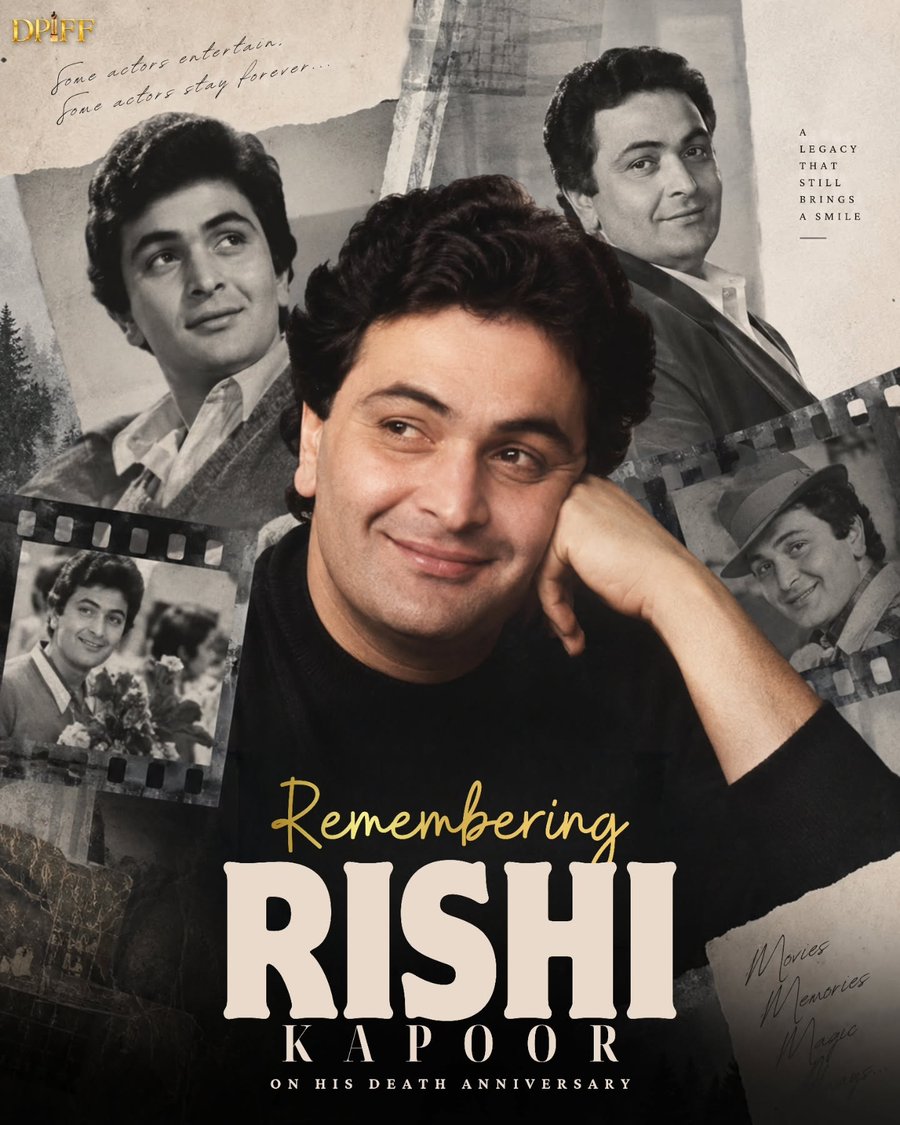
Rishi Kapoor’s appeal went far beyond the romantic image that first made him a star. With his natural warmth, expressive face and instinctive comic timing, he built a career that moved comfortably between romance, family drama, comedy and character-driven roles. In a remembrance shared by the Dadasaheb Phalke International Film Festival on Instagram, DPIFF celebrates an actor whose work continues to connect with audiences across generations.
Kapoor remains one of the defining performers of Hindi cinema’s modern history. He brought an approachable quality to the screen: even when playing an idealised romantic hero, he retained a sense of vulnerability and mischief that made his characters feel recognisably human. That quality helped his performances remain accessible long after the era in which many of his most celebrated films were released.
From a legendary film family to a leading man
Born on 4 September 1952, Rishi Kapoor was part of the influential Kapoor family, one of Indian cinema’s most prominent acting and filmmaking dynasties. He made his first screen appearance as a child artist in Mera Naam Joker (1970), directed by his father, Raj Kapoor. The role earned him the National Film Award for Best Child Artist, establishing an early connection with the craft that would define his life.
His breakthrough as a leading actor came with Bobby (1973), a youthful romance that became a landmark film of its period. Paired with Dimple Kapadia, Kapoor played a young man caught between love, family expectations and social differences. The film’s music, performances and contemporary emotional tone made it a cultural touchstone, while Kapoor’s portrayal turned him into one of Hindi cinema’s most recognisable romantic stars.
The success of Bobby also demonstrated his ability to carry a film through sincerity rather than theatricality. His performance was recognised with the Filmfare Award for Best Actor. For readers seeking a broader reference to his career and filmography, the Encyclopaedia Britannica profile of Rishi Kapoor provides useful biographical context.
A career shaped by variety
Although romance remained closely associated with Kapoor, his filmography was never limited to one genre. During the 1970s and 1980s, he appeared in films such as Khel Khel Mein, Amar Akbar Anthony, Karz and Chandni. These performances revealed different aspects of his screen personality, from playful charm and musical energy to emotional intensity and comic spontaneity.
His partnership with many leading actresses became an important part of the Hindi film romance tradition. Yet Kapoor’s popularity rested not only on pairings or songs. He possessed a distinctive ability to communicate emotion through small gestures, quick changes in expression and an unforced conversational style. Those qualities made him equally effective in ensemble films and family stories.
As the Hindi film industry changed, Kapoor adapted to more mature and complex roles. His later work in Do Dooni Chaar, Agneepath, D-Day, Kapoor & Sons and 102 Not Out showed an actor willing to move away from the conventional leading-man image. In these films, he played fathers, professionals, patriarchs and flawed individuals, often using restraint instead of the larger-than-life manner associated with many mainstream performances.
Why his performances continue to matter
Rishi Kapoor’s legacy is significant because it reflects the changing vocabulary of the Hindi film actor. He began at a time when the romantic hero was often defined by songs, idealism and polished screen presence. In the later phase of his career, he embraced parts that were more layered, uncomfortable and emotionally demanding.
That transition gave his body of work unusual range. A viewer may remember him for the tenderness of Bobby, the flamboyance of Amar Akbar Anthony, the musical identity of Karz or the sharper dramatic work of Kapoor & Sons. Together, these films show how an actor can remain connected to popular cinema while continuing to revise his artistic identity.
His influence can also be seen in the way audiences remember Hindi film stars: not only through awards or opening-day figures, but through songs, gestures, costumes, family viewing experiences and performances that become part of everyday cultural memory. Kapoor’s screen image carried that kind of familiarity. It could evoke nostalgia without becoming locked in the past.
Remembering Rishi Kapoor through cinema
Rishi Kapoor died on 30 April 2020, aged 67. His passing marked the end of a career that had spanned more than five decades, from child artist to romantic icon and, finally, one of Hindi cinema’s most dependable character actors.
The most meaningful way to remember him is through the breadth of that journey. Kapoor was not defined by a single performance or period. His work demonstrates the value of adaptability in a long film career and explains why his charm, innocence and emotional directness continue to resonate with audiences.
Read the original DPIFF remembrance on Instagram.
Recent Coverage from DPIFF
For the latest verified stories, announcements and editorial features from the festival, readers can visit the DPIFF news archive. The archive brings together the festival’s ongoing coverage of Indian cinema, filmmakers, actors, awards and developments across the entertainment industry.
Readers can also learn more about the festival through the official DPIFF website and explore its institutional background through the festival’s About Us page. These official pages provide the most reliable source for DPIFF-related announcements and organisational information.
About Dadasaheb Phalke International Film Festival
Dadasaheb Phalke International Film Festival is an Indian film festival named after Dadasaheb Phalke, widely regarded as the pioneer of Indian cinema. DPIFF recognises creative achievement across films, television and the broader entertainment community. Through its awards, editorial work and public-facing initiatives, the festival seeks to celebrate the artistic and cultural contribution of cinema while connecting audiences with the people and stories behind it.
Rishi Kapoor’s career remains a reminder of how a performer can become part of the emotional history of popular cinema. His films continue to offer audiences not only nostalgia, but also a record of an actor who kept evolving with the industry he helped shape.
For additional filmography information, audiences may consult Rishi Kapoor’s IMDb listing and the National Film Development Corporation of India for wider context on Indian film heritage and preservation.




Share this link via



Share this link via