


From 3 Hours to 5: Why Long Runtime Films Have Always Been Part of Indian Cinema
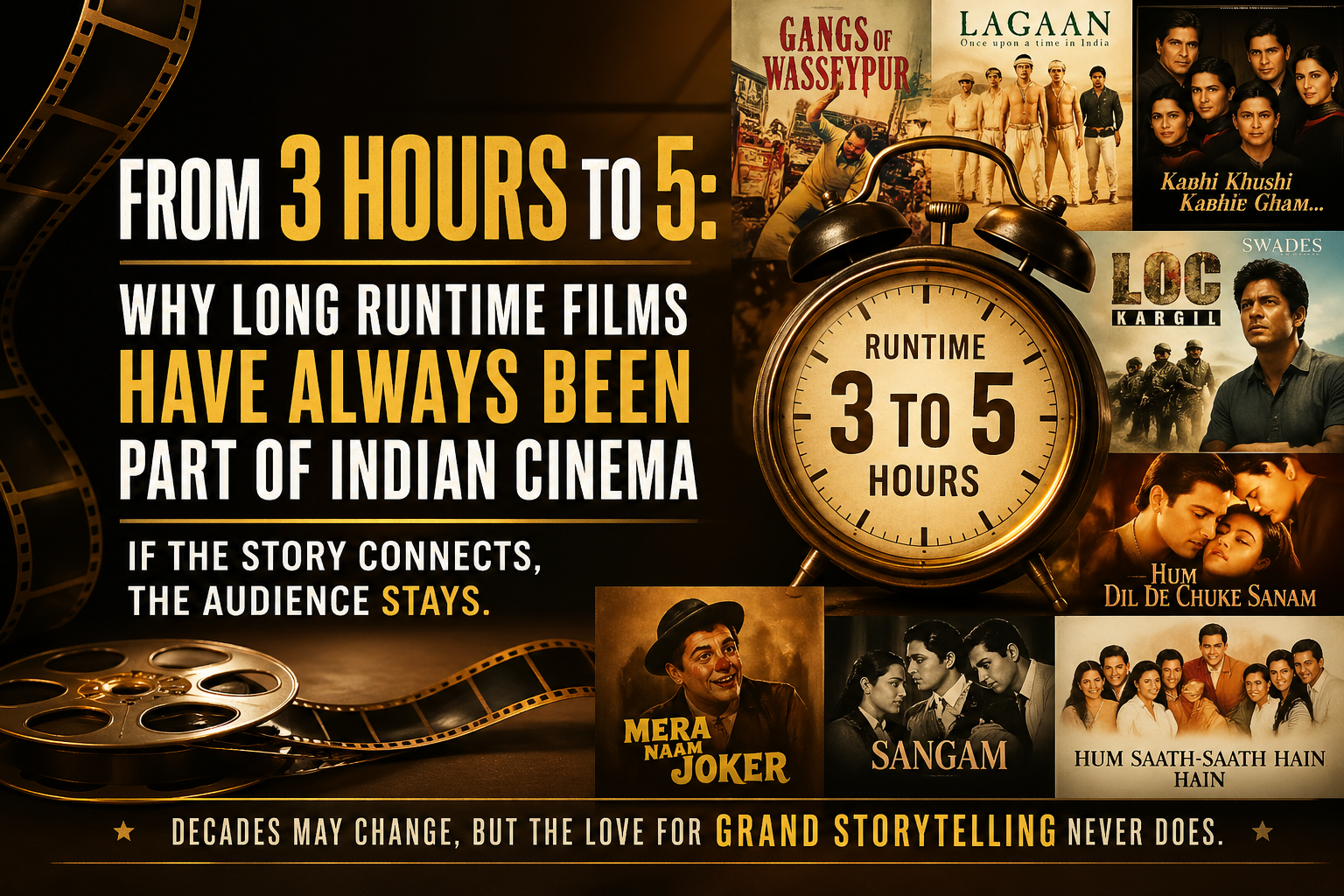
Indian cinema has never really followed the idea of “short and quick” storytelling. For decades, films here have been about the full experience, songs, emotions, drama and everything in between. So when Dhurandhar: The Revenge is making headlines for its runtime of almost 3 hours and 52 minutes, it’s not something new. It’s actually a continuation of a long-standing trend.
There was a time, especially in the 60s, 70s and even the 90s, when a three-hour film was considered normal. Filmmakers believed that longer runtimes gave stories the space to unfold properly. Characters had time to grow, and emotions stayed with the audience.
If we look back, one of the longest films ever made is Gangs of Wasseypur, which in its combined form runs for over 5 hours. Then comes LOC Kargil, a war drama that runs for more than 4 hours. Despite its scale and cast, the length affected its box office performance.
Mera Naam Joker, starring Raj Kapoor, also crossed the 4-hour mark. It didn’t work at the time of release but later gained a cult following. Similarly, Sangam was close to 4 hours and was such a long watch that theatres had to introduce two intervals.
Family dramas also followed this trend. Hum Saath-Saath Hain had an extended version close to 4 hours and became a big success. Films like Lagaan and Kabhi Khushi Kabhie Gham crossed the 3.5-hour mark and still connected with audiences across the world.
Historical films like Jodhaa Akbar also followed the same pattern, giving time to detail and storytelling. Even films like Swades and Hum Dil De Chuke Sanam went beyond the 3-hour mark and did well.
The point is simple, long runtime has never been a problem in Indian cinema. If the story connects, the audience stays. And that’s exactly what films like Dhurandhar are continuing today.


Share this link via


Share this link via

Share this link via

Share this link via