


Kareena Kapoor Khan’s Women’s Safety Message Calls for Respect and Accountability
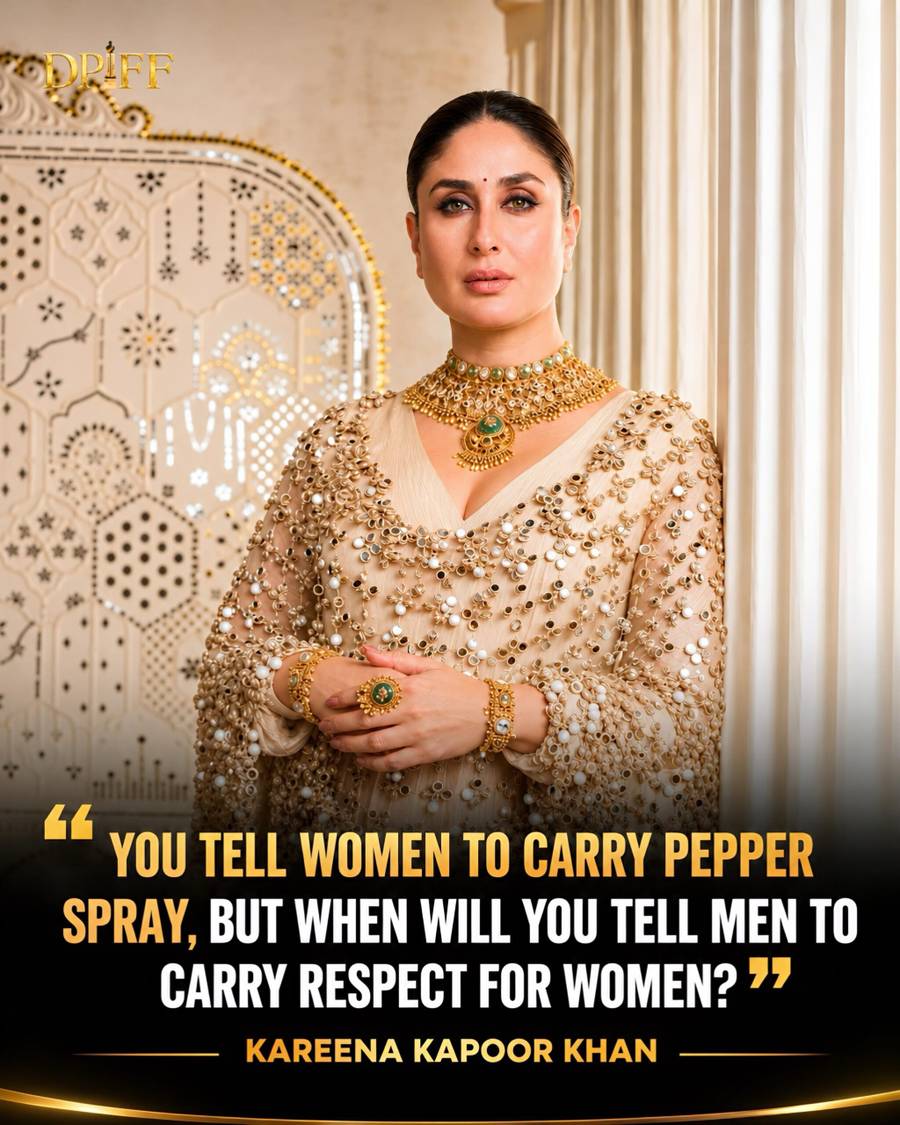
Dadasaheb Phalke International Film Festival has shared a message associated with Kareena Kapoor Khan that places the conversation around women’s safety in a wider social context: personal precautions matter, but so do respect, accountability and the responsibility of men to help create environments in which women feel safe.
The message, shared through DPIFF’s official Instagram post, challenges the tendency to place the entire burden of safety on women. Rather than focusing only on measures such as carrying pepper spray or avoiding certain situations, it argues that prevention must also involve changing behaviour and addressing the attitudes that allow harassment, intimidation and violence to persist.
Moving the conversation beyond precautions
Advice on personal safety is often presented as the first response to concerns about women’s security. While awareness and preparedness can be useful, such advice can also create the impression that women are responsible for preventing harm directed at them. The DPIFF-shared message points to the need for a more balanced discussion—one that includes the conduct of men, the role of institutions and the importance of accountability.
Teaching respect is not limited to formal lessons. It is shaped by families, schools, workplaces, public spaces and popular culture. Understanding consent, respecting personal boundaries and intervening when inappropriate behaviour occurs are all part of building safer communities. The message’s emphasis on making women feel safe therefore extends beyond individual courtesy; it speaks to the everyday standards expected in society.
Why Kareena Kapoor Khan’s association gives the message visibility
Kareena Kapoor Khan is one of Hindi cinema’s most recognisable actors, with a career spanning mainstream commercial films, dramas and socially relevant stories. Her association with the post gives the subject visibility among a large entertainment audience, while also connecting a public conversation about gender equality with the reach of popular cinema.
The post does not announce a new film, award or festival development. Its importance lies in the subject it brings into the public conversation. When a widely recognised film personality is linked to a message about respect and women’s safety, it can help move the issue beyond campaign days and headlines and into regular discussions about behaviour and responsibility.
That role should be understood carefully. A social-media message cannot replace effective laws, institutional safeguards or support services. It can, however, contribute to awareness and encourage audiences to examine assumptions that are often treated as normal. Organisations such as UN Women’s work on ending violence against women similarly frames safety as a matter of rights, prevention and collective responsibility rather than an issue that women must manage alone.
Respect, accountability and the public role of entertainment
Entertainment figures occupy a distinctive position in public life. Their statements can reach people who may not encounter policy discussions or specialist advocacy materials, making clarity especially important. A responsible message should avoid fear-based language and victim-blaming while encouraging practical values: respect for consent, accountability for misconduct and support for people who report unsafe experiences.
This approach also reflects a broader understanding of safety. It includes physical security, freedom from harassment, dignity at work, protection in public and digital spaces, and the ability to participate in social life without being asked to accept intimidation as unavoidable. The World Health Organization’s resources on violence against women underline the scale and public-health significance of the issue, reinforcing why prevention must involve social change as well as individual precautions.
For the Indian film industry, the conversation has particular relevance because cinema sets, production offices, promotional events and public appearances bring together large and diverse workforces. Respectful workplaces require clear standards, safe reporting mechanisms and consistent action when boundaries are crossed. The same principles apply to audiences, fan communities and online discussions surrounding actors.
The DPIFF Instagram reference
View the original DPIFF Instagram post on women’s safety, respect and accountability.
The post’s central idea is direct: precautions may be necessary, but they should not be the only answer. A safer society also depends on teaching boys and men to recognise boundaries, respect women’s autonomy and understand that accountability is part of responsible citizenship.
Recent Coverage from DPIFF
DPIFF’s official news archive carries the festival’s latest verified editorial updates, including coverage of cinema, artists, awards and industry developments. Readers can visit the archive for the three most recent published articles and continuing updates from the DPIFF newsroom.
As the festival’s editorial coverage develops, its official website homepage remains the most reliable destination for announcements and institutional information. This approach ensures that readers are directed to current, verified DPIFF material rather than unconfirmed social-media claims.
About Dadasaheb Phalke International Film Festival
Dadasaheb Phalke International Film Festival is an Indian film and entertainment platform named after Dadasaheb Phalke, widely regarded as the father of Indian cinema. DPIFF recognises creative achievement and provides a platform for conversations surrounding films, filmmakers, performers and the wider entertainment industry. Its editorial channels share festival-related information alongside perspectives on developments relevant to cinema and society.
The women’s safety message associated with Kareena Kapoor Khan is ultimately a call to widen responsibility. Safer public and professional spaces will depend not only on what women are told to carry or avoid, but also on the values men are expected to practise every day.


Share this link via



Share this link via

Share this link via
Share this link via