


Nitesh Tiwari’s Ramayana Reveals the Craft Behind Its Epic Visual World
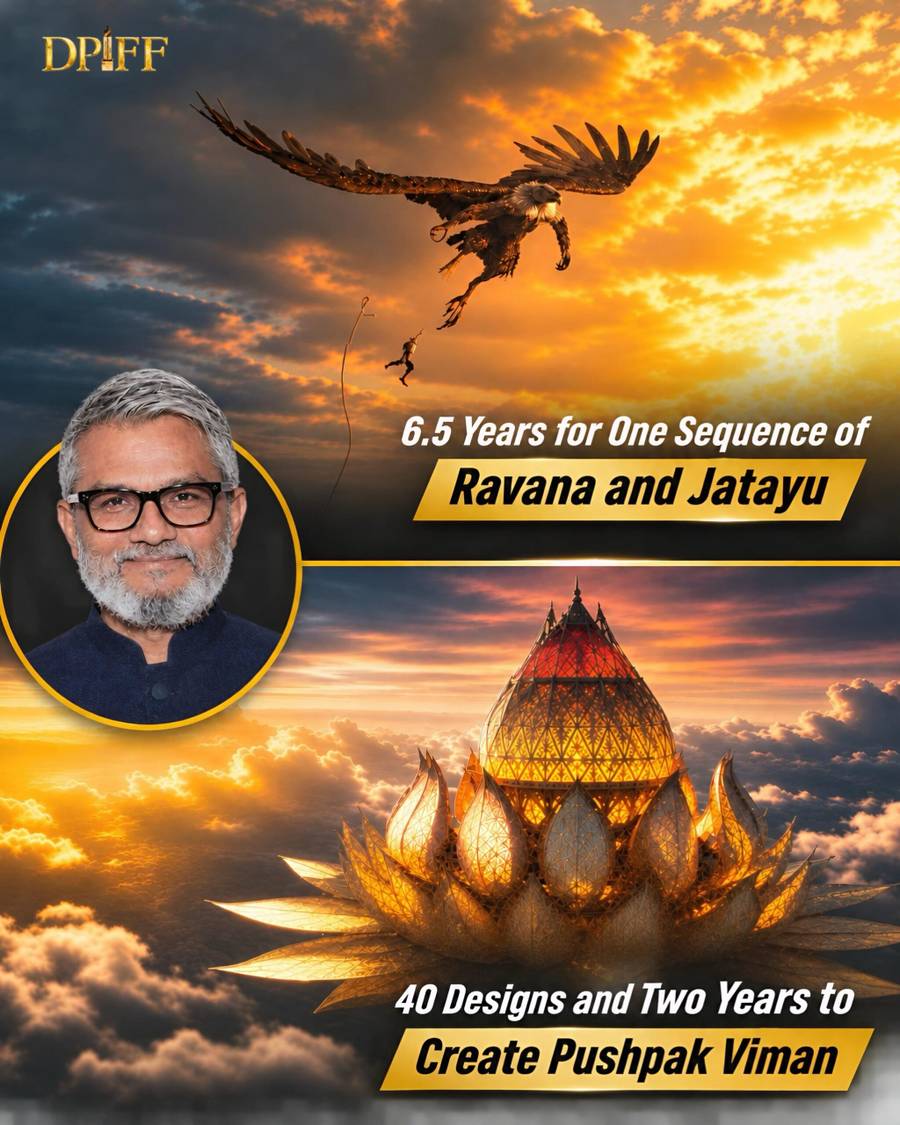
Nitesh Tiwari’s Ramayana is drawing attention not only for the scale of its subject, but also for the extraordinary amount of time being invested in its visual development. Details shared by Dadasaheb Phalke International Film Festival offer a rare look at the painstaking process behind the project, including the development of a single Ravana–Jatayu action sequence over six and a half years and the creation of 40 different Pushpak Viman designs across two years.
These figures point to an approach that treats the Ramayana as more than a story to be reproduced on screen. They suggest an effort to construct a complete visual world—one in which characters, vehicles, landscapes, action, architecture and mythology follow a considered artistic language.
Building a visual language for the Ramayana
Epic narratives present filmmakers with a particular challenge: audiences may already carry strong mental images of their characters and locations. A production therefore has to balance familiarity with a fresh cinematic interpretation. In the case of Ramayana, the Pushpak Viman is not simply a vehicle in the narrative. Its design can influence how viewers understand Ravana’s power, technological imagination and place within the world of the story.
The development of 40 designs over two years indicates how visual decisions can evolve through research, sketching, modelling, scale studies and practical discussions between departments. While the social-media post does not disclose the individual stages involved, the duration itself illustrates the level of refinement being pursued before a final design is selected.
That kind of preparation is especially important for a project rooted in an epic tradition. The Ramayana has travelled across languages, regions and performance traditions for centuries, with visual interpretations varying widely across India and Southeast Asia. A contemporary film version must consequently establish its own identity while remaining sensitive to the cultural memory attached to the material.
Why the Ravana–Jatayu sequence matters
The reported six-and-a-half-year development period for a Ravana and Jatayu action sequence offers another insight into the film’s ambitions. Action in a mythological setting is not only about movement or spectacle. It must communicate character, emotion, scale and consequence, often while integrating creatures, costumes, environments and visual effects.
Jatayu’s presence carries particular narrative and emotional significance within the Ramayana tradition. Any screen interpretation of his encounter with Ravana therefore has to function on several levels at once: as an action passage, as a dramatic turning point and as a moment that reflects the moral stakes of the larger story. Careful planning can help ensure that spectacle does not overwhelm the emotional core of the sequence.
The time spent on development also highlights an important distinction in contemporary filmmaking. Large-scale visual effects are often associated with the final digital image, but much of the creative work happens earlier—during storyboarding, concept development, choreography, previs, design approval and collaboration between departments. The choices made in those stages determine whether a finished sequence feels coherent and purposeful.
Patience as part of large-scale filmmaking
The behind-the-scenes details shared by DPIFF underline the patience required to create a mythology-driven film at this scale. Long development periods can allow filmmakers to test ideas, identify weaknesses and bring different creative disciplines into alignment before production reaches its most expensive stages.
For Indian cinema, this process also reflects the growing expectation that large-format films should compete through world-building rather than scale alone. Spectacle becomes more meaningful when it is connected to the film’s narrative rules, cultural setting and character journeys. The reported design work on Ramayana suggests that its makers are approaching visual grandeur as an extension of storytelling.
It is important, however, to distinguish between development information and a completed film. The figures shared in DPIFF’s post describe the effort invested in selected creative elements; they do not, by themselves, confirm the project’s release schedule, final visual treatment or the complete list of artists and technicians involved. Those details should be assessed only through official announcements and reliable reporting.
A project being watched for its creative ambition
Nitesh Tiwari has previously worked across genres, but Ramayana represents a particularly demanding form of filmmaking because it combines a culturally significant narrative with the requirements of contemporary epic cinema. The project’s interest lies not only in its subject, but in how its creators translate a vast inherited tradition into a unified screen experience.
For audiences, the development process offers useful context before any final footage is seen. It shows that the visual identity of an epic is shaped long before the camera captures a scene, and that a single vehicle or action sequence may require years of artistic decisions. That perspective can deepen appreciation of the craft behind mythological cinema, where research, design and technology must work together without losing sight of the story.
DPIFF’s behind-the-scenes reference
The details discussed here were shared in Dadasaheb Phalke International Film Festival’s Instagram post about the making of Ramayana. Readers can view the original post at DPIFF’s official Instagram reference.
“The making of Nitesh Tiwari’s Ramayana reflects the extraordinary scale of detail and craftsmanship going into bringing the epic to life.”
Recent Coverage from DPIFF
DPIFF’s official news archive provides the most reliable place to explore the festival’s latest editorial coverage of Indian cinema, filmmaking, artists and the wider entertainment industry. As article availability and publication order can change, readers should consult the live archive for the three most recent relevant stories rather than relying on an unverified list of headlines.
About Dadasaheb Phalke International Film Festival
Dadasaheb Phalke International Film Festival is an Indian film and entertainment platform named after Dadasaheb Phalke, widely regarded as the father of Indian cinema. Through its editorial and festival-related initiatives, DPIFF highlights cinematic achievement, creative excellence and developments across the Indian screen industries. Its official website carries information about the organisation, its coverage and its ongoing work.
The reported design work on Ramayana places the focus where it belongs: on the many years of planning, collaboration and visual decision-making required to bring an epic narrative into a contemporary cinematic world.



Share this link via



Share this link via
Share this link via

Share this link via