


Mangal Rang and the Debate Over Musical Interpretation in the Ramayana
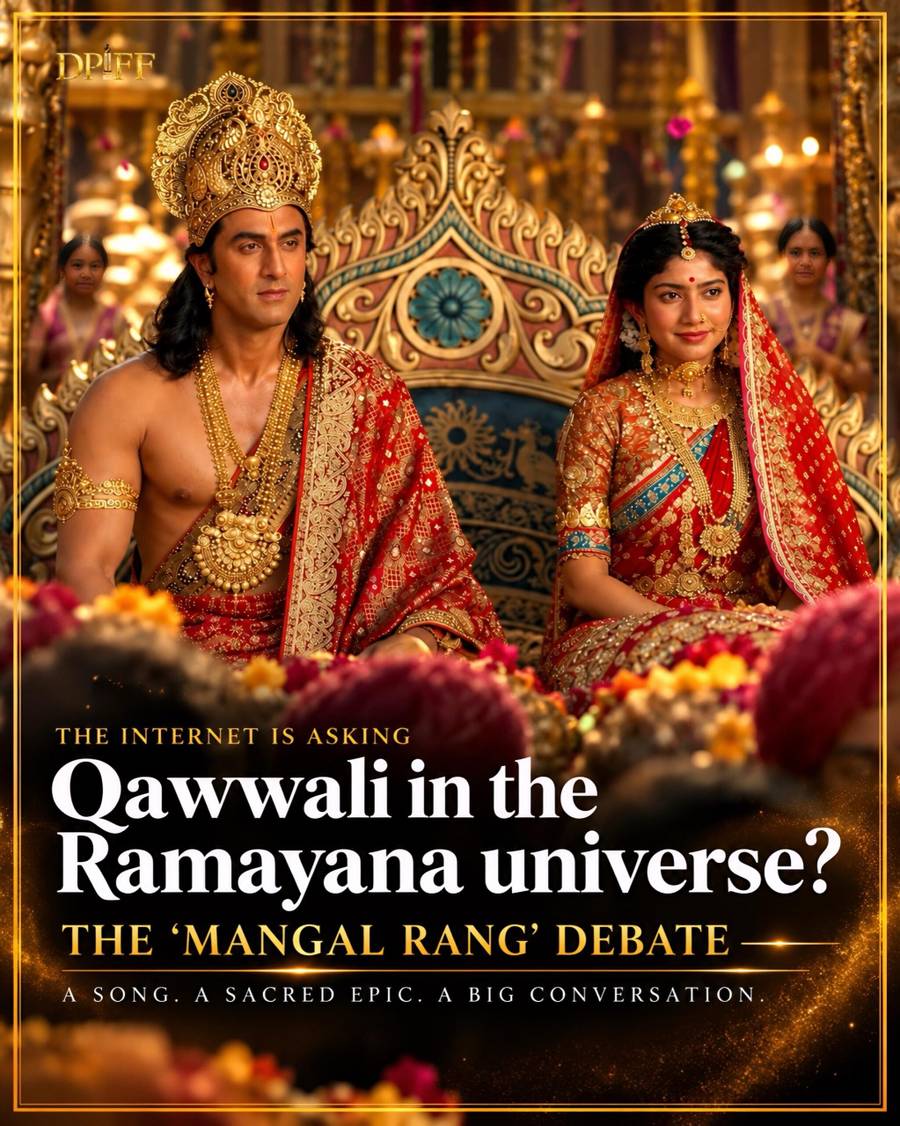
A. R. Rahman’s Mangal Rang, featuring the voices of Arijit Singh and Shreya Ghoshal, has opened a wider discussion about how sacred stories should sound on screen. Created around the union of Ram and Sita, the song has drawn appreciation for its composition, vocal performances and cinematic scale, while also prompting questions about its perceived Qawwali and Sufi influences.
The conversation, highlighted by DPIFF’s Instagram post, is not limited to one song. It touches on a recurring creative question in Indian cinema: when filmmakers interpret an epic with deep cultural and religious associations, should the music remain close to familiar traditional forms, or can a contemporary composition find new ways to express an established story?
What the discussion around Mangal Rang reveals
The response to Mangal Rang reflects two distinct ways of listening. Some audiences have responded to the song as an expansive film composition, focusing on Rahman’s arrangement and the contrast between Arijit Singh’s and Shreya Ghoshal’s voices. Others have heard echoes of musical traditions and cinematic references they already associate with Rahman’s work, including comparisons with Kun Faya Kun.
Those comparisons are part of a broader challenge faced by composers working with culturally significant material. Audiences often carry a strong sonic memory of the Ramayana, shaped by devotional music, classical performance, television adaptations, theatre and earlier film interpretations. A new song therefore arrives with expectations that go beyond melody and lyrics; listeners also assess whether its musical language feels appropriate to the emotional and spiritual world of the story.
Tradition, genre and artistic freedom
The Ramayana is not associated with one single musical vocabulary. Its many regional and performance traditions have produced different approaches to rhythm, language, instrumentation and devotional expression. The epic’s presence across South and Southeast Asia has also resulted in varied cultural interpretations, a point documented in the Encyclopaedia Britannica overview of the Ramayana.
That history makes the debate around Mangal Rang more complex than a simple question of whether a song sounds traditional. A composition can draw from established devotional practices while also using orchestration, vocal treatment and recording techniques associated with contemporary cinema. The important question is not only which tradition is being used, but how consciously and sensitively it is being used in relation to the story.
At the same time, concerns about musical identity should not be dismissed as resistance to experimentation. When a creative work engages with a sacred narrative, listeners may reasonably ask whether its musical choices deepen the scene, clarify the emotional context and respect the cultural associations carried by the characters of Ram and Sita.
Why A. R. Rahman’s involvement matters
Rahman’s name brings particular weight to this conversation because his work has long moved between devotional, classical, folk, electronic and global musical influences. His compositions are often recognised for placing contrasting textures alongside one another rather than treating genre as a fixed boundary. The composer’s official website reflects the breadth of his work across film, live performance and other musical formats.
That creative identity also shapes how audiences hear a new Rahman composition. Listeners may welcome a familiar sensitivity to atmosphere and vocal interplay, while others may expect a musical setting for the Ramayana to sound more explicitly rooted in the traditions they associate with the epic. Both responses are connected to the same fact: music in a large-scale mythological story is not decorative. It helps define the emotional and cultural frame through which the audience encounters the narrative.
What listeners are really debating
The disagreement over Mangal Rang is ultimately about interpretation rather than a single correct formula. Traditional musical forms can provide recognition, continuity and devotional resonance. A new approach can offer a different emotional entry point, especially for audiences encountering the story through contemporary cinema.
There is also a difference between influence and imitation. A composition may share characteristics with a broader musical tradition without reproducing an earlier song. For listeners, however, the experience of recognition can still affect how original, suitable or emotionally convincing the work feels. That is why comparisons with Kun Faya Kun have become part of the public discussion, even though the larger issue concerns the vocabulary chosen for a different sacred narrative.
DPIFF’s post does not prescribe an answer. Instead, it places the artistic question before audiences: can a modern musical interpretation honour the Ramayana while challenging expectations, or should a story of such significance remain closer to its traditional sound? The value of the debate lies in taking both artistic freedom and cultural responsibility seriously.
DPIFF’s original Instagram reference
The discussion was initiated through DPIFF’s carousel post on Mangal Rang, which invited audiences to consider the balance between tradition and experimentation in the musical treatment of the Ramayana. Readers can view the original post on DPIFF’s official Instagram account.
Recent Coverage from DPIFF
DPIFF’s News section carries the festival’s latest verified editorial coverage across cinema, music, filmmakers, performers and industry developments. Readers should consult the live section for the most recent published articles and updates, as its listings change with new releases.
About Dadasaheb Phalke International Film Festival
Dadasaheb Phalke International Film Festival is a film-festival platform dedicated to recognising and engaging with Indian cinema and the wider screen arts. Through its awards, editorial work and public conversations, DPIFF brings attention to creative achievement across films, performances, music and filmmaking. Its coverage also encourages informed discussion about the cultural and artistic choices that shape cinema.
Mangal Rang has therefore become more than a song for its listeners. It is also an example of how musical choices can reopen long-running conversations about representation, reverence and innovation in Indian screen storytelling.



Share this link via


Share this link via
Share this link via

Share this link via