


Zingaat Hindi vs Marathi: How the Song Became a Cultural Phenomenon
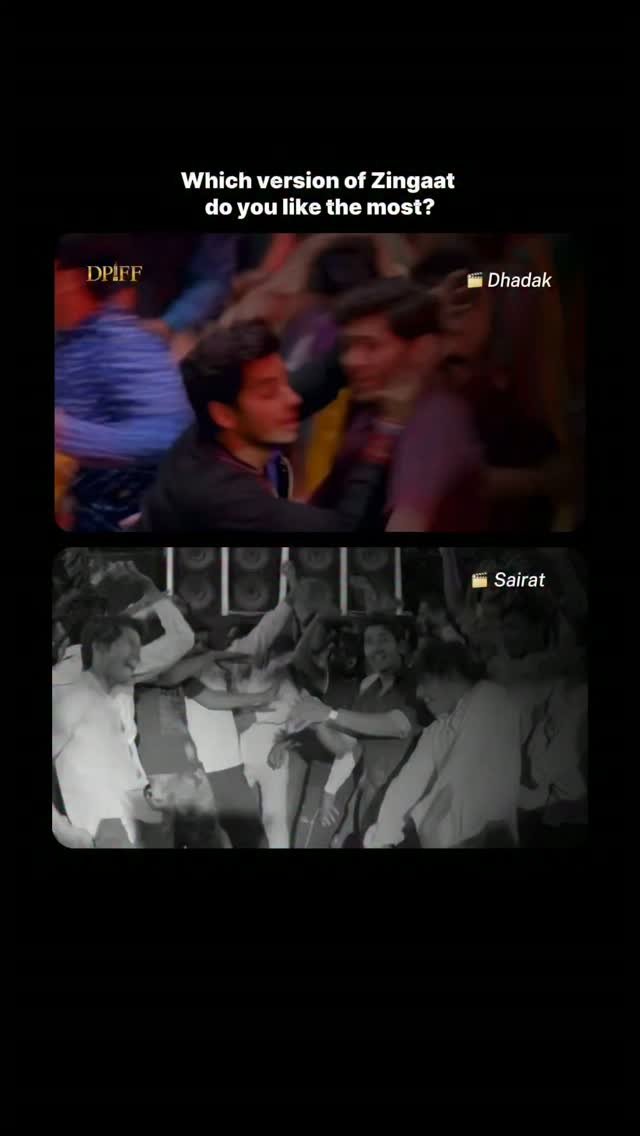
Dadasaheb Phalke International Film Festival has placed the spotlight on one of contemporary Indian cinema’s most recognisable dance anthems: “Zingaat”. Through a new Instagram reel, DPIFF asks audiences to compare the original Marathi version from Sairat with its Hindi adaptation in Dhadak—two versions built around the same exuberant energy but shaped by different films, languages and cultural contexts.
The post does not frame the comparison as a contest with a definitive winner. Instead, it reflects why “Zingaat” continues to connect with audiences across linguistic boundaries. Viewers are invited to choose the version that makes them want to dance most, bringing the conversation back to the song’s central appeal: its uninhibited rhythm, celebratory mood and instantly recognisable hook.
From Sairat’s Marathi original to Dhadak’s Hindi adaptation
The original “Zingaat” appeared in Sairat, Nagraj Manjule’s 2016 Marathi romantic drama starring Rinku Rajguru and Akash Thosar. The film’s music was composed by Ajay-Atul, whose work combined folk-rooted textures with a large-scale cinematic sound. “Zingaat” became the most visible expression of that musical approach, turning a celebratory sequence into one of the film’s defining cultural moments.
Two years later, the song was recreated for Dhadak, the Hindi adaptation directed by Shashank Khaitan and led by Janhvi Kapoor and Ishaan Khatter. Ajay-Atul returned as composers, while the Hindi lyrics were written by Amitabh Bhattacharya. The adaptation retained the song’s title, core composition and high-energy structure while introducing it to a new Hindi-speaking audience.
Why the two versions feel different
Language is the most obvious difference, but it is not the only one. The Marathi “Zingaat” is closely tied to the world of Sairat and the film’s regional setting. Its impact comes from the way the song captures a communal celebration, with movement, music and emotion blending into a single burst of youthful excitement.
The Hindi version performs a similar function in Dhadak, but its surrounding cinematic context is different. Even when the melody and arrangement remain familiar, changes in lyrics, vocal delivery, choreography and performance can alter how audiences experience the song. This is why comparisons between the two versions often become discussions about more than language: they also involve memory, character chemistry and each film’s individual identity.
Both versions demonstrate the influence of Ajay-Atul’s composition. The duo’s music frequently draws on percussive momentum and folk-inspired colour while remaining accessible to a mainstream film audience. In “Zingaat”, that balance helped the song move beyond the films themselves and become a popular choice for celebrations, stage performances and social-media dance videos.
A notable example of Marathi cinema crossing into the mainstream
The journey from Sairat to Dhadak also reflects the growing circulation of stories and musical ideas between regional cinema and Hindi film. A successful regional film can inspire an official adaptation, but recreating its music presents a particular challenge: the new version must remain recognisable while establishing its own relationship with viewers.
“Zingaat” is an especially interesting example because its appeal is driven by performance as much as by melody. The song’s repeated hook and energetic beat make it immediately participatory. Audiences do not need to know every lyric to respond to its rhythm, allowing both versions to function as independent dance tracks while remaining connected to the films that introduced them.
That connection is also why the Hindi-versus-Marathi question remains engaging. For some listeners, the Marathi original carries the freshness and emotional association of Sairat. For others, the Hindi adaptation may be more familiar or may evoke Dhadak and its performances. The choice is ultimately personal, but the comparison highlights how music can retain its core identity while acquiring new meaning in another language.
DPIFF’s Instagram reference
The discussion originates from DPIFF’s Instagram reel, which invites followers to choose between the Hindi and Marathi versions of “Zingaat”. Readers can view the original post and participate in the conversation through the DPIFF Instagram reel.
Recent Coverage from DPIFF
DPIFF’s newsroom continues to publish editorial updates on Indian cinema, artists, festivals and major developments across the entertainment industry. Readers can browse the latest DPIFF coverage for the most recent verified articles and festival-related stories. As the available post focuses on a social conversation around “Zingaat” rather than a new film announcement, the news archive provides the appropriate source for current editorial continuity without attributing unrelated reports to this Instagram post.
About Dadasaheb Phalke International Film Festival
Dadasaheb Phalke International Film Festival is a film-focused platform named after Dadasaheb Phalke, widely regarded as the father of Indian cinema. DPIFF recognises and celebrates achievements across Indian and international filmmaking while creating space for conversations around films, performances, music and cinematic culture. Its editorial channels cover cinema-related developments for audiences and industry observers.
Whether listeners prefer the Marathi original or the Hindi adaptation, “Zingaat” remains a compelling example of how a film song can travel across languages without losing its ability to create a collective response. The lasting debate is less about replacing one version with another and more about the different memories each version creates.



Share this link via


Share this link via

Share this link via

Share this link via