How Willem Dafoe’s Green Goblin Laugh Intensified Spider-Man: No Way Home
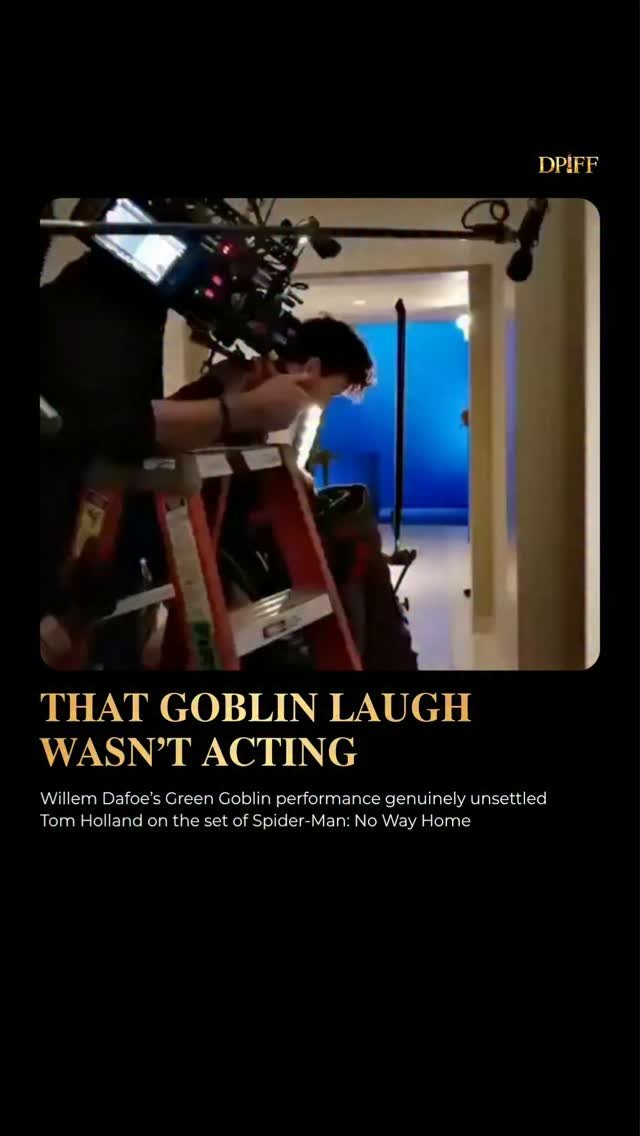
A sudden burst of Willem Dafoe’s Green Goblin laugh reportedly changed the atmosphere on the set of Spider-Man: No Way Home during one of the film’s most physically intense sequences. The moment came while Dafoe’s Norman Osborn was fighting Tom Holland’s Peter Parker in the apartment battle, a confrontation that became a major turning point in the Marvel film.
DPIFF’s Instagram post revisits the behind-the-scenes incident, describing how Dafoe unexpectedly unleashed the Goblin’s chilling cackle while Holland’s character was attacking him against a wall. The reaction from the set, as recounted in the post, underlined how effectively Dafoe had made the villain’s voice and laugh part of the character’s psychological presence.
A laugh that became part of the Green Goblin’s identity
Dafoe first played Norman Osborn and his alter ego in Sam Raimi’s Spider-Man (2002). In that film, the Green Goblin’s distinctive laugh, aggressive physicality and fractured personality helped establish him as one of Spider-Man’s most memorable screen antagonists.
When Dafoe returned for Spider-Man: No Way Home, the performance had to serve two purposes. It needed to acknowledge the character audiences remembered from the earlier film while fitting into a new story involving villains and heroes from across different Spider-Man universes. The laugh became an immediate reminder of the Goblin’s unstable and threatening persona.
The apartment fight in Spider-Man: No Way Home
The apartment confrontation is among the film’s most emotionally charged action scenes. Norman Osborn’s internal struggle gives way to the Green Goblin’s violence, placing Peter Parker in a fight that is personal as well as physical. Unlike a conventional superhero battle, the sequence is driven by anger, fear and the sense that Peter has lost control of the situation.
The scene also carries narrative weight because it follows Norman’s apparent return to normality. His transformation into the Goblin makes the fight more disturbing: Peter is not simply facing an external enemy, but a dangerous personality concealed within a familiar face.
The DPIFF post further notes that Dafoe and Holland performed significant portions of the physical exchange themselves. Action scenes of this scale still depend on stunt performers, coordinators, safety teams and visual-effects work, but the actors’ involvement can give close-quarters combat greater immediacy. Small changes in rhythm, expression and physical reaction often make a fight feel less mechanical and more character-driven.
Why Willem Dafoe’s return mattered to the film
Released in 2021 and directed by Jon Watts, Spider-Man: No Way Home brought together characters associated with earlier Spider-Man films and the Marvel Cinematic Universe. Dafoe’s return was especially significant because the Green Goblin was not treated only as a nostalgic appearance. The character remained a genuine threat to Holland’s Peter Parker.
That decision allowed the film to connect its multiverse premise with the emotional history of Spider-Man on screen. Norman Osborn represented one of the earliest major live-action villains in the modern franchise, while Holland’s Peter was still confronting the consequences of his own choices and responsibilities.
Dafoe’s performance benefited from the contrast between Norman’s vulnerable, seemingly reasonable manner and the Goblin’s cruel, unpredictable energy. The reported laugh during the fight captures that contrast in a single performance detail. It is not merely a vocal effect; it signals the return of a personality that Peter cannot reason with in the same way.
Why practical performance details still matter
Large-scale superhero productions are built through a combination of choreography, practical staging, digital effects and post-production sound. Yet the final impact of a scene often depends on details that are created in the moment: a pause before an attack, an actor’s physical commitment or an unexpected vocal choice.
In this case, the Goblin’s laugh reportedly unsettled Holland during the take. That kind of response can strengthen a scene because the fear seen on screen feels connected to the performers’ immediate interaction. It also demonstrates why audiences continue to value behind-the-scenes accounts: they reveal how an apparently fixed cinematic moment can emerge from collaboration and instinct.
DPIFF Instagram reference
DPIFF’s original video post about the scene can be viewed on Instagram. The post is the reference for the reported on-set anecdote about Dafoe’s laugh and the actors’ participation in the physical sequence.
Recent Coverage from DPIFF
Readers can explore the latest verified editorial work from the Dadasaheb Phalke International Film Festival through the DPIFF News archive. As the archive is updated regularly, the most recent articles and their publication details are available directly on the official page.
About Dadasaheb Phalke International Film Festival
Dadasaheb Phalke International Film Festival is an Indian film festival named after Dadasaheb Phalke, widely regarded as the father of Indian cinema. DPIFF recognises creative contributions across film and entertainment while providing a platform for conversations around cinema, artists and the wider screen industry. Through its official website and social channels, the festival also shares film-related editorial features and cultural moments with audiences.
The reported Green Goblin laugh is a small behind-the-scenes detail, but it helps explain the lasting force of the apartment fight in Spider-Man: No Way Home. Dafoe’s voice, Holland’s physical reaction and the scene’s tightly staged aggression combined to make the encounter feel as threatening as the character’s reputation demanded.



Share this link via



Share this link via

Share this link via