


The Mummy Franchise: How the Adventure Saga Has Evolved
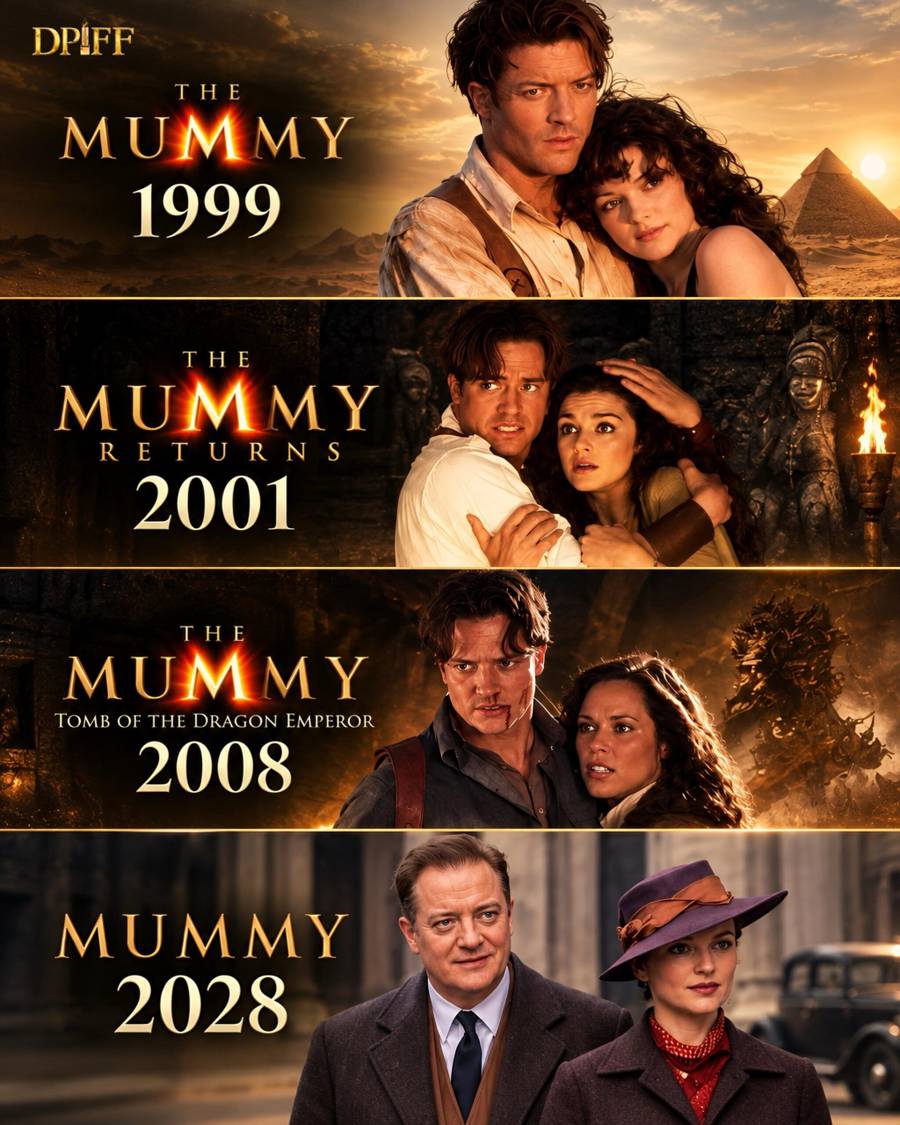
The The Mummy franchise has remained one of modern adventure cinema’s most recognisable blends of ancient mythology, supernatural suspense and large-scale action. Beginning with Stephen Sommers’ 1999 film, the series transformed the idea of an Egyptian curse into a fast-moving blockbuster built around archaeological discovery, romance, humour and high-stakes spectacle.
A recent DPIFF Instagram post revisits the franchise across its major chapters and points towards a 2028 entry associated with the Mummy title. The post does not provide confirmed production details about that future reference, but its timeline captures the enduring appeal of a property that has repeatedly returned to the same cinematic fascination: what happens when the secrets of the ancient world are disturbed?
How the 1999 film established The Mummy’s identity
Released in 1999, The Mummy starred Brendan Fraser as adventurer Rick O’Connell, Rachel Weisz as aspiring Egyptologist Evelyn Carnahan and Arnold Vosloo as the resurrected Imhotep. Rather than presenting itself as a strict historical drama, the film used ancient Egyptian imagery as the foundation for a crowd-pleasing fantasy adventure.
Its success came from the way it balanced apparently opposing tones. The film had tombs, hieroglyphics and supernatural mythology, but it also moved with the rhythm of a classic action serial, combining comic timing, romance, chase sequences and visual effects. That mixture gave the film a distinctive personality and helped make Fraser’s performance as Rick O’Connell central to the franchise’s identity.
Universal’s official film page for The Mummy reflects the film’s continuing place in the studio’s adventure catalogue, while the IMDb listing for the 1999 film provides additional credits and production information for audiences revisiting the original.
The Mummy Returns expanded the mythology
The first sequel, The Mummy Returns, arrived in 2001 with Fraser, Weisz and John Hannah returning to their roles. Directed again by Stephen Sommers, it widened the story beyond a single resurrection plot and increased the scale of the mythology surrounding Rick and Evelyn.
The sequel also introduced audiences to the Scorpion King, a character whose popularity later led to a separate spin-off. More importantly, it demonstrated how the franchise could preserve its central ingredients while enlarging its world. Ancient prophecy, family stakes and supernatural threats were placed alongside the action-adventure format that had defined the first film.
The 2001 film is significant because it confirmed that The Mummy was not simply a one-film success. It had developed into a recognisable franchise language: lost civilisations, forbidden knowledge, resurrected forces and heroes who rely as much on courage and improvisation as on conventional power.
A new setting in The Mummy: Tomb of the Dragon Emperor
Released in 2008, The Mummy: Tomb of the Dragon Emperor moved the action away from Egypt and into a mythology rooted in ancient China. Rob Cohen directed the film, with Brendan Fraser returning as Rick O’Connell and Jet Li appearing as the Dragon Emperor.
The change in setting gave the third instalment an opportunity to explore a different visual and mythological environment. Its terracotta warriors, imperial history and supernatural conflict showed that the core concept of The Mummy could travel beyond one civilisation. At the same time, the shift also marked a change in the franchise’s supporting cast and overall atmosphere.
That evolution is part of the series’ larger history. Each chapter approaches the ancient world differently, but all of them use the past as an active force rather than a static backdrop. Tombs and relics are not merely objects of study; they are gateways to stories that continue to shape the present.
Why The Mummy continues to connect with audiences
The lasting appeal of The Mummy comes from its accessibility. The films invite viewers into a world of archaeological mystery without requiring the story to remain bound by realism. Ancient languages, curses and legends become tools for cinematic adventure, while the human relationships give the spectacle an emotional centre.
The franchise also belongs to a long tradition of screen stories inspired by mummies, Egypt and the supernatural. Earlier films, including Universal’s 1932 The Mummy, helped establish the character as a horror icon. The 1999 production reinterpreted that tradition for a new generation by placing the mythology inside a more expansive action-adventure framework. The Encyclopaedia Britannica overview of mummification and ancient Egyptian belief offers useful historical context for the cultural ideas that have influenced many such films, even though the franchise itself is a work of fantasy.
That distinction matters. The Mummy films are not historical accounts of ancient Egypt or China. They are stylised entertainment that draws on real visual and cultural references while creating fictional curses, characters and supernatural rules. Their strength lies in the imaginative collision between historical atmosphere and blockbuster storytelling.
What the 2028 reference represents
The 2028 marker featured in DPIFF’s timeline signals interest in the next phase associated with the Mummy title, but the Instagram post does not announce a confirmed cast, director, plot or release schedule. Those details should therefore not be treated as established production information.
What can be said with confidence is that the franchise remains culturally recognisable more than two decades after the 1999 film. Its continued presence in film conversations reflects the strength of its central formula: ancient secrets, supernatural danger, charismatic adventurers and the promise of a journey into the unknown.
DPIFF’s Instagram reference
DPIFF’s original visual timeline, “From Ancient Egypt to a New Era: The Mummy Saga Through the Years”, places the franchise’s major modern entries in conversation with one another. It also invites audiences to consider which chapter best represents the series’ combination of mythology, action and nostalgia.
Recent Coverage from DPIFF
DPIFF’s official News section carries the festival’s latest editorial coverage across cinema, artists, film milestones and entertainment developments. As article titles and publication order can change in the live archive, readers should use the current News page to access the three most recently published stories rather than relying on a static list that may become outdated.
The archive provides a useful continuation of the themes explored here: how films build cultural memory, how celebrated performers and filmmakers shape audience conversations, and how major screen stories remain relevant beyond their original release period.
About Dadasaheb Phalke International Film Festival
Dadasaheb Phalke International Film Festival is a platform dedicated to recognising and celebrating cinematic achievement. Named after Dadasaheb Phalke, widely regarded as the father of Indian cinema, DPIFF connects film appreciation with discussions around artists, storytelling and the wider screen industry. Its editorial work covers Indian and international cinema, film personalities, festivals and significant developments in entertainment.
Across its different eras and settings, The Mummy endures because it treats the past as an invitation to adventure. For many viewers, the franchise remains less a single storyline than a memorable cinematic mood: desert horizons, hidden chambers, impossible legends and the excitement of discovering what lies beyond the next door.


Share this link via


Share this link via
Share this link via

Share this link via