South Indian Cinema’s Biggest Firsts: The Films That Changed the Industry
South Indian cinema has grown over the years with films that have introduced new technology, new storytelling styles and records at the box office. Today, Tamil, Telugu, Malayalam and Kannada films are watched across India and in many parts of the world. But before reaching this stage, the industry crossed several important milestones that helped shape its journey.
Here are some of the films that became the first of their kind in South Indian cinema.
Keechaka Vadham (1916) – South India’s First Silent Film
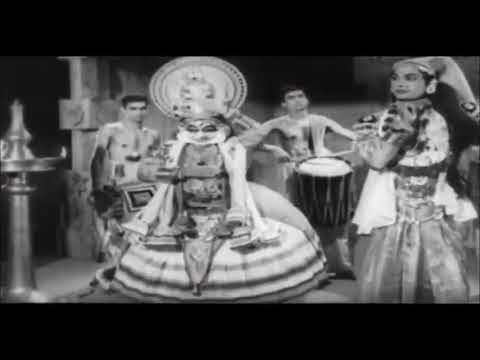
Directed by R. Nataraja Mudaliar, Keechaka Vadham is recognised as the first silent feature film made in South India. The story was based on an episode from the Mahabharata and marked the beginning of filmmaking in the region.
Bhishma Pratigna (1921) – First Telugu Silent Film
Directed by Raghupathi Venkaiah Naidu and R.S. Prakash, Bhishma Pratigna became the first silent film made by Telugu filmmakers. Venkaiah Naidu is still remembered as one of the people who helped build the Telugu film industry in its early years.
Vigathakumaran (1928) – First Malayalam Silent Film
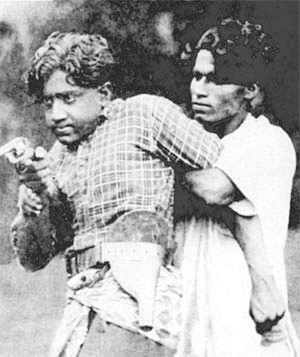
Vigathakumaran was written, directed and produced by J.C. Daniel. The film is considered the beginning of Malayalam cinema, and Daniel is remembered as the father of the industry.
Mricchakatika (1931) – First Kannada Silent Film
Mricchakatika became the first silent feature film made in Kannada before films with sound became common.
Kalidas (1931) – South India’s First Talkie

When sound entered Indian cinema, Kalidas became the first talking film produced in South India. The film featured both Tamil and Telugu dialogues and marked the beginning of the talkie era in the South.
Bhakta Prahlada (1932) – First Telugu Talkie
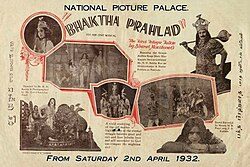
Directed by H.M. Reddy, Bhakta Prahlada became the first full-length Telugu film with sound. It remains an important film in Telugu cinema’s history.
Sati Sulochana (1934) – First Kannada Talkie
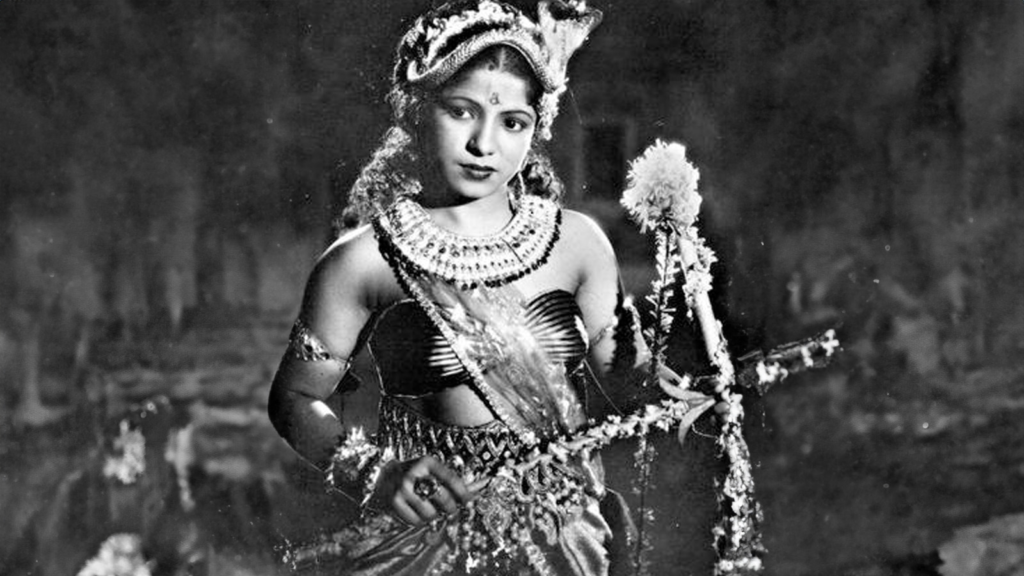
Sati Sulochana became Kannada cinema’s first talkie. It was also the first Kannada film to be screened in the Kingdom of Mysore.
Balan (1938) – First Malayalam Talkie
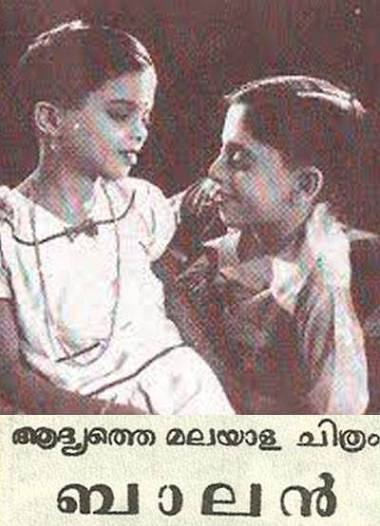
Directed by S. Nottani, Balan introduced spoken dialogues and songs to Malayalam cinema and became the industry’s first talkie.
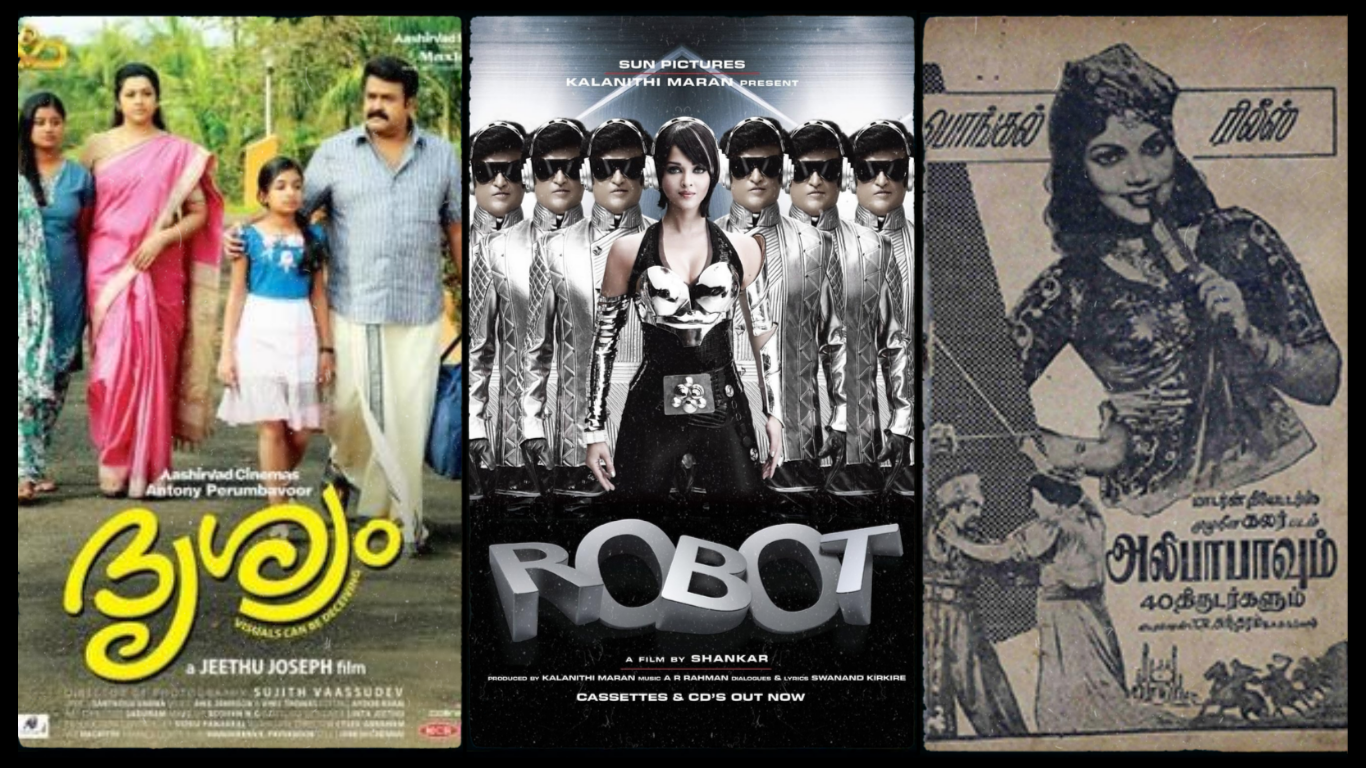
Alibabavum 40 Thirudargalum (1956) – First Full-Length Colour Film in South India
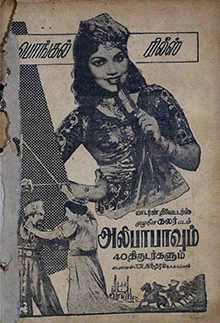
Starring M.G. Ramachandran and Bhanumathi Ramakrishna, the film became the first full-length South Indian feature to be shot entirely in colour using Gevacolor technology.
Robot (2010) – First South Indian Film to Cross Rs 200 Crore Worldwide
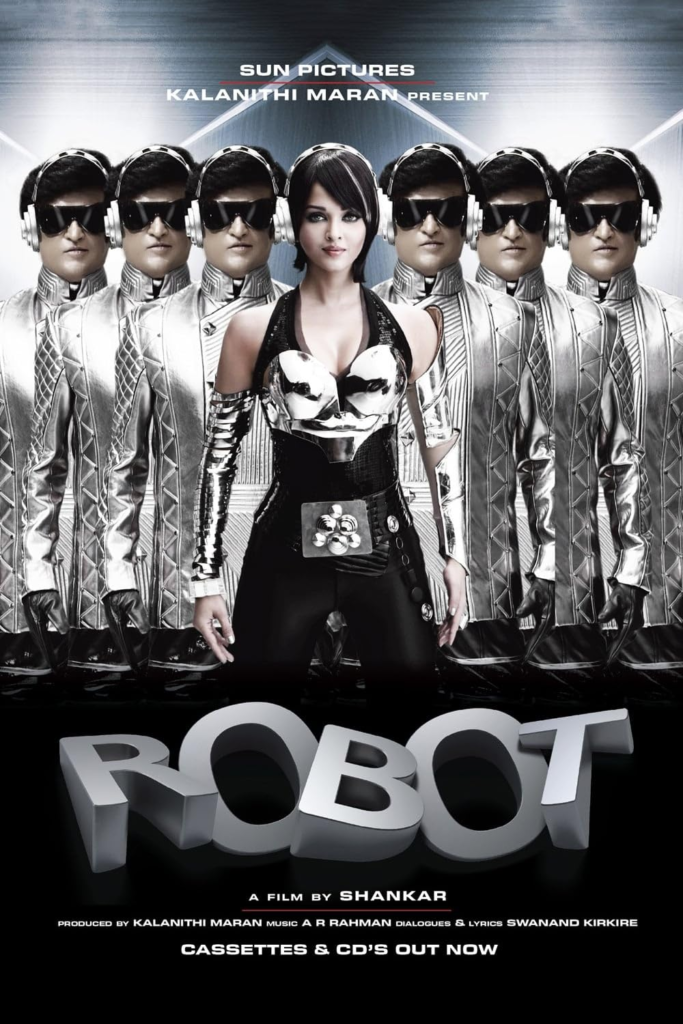
Directed by S. Shankar, Enthiran starred Rajinikanth and Aishwarya Rai Bachchan. The science-fiction film became the first South Indian film to earn more than Rs 200 crore worldwide and later crossed Rs 250 crore as well.
Baahubali: The Beginning (2015) – The Film That Took South Indian Cinema to a Bigger Market
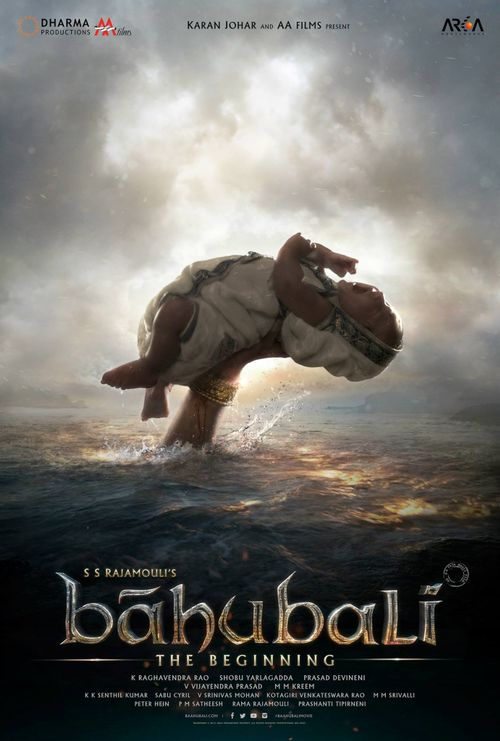
Directed by S.S. Rajamouli, Baahubali: The Beginning became the first South Indian film to cross Rs 300 crore and later Rs 650 crore worldwide. The film reached audiences across different languages and was one of the projects that helped popularise the pan-India release model.
RRR (2022) – First South Indian Film to Win an Oscar
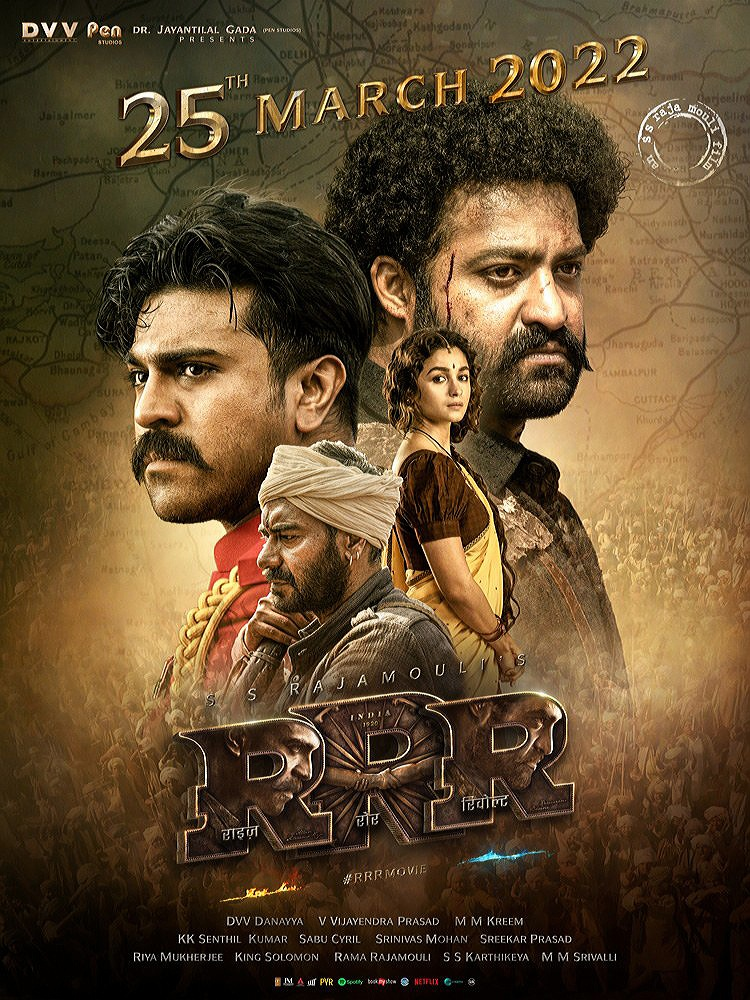
Directed by S.S. Rajamouli, RRR received global attention after “Naatu Naatu” won the Academy Award for Best Original Song. It became the first song from an Indian feature film to receive the award.
Drishyam (2013) – A South Indian Film That Travelled Across Countries
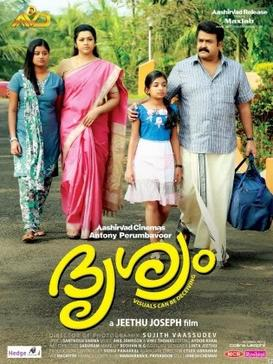
Directed by Jeethu Joseph, the Malayalam film Drishyam was remade in several Indian languages and later adapted internationally, including in South Korea. It remains one of the most adapted Indian films.
South Indian cinema has continued to grow with every generation. From silent films and the first talkies to colour cinema, box office records and international recognition, these films represent different stages in the journey of the industry. Many of them also influenced the way Indian cinema evolved over the years.


Share this link via



Share this link via

Share this link via