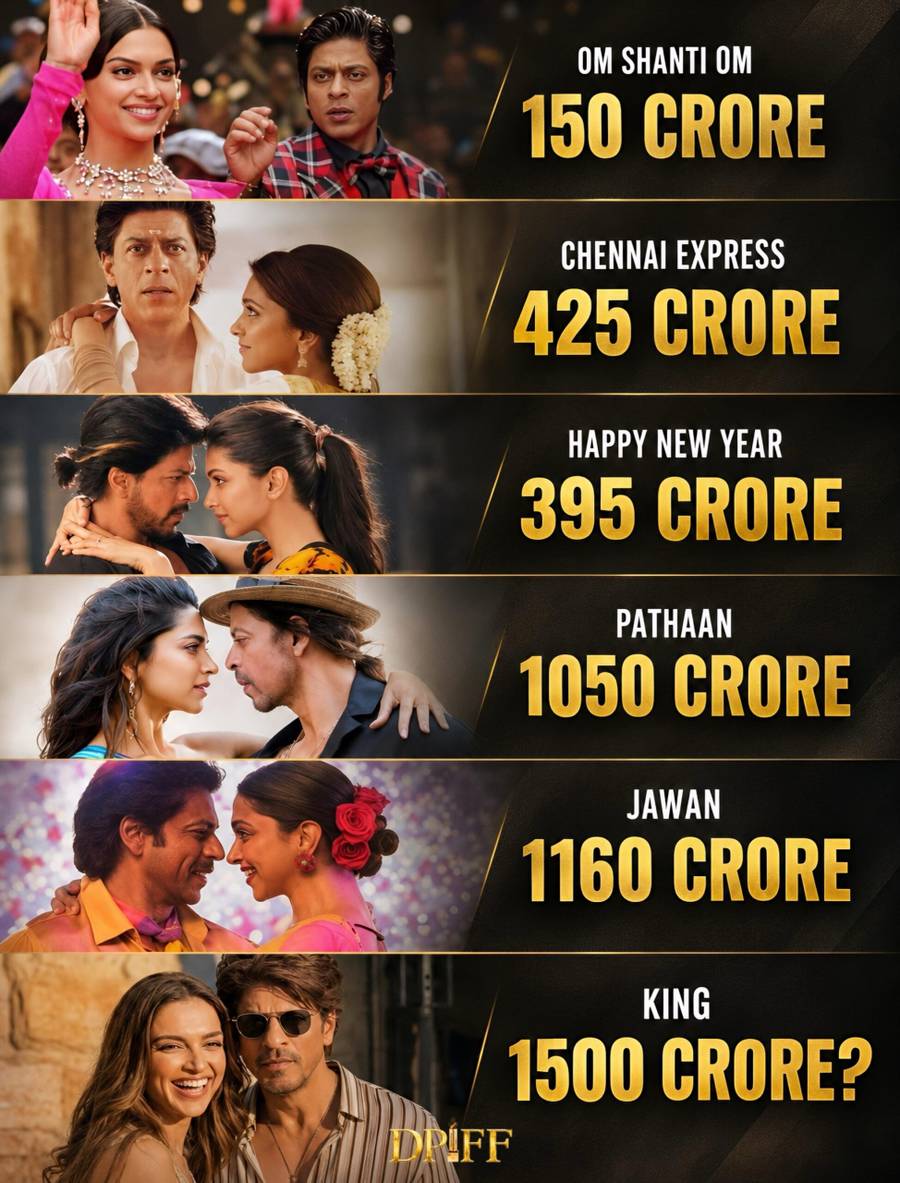
Shah Rukh Khan’s Fitness Journey Through Four Defining Film Eras
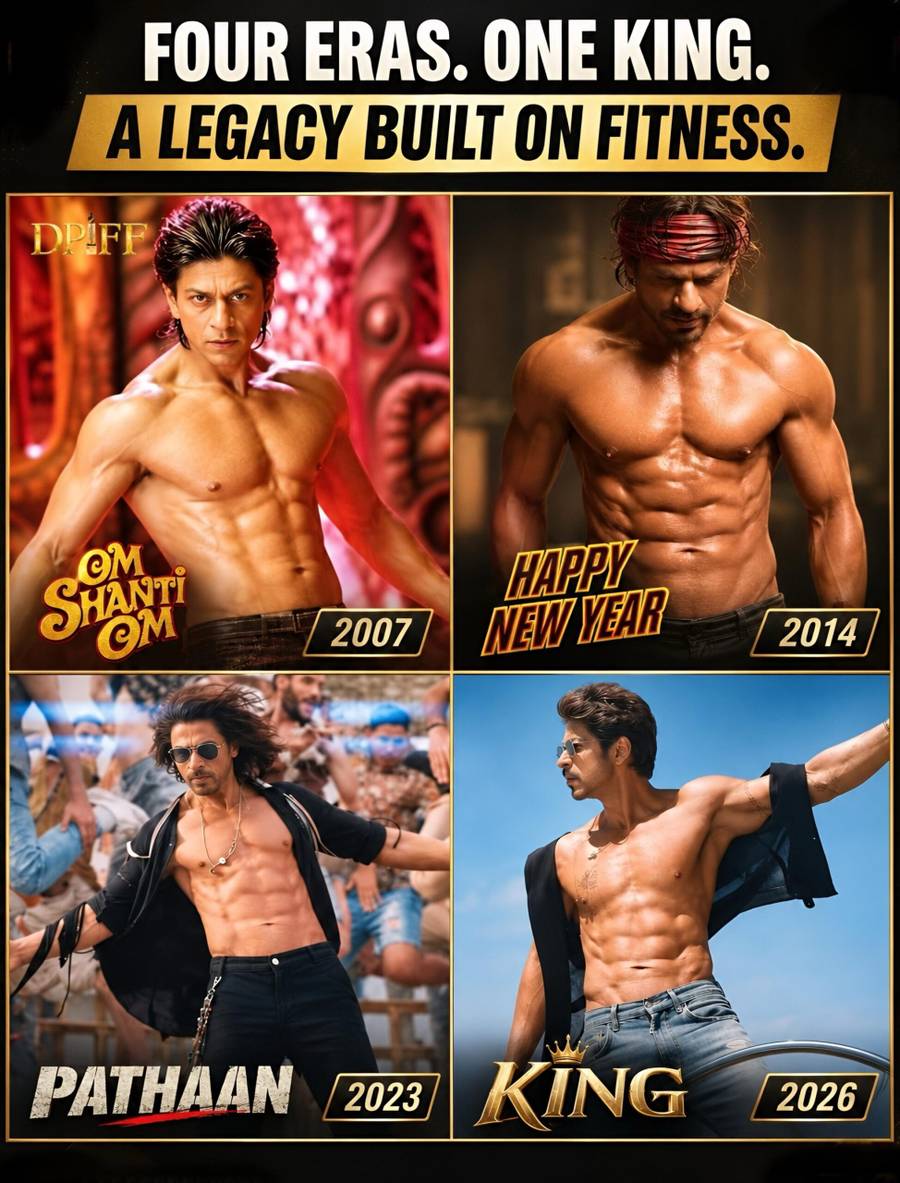
Shah Rukh Khan’s screen image has never remained fixed for long. From the sculpted look associated with Om Shanti Om to the more action-oriented physiques seen in Happy New Year and Pathaan, the actor’s physical transformations have become part of the conversation around his films. DPIFF’s latest Instagram post presents that evolution as four distinct eras, with King positioned as the newest chapter in a career built on reinvention.
The post is significant because it frames fitness not simply as a matter of appearance, but as an extension of performance. For a leading actor, changes in physicality can influence movement, screen presence, action choreography, costume design and the way audiences understand a character. In Khan’s case, those changes have accompanied very different phases of his career.
From romantic leading man to physically demanding roles
When Om Shanti Om arrived in 2007, Khan was already one of Hindi cinema’s most recognisable stars. The film allowed him to work across romance, comedy, melodrama and action while playing characters from different periods. His sculpted appearance became one of the film’s most discussed visual elements, particularly because it supported the larger-than-life tone of Farah Khan’s production.
The transformation mattered within the story as well as outside it. Om Shanti Om used the language of popular cinema—film stardom, spectacle and performance—to build its world. Khan’s physical presentation helped underline the contrast between its characters and contributed to the heightened visual identity that made the film memorable.
His next major physical milestone in the DPIFF post is linked to Happy New Year, the 2014 ensemble heist comedy directed by Farah Khan. The film required Khan to perform as part of a group of characters whose preparation for a dance competition becomes central to the plot. That setting placed renewed attention on fitness, choreography and the physical discipline required for a dance-led commercial film.
Pathaan and the action-star phase
The release of Pathaan in 2023 marked a major shift in the public conversation around Khan’s screen persona. Directed by Siddharth Anand and produced by Yash Raj Films, the film presented him in the role of a field agent and placed his physicality at the centre of its action design.
Unlike a transformation that exists mainly as a promotional talking point, an action role demands that the actor’s body function as part of the storytelling. Running, fighting, travelling through elaborate set pieces and sustaining the rhythm of large-scale action sequences all shape how a character is perceived. In Pathaan, Khan’s physique worked alongside choreography, stunt design, editing and visual effects to establish the film’s action-hero identity.
Readers looking to place this phase in the actor’s filmography can compare the film’s official positioning through Yash Raj Films’ page for Pathaan and consult the film’s listing on IMDb. These references also help distinguish the film’s confirmed release and production details from the broader fan discussion that often surrounds celebrity fitness.
What the King reference represents
DPIFF’s caption identifies King as the latest point in Khan’s fitness journey. At this stage, the most useful way to read that reference is as part of the actor’s continuing pattern of physical reinvention, rather than as a reason to speculate about unconfirmed production details or training methods.
The importance of the image lies in its timeline. It connects separate films across nearly two decades and shows how the idea of a Hindi film star has expanded. Khan’s changing appearance has moved from the sculpted presentation of a romantic and theatrical leading man to the functional physicality expected of a contemporary action protagonist.
That evolution also reflects changing audience expectations. Modern mainstream films increasingly promote performers through a combination of acting, movement, fitness and visual scale. The preparation may be less visible than the final image on screen, but the result becomes part of the film’s marketing language and its cultural afterlife.
Fitness as part of a star’s professional craft
It is important, however, not to reduce an actor’s fitness journey to body measurements or before-and-after comparisons. Physical preparation for cinema is closely connected to character, genre and performance requirements. A body designed for a dance film communicates something different from one presented for a spy thriller or an action drama.
Khan’s career makes that distinction especially clear. Om Shanti Om used spectacle and film nostalgia; Happy New Year combined ensemble comedy with dance; and Pathaan placed the actor inside the machinery of a modern action franchise. Each film asked for a different screen energy, and the physical transformations associated with them helped support those creative choices.
For more background on the earlier films, readers can refer to the film records for Om Shanti Om and Happy New Year. Shah Rukh Khan’s wider career is also documented in established reference sources such as Encyclopaedia Britannica.
DPIFF’s Instagram Reference
The editorial reference for this story is DPIFF’s original Instagram post, which presents Shah Rukh Khan’s physical evolution through Om Shanti Om, Happy New Year, Pathaan and King: view the post on Instagram.
Recent Coverage from DPIFF
DPIFF’s official news archive features the festival’s latest editorial updates, including coverage connected to Indian cinema, film personalities, achievements and the wider entertainment industry. Readers can visit the archive for the three most recent published stories and follow the festival’s continuing coverage beyond this feature.
About Dadasaheb Phalke International Film Festival
Dadasaheb Phalke International Film Festival is an Indian film festival and awards platform named after Dadasaheb Phalke, widely regarded as the father of Indian cinema. DPIFF highlights creative work and contributions across Indian cinema and the broader entertainment community. Through its editorial channels and festival initiatives, it documents noteworthy developments involving films, artists and industry practitioners.
Seen together, the four eras highlighted by DPIFF present Shah Rukh Khan’s fitness journey as part of a larger professional discipline: the ability to adapt the body, movement and screen presence to the demands of changing cinematic roles.


Share this link via



Share this link via
Share this link via