Niu Lai Box Office Story Highlights the Power of Modest-Budget Cinema
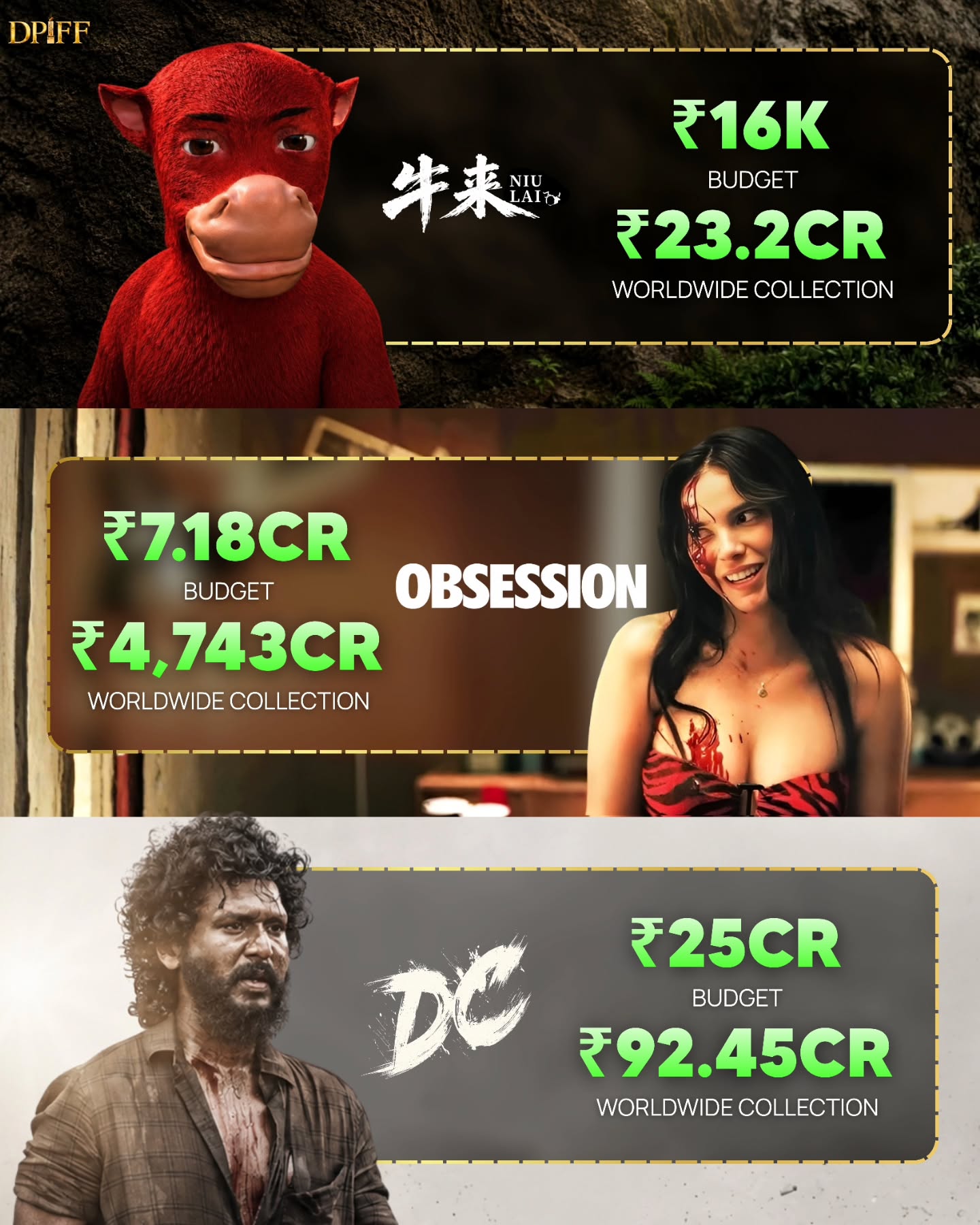
A reported worldwide gross of ₹23.2 crore for the ultra-low-budget Chinese animation Niu Lai has placed the film among a group of releases being highlighted by Dadasaheb Phalke International Film Festival for their striking budget-to-collection performance. The comparison also features Obsession and DC, an Indian film associated with filmmaker Arun Matheswaran and actors Lokesh Kanagaraj and Wamiqa Gabbi.
The figures shared in DPIFF’s Instagram post point to a recurring reality of the film business: commercial impact is not always determined by production scale. A film made with limited resources can still attract audiences when its concept, execution, positioning and word of mouth connect effectively with viewers.
What the reported figures indicate
Niu Lai is described in the post as an ultra-low-budget Chinese animation that reportedly converted a small production investment into a ₹23.2 crore worldwide gross. The figure is significant because animation is often associated with expensive production pipelines, large technical teams and long development schedules. A comparatively modestly mounted project achieving a substantial theatrical return can therefore draw attention beyond its home market.
However, box-office comparisons require care. A reported gross is not the same as profit, and public figures may not always specify whether they refer to a film’s theatrical run alone, its worldwide total, or a particular reporting period. Production budgets can also exclude or include different costs, such as marketing, distribution and prints. The numbers shared by DPIFF are best understood as an indication of commercial performance rather than a complete statement of profitability.
The post places Obsession alongside Niu Lai and DC as another example of a film being discussed through its reported investment-to-collection ratio. Since the available post does not provide a full breakdown of the figures or the methodology used for each title, direct comparisons should be treated as illustrative rather than definitive.
Why small-budget successes matter to the industry
Stories of strong returns on modest budgets are relevant to producers because they challenge the assumption that scale alone guarantees audience attention. Smaller productions generally have less room for financial error, but they can also operate with greater creative flexibility and more focused marketing strategies. When such films perform well, they can encourage distributors and investors to consider distinctive ideas that may not resemble conventional big-budget projects.
For audiences, these examples can broaden the conversation around what makes a film commercially viable. Familiar stars and expensive visual effects remain important attractions, but an original premise, a clearly defined audience and positive word of mouth can also influence a film’s reach. This is particularly visible in animation and other formats that can travel across language and geographical boundaries when their storytelling is accessible.
Context around Arun Matheswaran’s DC
DPIFF’s post also references DC, described as being directed by Arun Matheswaran and featuring Lokesh Kanagaraj and Wamiqa Gabbi. The caption states that the film released theatrically on August 7, 2026. As the available information does not provide a detailed production note, official collection statement or confirmed breakdown of the film’s budget, those details should be read as reported in the social-media post.
The inclusion of DC gives the discussion an Indian cinema dimension. It places a reported domestic release in conversation with an international animation title and another film associated with a strong return on investment. That comparison reflects the increasingly global nature of box-office conversations, where films from different industries are assessed not only by absolute earnings but also by the scale of their initial investment.
DPIFF’s reference to the films
Dadasaheb Phalke International Film Festival shared the comparison through its official Instagram post, focusing on films that reportedly delivered notable returns despite modest production outlays. The original post can be viewed here: DPIFF Instagram post on Niu Lai, Obsession and DC.
About Dadasaheb Phalke International Film Festival
Dadasaheb Phalke International Film Festival is a film-focused platform that celebrates achievements across Indian and international cinema. The festival recognises the contribution of filmmakers, performers, technicians and other creative professionals to the moving-image arts. Through its editorial and social channels, DPIFF also highlights notable developments, cinematic milestones and conversations shaping the entertainment industry.
The stories of Niu Lai, Obsession and DC underline why budget-to-collection discussions remain useful when approached with context. They offer a reminder that the business of cinema is influenced not only by how much a film costs, but also by how effectively it reaches and resonates with its intended audience.


Share this link via



Share this link via

Share this link via