


Superman, Batman or Joker: Which Is the Most Famous DC Character?
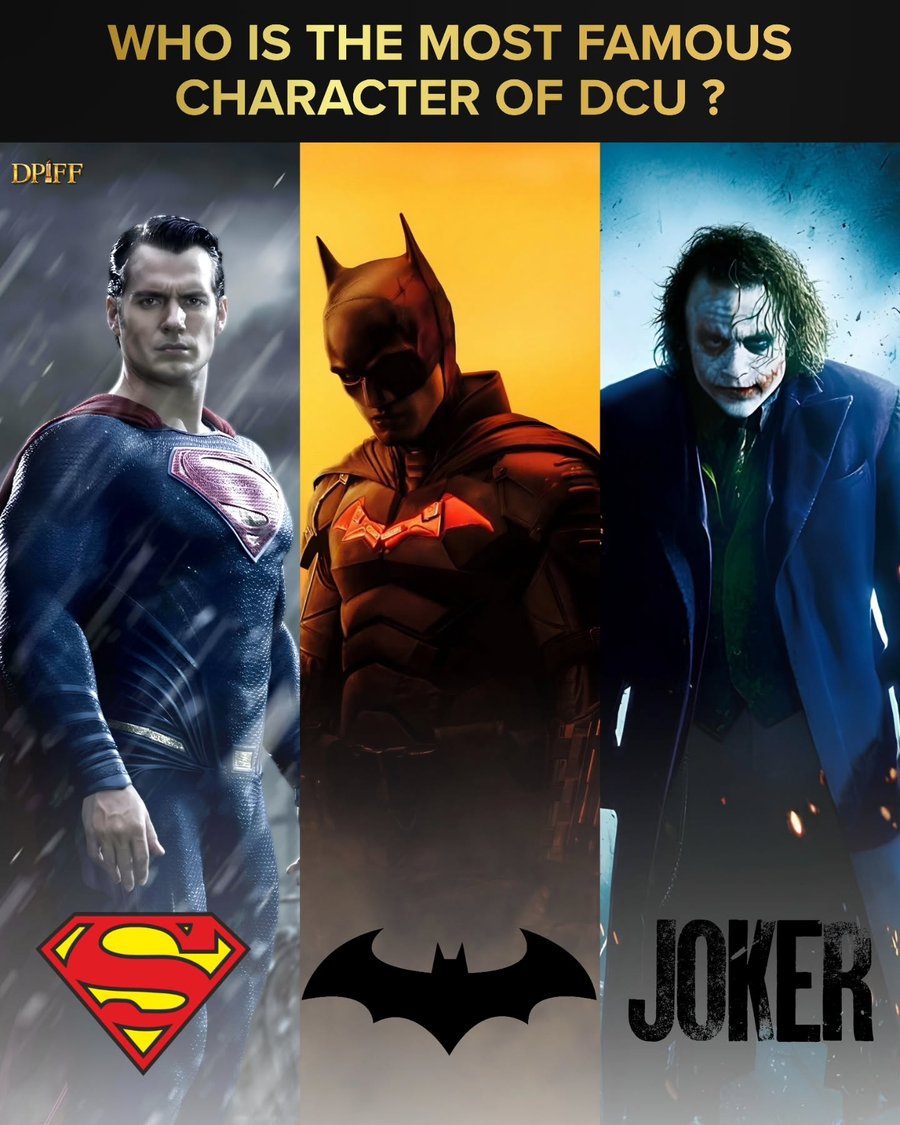
DPIFF’s latest Instagram post puts a familiar question to comic-book and film audiences: between Superman, Batman and the Joker, which character has become the most famous DC figure? There is no single objective answer, but the debate reveals how differently audiences measure cultural impact — through longevity, screen adaptations, recognisable imagery, character depth and influence on popular culture.
Superman represents the classic superhero ideal, Batman has evolved across generations as a symbol of human determination, and the Joker remains one of cinema’s most recognisable villains. Together, they form one of the most influential rivalries and character relationships in the history of popular entertainment.
Why Superman remains DC’s defining superhero
Superman occupies a unique place in modern popular culture. Introduced in Action Comics No. 1 in 1938, he helped establish the template for the modern superhero: a larger-than-life figure with extraordinary abilities, a strong moral code and a civilian identity that allows audiences to connect with him.
His visual language is immediately recognisable — the blue-and-red costume, the emblematic shield and the image of a hero in flight. More importantly, Superman’s appeal is rooted in the values he represents. His stories traditionally explore responsibility, compassion, justice and the challenge of using immense power ethically. The official DC character profile for Superman reflects the enduring importance of that mythology within the publisher’s universe.
Superman’s influence extends beyond comic books. Radio, television, animation and feature films have repeatedly reinterpreted the character for new generations. That continuity has helped make him one of the most universally recognised superheroes in the world, even among people who do not regularly read comics or follow superhero cinema.
Batman’s lasting appeal comes from reinvention
Batman first appeared in Detective Comics No. 27 in 1939. Unlike Superman, he has no superhuman powers. His identity is built around discipline, detective work, technology, physical training and an unwavering commitment to protecting Gotham City.
That grounded foundation has allowed filmmakers and writers to take Batman in markedly different directions. He can function as a crime fighter, a detective, a gothic hero, a psychologically complex vigilante or the centre of a large-scale action franchise. The DC character guide to Batman places his mission and connection to Gotham at the centre of his continuing mythology.
Batman’s popularity has also been strengthened by the range of performers and directors who have interpreted him. From television and animation to major theatrical releases, every new version has contributed something different to the character’s public image. His stories are often accessible to audiences who may not consider themselves traditional superhero fans because they draw on crime drama, mystery, psychological thriller and action cinema.
Why the Joker became more than a comic-book villain
The Joker is inseparable from Batman’s mythology, but his cultural reach has grown far beyond the role of a conventional antagonist. First introduced in the early 1940s, he has been portrayed as a criminal mastermind, an agent of chaos, a theatrical showman and a disturbing reflection of the society around him.
What makes the Joker especially durable is his flexibility. Different versions have emphasised his humour, violence, unpredictability, intelligence or philosophical opposition to Batman. The character’s appearance — particularly the pale face, green hair and exaggerated smile — is as recognisable as the imagery associated with many leading superheroes. DC’s official profile of the Joker outlines his central place in Batman’s world.
Film has played a major role in expanding that recognition. Performances by actors including Cesar Romero, Jack Nicholson, Heath Ledger and Joaquin Phoenix presented distinct interpretations rather than one fixed version of the character. Those performances also encouraged wider conversations about villainy, performance, social alienation and the relationship between comic-book storytelling and serious drama.
Fame depends on how audiences define it
If fame means global recognition of a heroic symbol, Superman may have the strongest claim. If it means sustained popularity across films, animation, comics, merchandise and video games, Batman is arguably the most versatile. If it means the ability to command attention as a villain and become a cultural reference point in his own right, the Joker stands apart.
The comparison is also shaped by geography and generation. One audience may associate Superman with the earliest idea of the superhero, while another may have encountered Batman through a modern film trilogy or discovered the Joker through a landmark performance. Streaming platforms, social media and global theatrical distribution have further multiplied the number of versions available to viewers.
That is why DPIFF’s question works beyond a simple popularity poll. It invites audiences to consider what makes a fictional character endure: an instantly identifiable design, a compelling moral conflict, the strength of the surrounding stories or the ability to be reinterpreted without losing the character’s core identity.
DPIFF Instagram reference
The discussion was prompted by DPIFF’s Instagram post asking audiences to choose between Superman, Batman and the Joker. Readers can view the original post and participate in the conversation through the DPIFF Instagram reference.
Superman, Batman or Joker — which one do you think is the most famous DC character?
Recent Coverage from DPIFF
For the latest editorial updates, readers can consult the DPIFF newsroom, which brings together the festival’s current coverage of cinema, artists, awards and entertainment developments. The newsroom is the appropriate source for the three most recently published articles, as publication order and availability may change over time.
About Dadasaheb Phalke International Film Festival
Dadasaheb Phalke International Film Festival is a platform that celebrates achievements across Indian cinema and the wider entertainment industry. Named after Dadasaheb Phalke, widely regarded as the father of Indian cinema, the festival recognises creative and technical contributions to filmmaking. DPIFF also publishes editorial coverage and cultural content for audiences interested in cinema, entertainment and the people shaping the industry. More information about the organisation is available through its official profile.
Whether the final choice is Superman, Batman or the Joker, the debate confirms the extraordinary reach of DC’s character library. Each figure represents a different route to cultural permanence — idealism, human resilience and disruptive villainy — which is precisely why all three continue to matter to film audiences.



Share this link via



Share this link via


Share this link via