


Marvel MCU Aura Debate: Thor, Captain America, Loki or Spider-Man?
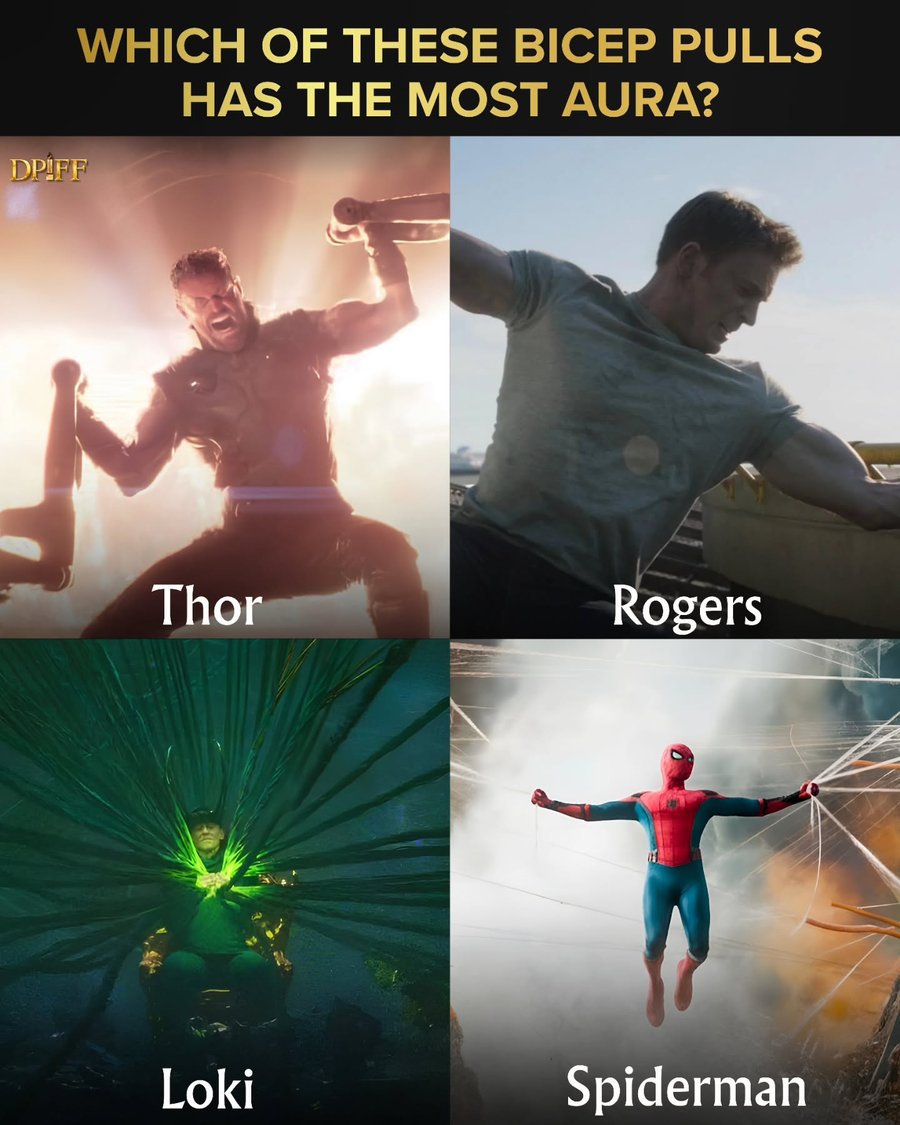
Dadasaheb Phalke International Film Festival has opened a familiar Marvel debate: which character has the greatest “aura” in the Marvel Cinematic Universe — Thor, Steve Rogers’ Captain America, Loki or Spider-Man? The question is not about strength alone. It is about screen presence, identity, charisma and the distinct emotional connection each hero has built with audiences.
These four characters occupy very different positions within the MCU. Thor arrives with the scale of mythology, Captain America represents traditional heroism, Loki turns unpredictability into charisma, and Spider-Man brings youthful energy shaped by responsibility and vulnerability. That contrast is what makes the comparison more interesting than a straightforward ranking of the most powerful Marvel characters.
Thor brings mythic scale to the MCU
Thor’s presence is rooted in spectacle. Introduced as the heir to Asgard in Thor (2011), the character brought a distinctly mythological dimension to a cinematic universe that was initially grounded in science fiction, espionage and technological innovation.
His armour, hammer, royal lineage and larger-than-life personality give him an immediate visual and dramatic impact. Across the MCU, Thor’s journey has also expanded beyond the image of an invincible god. His losses, failures and moments of self-doubt have made the character more emotionally accessible without taking away from his imposing presence.
That combination of grandeur and vulnerability is central to Thor’s appeal. He can dominate a battlefield, command attention in a royal setting and still function as a deeply human character when the story turns toward grief or personal responsibility.
Captain America remains the classic heroic ideal
Steve Rogers, played by Chris Evans, represents a different kind of aura. Where Thor’s authority comes from his divine heritage, Captain America’s influence is built on conviction, discipline and moral clarity. His transformation in Captain America: The First Avenger did not erase the character’s essential identity; it amplified qualities that were already present in him.
Captain America’s appeal comes from the sense that he will continue to do what he believes is right even when doing so is personally costly. His shield is an instantly recognisable symbol, but the character’s strongest identity comes from the values attached to it: courage, loyalty and a refusal to abandon people in difficult circumstances.
That makes Steve Rogers’ screen presence quieter than Thor’s but no less powerful. His aura is the aura of a dependable leader — a character whose arrival often changes the emotional temperature of a scene before he even speaks.
Loki turns unpredictability into star power
Loki’s appeal has always depended on contradiction. He is intelligent but insecure, theatrical but wounded, and capable of both betrayal and sacrifice. Tom Hiddleston’s performance gave the character a distinctive combination of elegance, wit and menace, helping Loki become one of the MCU’s most recognisable figures.
Unlike Thor or Captain America, Loki does not project certainty. His presence comes from the possibility that he may change the direction of a story at any moment. A conversation with Loki can become a negotiation, a performance or a threat without warning.
This unpredictability gives him a particularly strong form of aura. Loki does not need to be the strongest character in a scene to control it. His influence often comes from the questions he creates: what does he want, whom can he trust and whether his next decision will be selfish or selfless?
Spider-Man makes heroism feel personal
Spider-Man occupies yet another space in the Marvel universe. In the MCU, Peter Parker is introduced as a young hero still learning how to balance school, family responsibilities and the demands of superhero life. His powers are extraordinary, but his emotional world remains recognisable.
That relatability is a major part of Spider-Man’s enduring appeal. His humour, nervous energy and mistakes make him feel closer to the audience than the more established heroes around him. At the same time, the character’s commitment to helping others gives his youthful charm a strong moral centre.
Spider-Man’s aura is therefore less about command and more about connection. He may enter a scene with jokes and uncertainty, but his decisions repeatedly show why he belongs among the MCU’s most important heroes. The contrast between an ordinary young life and extraordinary responsibility continues to define the character.
Why the “aura” question has no single answer
The DPIFF discussion works because “aura” is subjective. A viewer drawn to mythology and spectacle may choose Thor. Someone who values leadership and principle may identify more strongly with Captain America. Fans of theatrical villains and complex redemption arcs may prefer Loki, while audiences who respond to humour, vulnerability and coming-of-age storytelling may select Spider-Man.
The comparison also reflects the wider strength of the MCU’s character design. Its central figures are not built around one shared personality. They represent different ideas of heroism: inherited power, chosen duty, moral leadership, personal growth and the complicated search for belonging.
In that sense, the most compelling answer may depend on the kind of presence a viewer values most. The debate is not simply about who looks the most impressive on screen; it is about which character leaves the strongest impression after the scene, film or story has ended.
DPIFF’s Instagram discussion
DPIFF presented the comparison in an Instagram post featuring Thor, Steve Rogers’ Captain America, Loki and Spider-Man, inviting followers to decide which character has the most aura. The post highlights the different identities associated with the four MCU figures rather than announcing a definitive winner.
View the original DPIFF Instagram post and share your choice in the discussion.
About Dadasaheb Phalke International Film Festival
Dadasaheb Phalke International Film Festival is a film and entertainment platform named after Dadasaheb Phalke, widely recognised as a pioneer of Indian cinema. DPIFF covers films, filmmakers, performers, creative achievements and developments across the entertainment landscape. Through its editorial and festival-related work, it connects audiences with conversations about cinema and popular screen culture.
Whether the choice is Thor’s grandeur, Captain America’s conviction, Loki’s mischievous charisma or Spider-Man’s youthful charm, the Marvel aura debate ultimately reflects the diversity of ways a fictional character can command an audience’s attention.



Share this link via



Share this link via

Share this link via

Share this link via