Captain America Suits: How Steve Rogers’ MCU Look Evolved
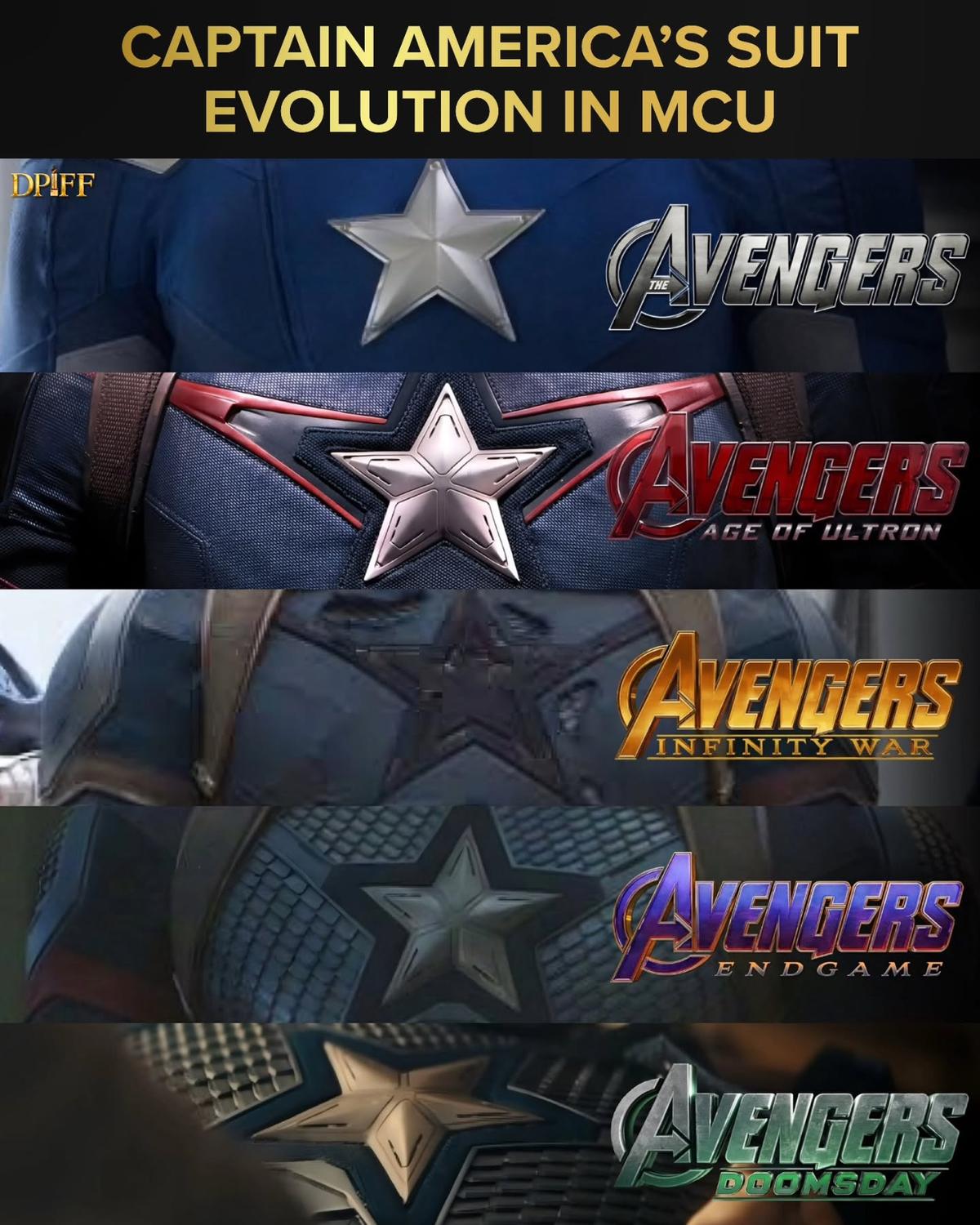
Dadasaheb Phalke International Film Festival’s latest Instagram post revisits one of the Marvel Cinematic Universe’s most recognisable visual journeys: the evolution of Captain America’s suits. Across Steve Rogers’ appearances, the costume changed from a patriotic World War II uniform into increasingly practical combat gear, reflecting his transformation from an idealistic soldier into a seasoned Avenger.
The changing design of Captain America’s suit is more than a series of cosmetic updates. Each version communicates where Steve stands in the story, how the world sees him and what kind of responsibility he is carrying. In the MCU, costume design has often worked as a form of character development, and Captain America provides one of its clearest examples.
From wartime symbol to frontline soldier
Steve’s first Captain America uniform, seen in Captain America: The First Avenger, was deliberately rooted in the imagery of 1940s America. It combined military references with the bold red, white and blue colour scheme associated with the character in Marvel Comics. The design was also shaped by Steve’s early public role: before becoming a battlefield leader, he was presented to the public as a patriotic symbol through performances, posters and war-bond campaigns.
That theatrical quality is important to the suit’s meaning. It looks recognisably heroic, but it is not yet the fully functional armour that Steve will later wear. Once he moves into active combat, the design becomes more practical, with stronger protective elements and a less polished appearance. The contrast mirrors Steve’s own movement from public mascot to soldier.
The tactical turn in The Winter Soldier
By the time of Captain America: The Winter Soldier, the character’s visual language had changed significantly. The brighter wartime palette gave way to a darker, more tactical uniform associated with covert operations and modern military equipment. The design placed greater emphasis on mobility and protection, while retaining the star emblem that connects Steve to his earlier identity.
This shift suited the film’s political-thriller tone. Steve is no longer fighting a conventional war in a clearly defined historical setting. He is operating in a world of surveillance, institutional mistrust and hidden enemies. His suit therefore appears less like a ceremonial uniform and more like equipment designed for a contemporary operative.
Recognisable colours, modernised armour
Captain America’s appearance continued to evolve in Avengers: Age of Ultron and Captain America: Civil War. The later designs restored more of the character’s familiar blue, red and white identity while incorporating a streamlined, armoured construction. The result balanced comic-book recognition with the visual demands of large-scale action filmmaking.
In Civil War, the costume carries additional dramatic weight because Steve’s identity is placed at the centre of a conflict among the Avengers. The star, shield and colours remain powerful symbols, but the character’s relationship with authority has become complicated. The suit still represents Captain America, even as Steve increasingly questions the institutions that claim to speak in his name.
The meaning of the shield and the uniform
Steve’s costume cannot be separated from his shield. Together, they form one of the MCU’s strongest visual combinations: the shield represents defence and resistance, while the uniform turns Steve into a figure whose personal choices carry national and global significance. When the shield is lost, rejected or passed on, the change affects the emotional meaning of the suit as well.
That is particularly clear in Avengers: Infinity War, where Steve appears in a more worn, subdued look after distancing himself from the official identity of Captain America. The visual change reflects his status as a fugitive and his rejection of government control. In Avengers: Endgame, the return to a more traditional Captain America appearance carries the weight of memory, leadership and finality as Steve takes part in the Avengers’ last major battle against Thanos.
Why Captain America’s evolving look still matters
The appeal of these costumes lies in their ability to connect several versions of the same character. The World War II-inspired uniform recalls Steve’s origins, the tactical suits reflect the modernisation of the MCU and the later designs underline the cost of long-term heroism. Even when the basic colours and symbols remain unchanged, the materials, silhouette and level of protection signal a new stage in his journey.
The evolution also helps the audience distinguish between Captain America as a personal identity and Captain America as a mantle. Steve Rogers’ story reaches a major conclusion in Avengers: Endgame, while Sam Wilson’s assumption of the shield introduces a different relationship with the symbol. This distinction gives the costume renewed relevance: the uniform is not only something a hero wears, but also an inheritance that must be interpreted by the person who receives it.
With Avengers: Doomsday representing the next chapter of the MCU’s Avengers story, interest in the franchise’s established visual symbols remains strong. Whether audiences focus on the original wartime design, the stealth suit from The Winter Soldier or the later battle-ready versions, Captain America’s wardrobe offers a compact history of Steve Rogers’ changing role within the MCU.
DPIFF Instagram Reference
DPIFF’s visual retrospective on Captain America’s suit evolution is available on the festival’s official Instagram page: view the original DPIFF post. The post invites viewers to compare the character’s major MCU looks and consider which design best represents Captain America.
Recent Coverage from DPIFF
DPIFF’s latest editorial updates and film-related coverage can be found in the festival’s newsroom at DPIFF News. Article-specific recent coverage has not been included here without verified access to the current newsroom listings, ensuring that no titles or links are presented inaccurately.
About Dadasaheb Phalke International Film Festival
Dadasaheb Phalke International Film Festival is a film-focused platform named after Dadasaheb Phalke, widely regarded as the father of Indian cinema. The festival recognises cinematic achievement and brings attention to important developments across Indian and international screen culture. Through its official digital channels, DPIFF also shares film history, popular cinema and audience-oriented editorial content.
Captain America’s suit evolution remains compelling because it turns costume into storytelling. Across more than a decade of MCU films, the design has preserved the character’s core identity while documenting how Steve Rogers changed with every battle, loss and responsibility.



Share this link via



Share this link via

Share this link via