Why Alia Bhatt’s Gangubai Kathiawadi Performance Still Resonates
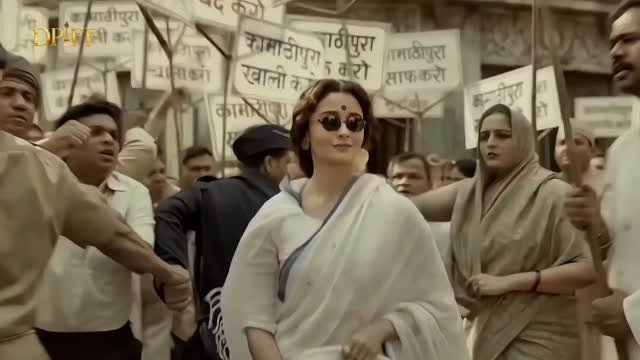
Alia Bhatt’s portrayal of Gangubai Kathiawadi remains one of the most discussed performances of her career. In a recent DPIFF Instagram post, the actor’s work in Sanjay Leela Bhansali’s 2022 film was highlighted for its authority, emotional range and ability to make a larger-than-life character feel intimate and human.
The appreciation is significant because Gangubai is a role built on contrasts. She is presented as a woman shaped by exploitation and violence, but also as a powerful public figure who learns to negotiate with criminals, politicians and the institutions around her. Bhatt’s performance had to communicate both sides without reducing the character to either victimhood or spectacle.
A performance built on control and vulnerability
Bhatt’s work in Gangubai Kathiawadi depends heavily on physical transformation. The character’s upright posture, deliberate movements, expressive eyes and measured delivery establish her authority long before the story fully explains how she acquired it. Even the smallest changes in body language help mark Gangubai’s movement from a vulnerable young woman to a commanding presence in Kamathipura.
The performance also avoids presenting strength as emotional invulnerability. Gangubai’s confidence is repeatedly balanced by moments of fear, grief, affection and uncertainty. That movement between public command and private fragility gives the character depth, allowing the audience to understand the cost behind her resilience.
Bhansali’s theatrical visual style and carefully staged dialogue sequences demand a performer who can hold the frame. Bhatt meets that demand through vocal modulation and stillness as much as through force. Her delivery is assertive in public confrontations, but the quieter scenes reveal the character’s loneliness and emotional complexity.
The world of Gangubai Kathiawadi
Directed by Sanjay Leela Bhansali, Gangubai Kathiawadi is inspired by the life of Gangubai Kothewali and draws from S. Hussain Zaidi’s book Mafia Queens of Mumbai. The film follows Gangubai’s rise within Mumbai’s Kamathipura while examining questions of agency, dignity and the social realities faced by women in the sex trade.
The film’s treatment combines period drama, political storytelling and musical spectacle. This broad canvas makes the central performance especially important: the narrative moves between personal trauma, public advocacy and grand cinematic set pieces, and Bhatt has to maintain continuity across all of those registers.
Rather than relying only on realism, the film uses heightened gestures and stylised composition to express Gangubai’s public image. Bhatt’s performance works within that language while retaining emotional credibility. The result is a character who can appear imposing in one scene and deeply exposed in the next.
Why the role marked an important career moment
Gangubai Kathiawadi arrived at a stage in Bhatt’s career when she was already known for moving between mainstream Hindi cinema and performance-led roles. The film gave her an unusually demanding protagonist: a woman whose influence is expressed through speech, political organisation and the ability to command attention in spaces controlled by men.
Her performance received major recognition at the 69th National Film Awards, where Bhatt shared the Best Actress honour with Kriti Sanon. The award placed her portrayal within a wider national conversation about acting craft and reinforced the film’s importance in her body of work.
The role also demonstrated how a star performance can shape the audience’s relationship with a historical or semi-historical subject. While the film remains a highly stylised interpretation rather than a documentary account, Bhatt’s emotional commitment gives its central figure a strong point of connection for viewers.
DPIFF’s Instagram reference
DPIFF’s Instagram post celebrates the elements that make Bhatt’s portrayal memorable: the command in her dialogue delivery, the strength of her screen presence and the vulnerability visible beneath Gangubai’s public persona. The original video can be viewed on the DPIFF Instagram account.
Recent Coverage from DPIFF
DPIFF’s latest editorial updates and film-industry stories are published in the DPIFF News section. Readers can visit the official newsroom for the most recent coverage, including articles on cinema, artists, awards and developments across the Indian entertainment industry.
About Dadasaheb Phalke International Film Festival
Dadasaheb Phalke International Film Festival is an Indian film and entertainment platform named after Dadasaheb Phalke, widely regarded as the father of Indian cinema. DPIFF recognises and celebrates creative contributions across Indian film and television while providing a space for discussion around the country’s evolving screen culture. Its editorial and social platforms highlight notable artists, performances, films and developments from the entertainment industry.
Alia Bhatt’s Gangubai remains memorable not simply because the role is designed for spectacle, but because the performance understands the emotional contradictions within its central figure. That balance of authority and vulnerability continues to give Gangubai Kathiawadi its enduring dramatic force.



Share this link via



Share this link via

Share this link via