


Smriti Irani Honoured at DPIFF 2026 for Kyunki Saas Bhi Kabhi Bahu Thi 2
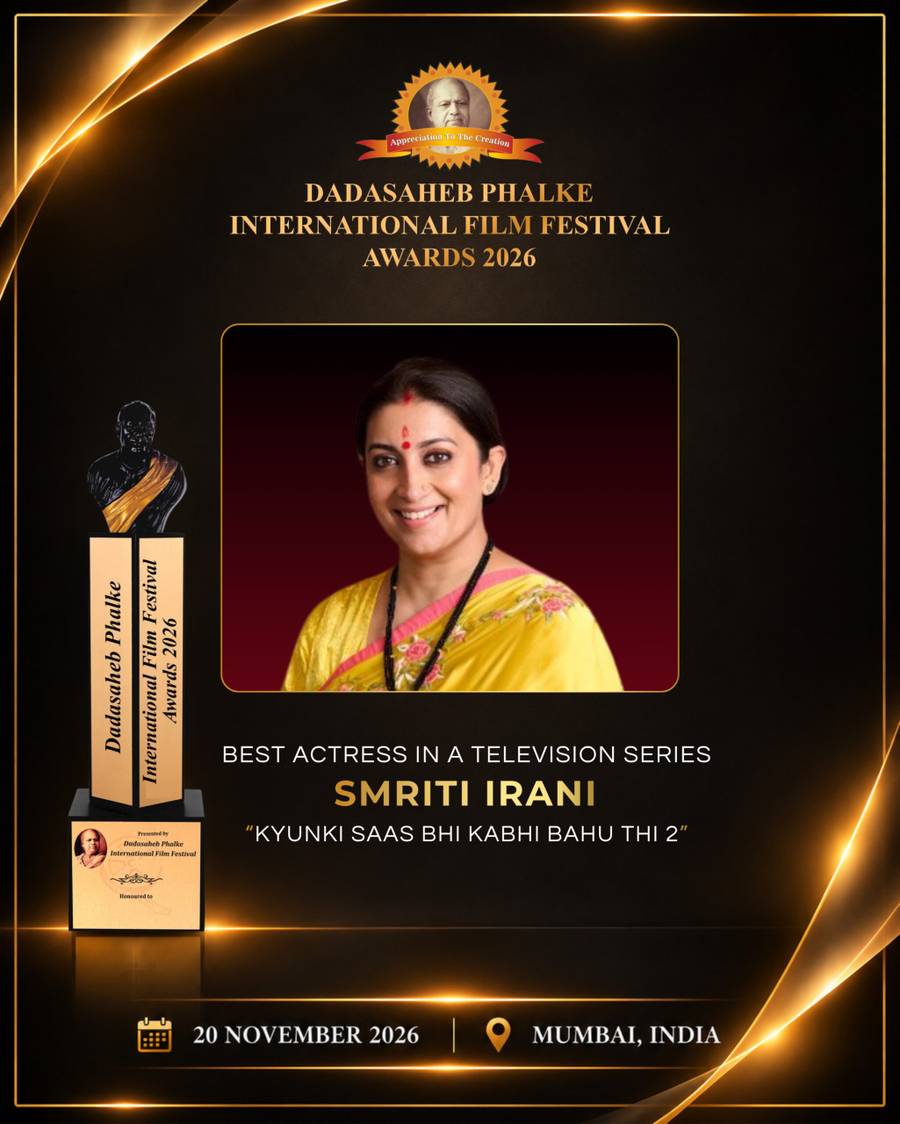
Dadasaheb Phalke International Film Festival has announced Smriti Irani as the recipient of the Best Actress in a Television Series Award at DPIFF 2026, recognising her performance in Kyunki Saas Bhi Kabhi Bahu Thi 2. The honour acknowledges the actor’s enduring screen presence and her contribution to one of Indian television’s most recognisable family dramas.
The award announcement places Smriti Irani at the centre of DPIFF’s 2026 television honours. The ceremony is scheduled to take place on 20 November 2026 in Mumbai, India, as stated in the festival’s official announcement. Rather than representing a new association with the character alone, the recognition also reflects the continuing cultural importance of a role that helped define television viewing for an entire generation.
A recognition connected to an iconic television character
Smriti Irani became widely known to Indian television audiences through her portrayal of Tulsi Virani in the original Kyunki Saas Bhi Kabhi Bahu Thi. The series, produced by Balaji Telefilms, became a landmark in the development of the Hindi television family drama and established a lasting visual and emotional vocabulary around relationships, duty, conflict and reconciliation.
Irani’s performance was central to that impact. Tulsi was written as a figure who combined emotional vulnerability with moral authority, allowing the character to move between intimate family conflicts and larger questions of responsibility. For viewers, the role became closely associated with Irani’s expressive performance and screen presence.
The new award for Kyunki Saas Bhi Kabhi Bahu Thi 2 therefore carries significance beyond a single television appearance. It connects a contemporary continuation of a familiar television property with the legacy of the original series and the audience relationship built around its central character.
Why the DPIFF 2026 television award matters
Television has long played a major role in shaping Indian popular culture, particularly through serialised storytelling that reaches audiences over extended periods. Unlike a feature film, a television series can develop its characters across hundreds of episodes, making performance consistency, emotional detail and audience trust especially important.
Recognising an actress in a television series acknowledges those distinctive demands. It also underlines the importance of television acting within the wider Indian entertainment industry, where performers often become part of viewers’ daily routines and contribute to conversations about family, society and changing cultural expectations.
For DPIFF, the honour broadens the festival’s engagement with screen storytelling. While the festival is closely associated with cinema and film awards, television remains an essential part of India’s entertainment landscape. A dedicated television category allows the contribution of series performers and creators to be acknowledged within a wider national platform.
Smriti Irani’s continuing association with Indian television
Irani’s career illustrates the lasting influence a television performance can have. Her portrayal of Tulsi Virani became a defining professional milestone and continues to be referenced whenever conversations turn to landmark Hindi television characters.
That familiarity also gives Kyunki Saas Bhi Kabhi Bahu Thi 2 a particular cultural context. Returning to a recognised television world brings expectations from long-time viewers while also introducing the property to audiences who may know it primarily through its reputation. Irani’s participation creates a direct link between the original era of the show and its contemporary continuation.
The announcement also highlights the role of producers and institutions in sustaining television legacies. Balaji Telefilms, which is tagged in DPIFF’s announcement, has been associated with the production of the franchise. More information about the company and its work is available through the official Balaji Telefilms website.
DPIFF’s announcement and the 2026 ceremony
DPIFF described the honour as recognition of Irani’s “iconic screen presence, expressive portrayal and enduring influence on Indian television storytelling.” The wording places equal emphasis on the performance and on the larger legacy of the actor’s work in the medium.
The award will be formally associated with the Dadasaheb Phalke International Film Festival Awards 2026, scheduled in Mumbai on 20 November. Readers should treat the festival’s official communication as the primary reference for the announcement and any subsequent ceremony-related updates.
DPIFF Instagram reference
The original announcement is available in DPIFF’s official Instagram post: Smriti Irani wins Best Actress in a Television Series at DPIFF 2026. The post tags Smriti Irani’s official Instagram account and Balaji Telefilms, providing the source reference for the award announcement and the event details.
Recent Coverage from DPIFF
DPIFF’s official news archive provides the latest festival announcements, award updates and editorial coverage published on DPIFF.in. As article availability and publication order can change, readers should use the archive for the most current recent coverage rather than relying on an unverified list of titles.
About Dadasaheb Phalke International Film Festival
Dadasaheb Phalke International Film Festival is an Indian film and entertainment institution that celebrates achievements across cinema and television. Its awards platform recognises performers, filmmakers, technicians and creative contributions from the Indian entertainment industry. DPIFF also publishes festival announcements and entertainment coverage through its official digital platforms.
Smriti Irani’s DPIFF 2026 honour places a contemporary television performance within the broader history of Indian screen storytelling. It also reaffirms how deeply memorable characters can continue to shape audience culture long after their first appearance.



Share this link via



Share this link via

Share this link via

Share this link via