


Sai Abhyankkar and Anirudh Ravichander Reflect Tamil Cinema’s Musical Range
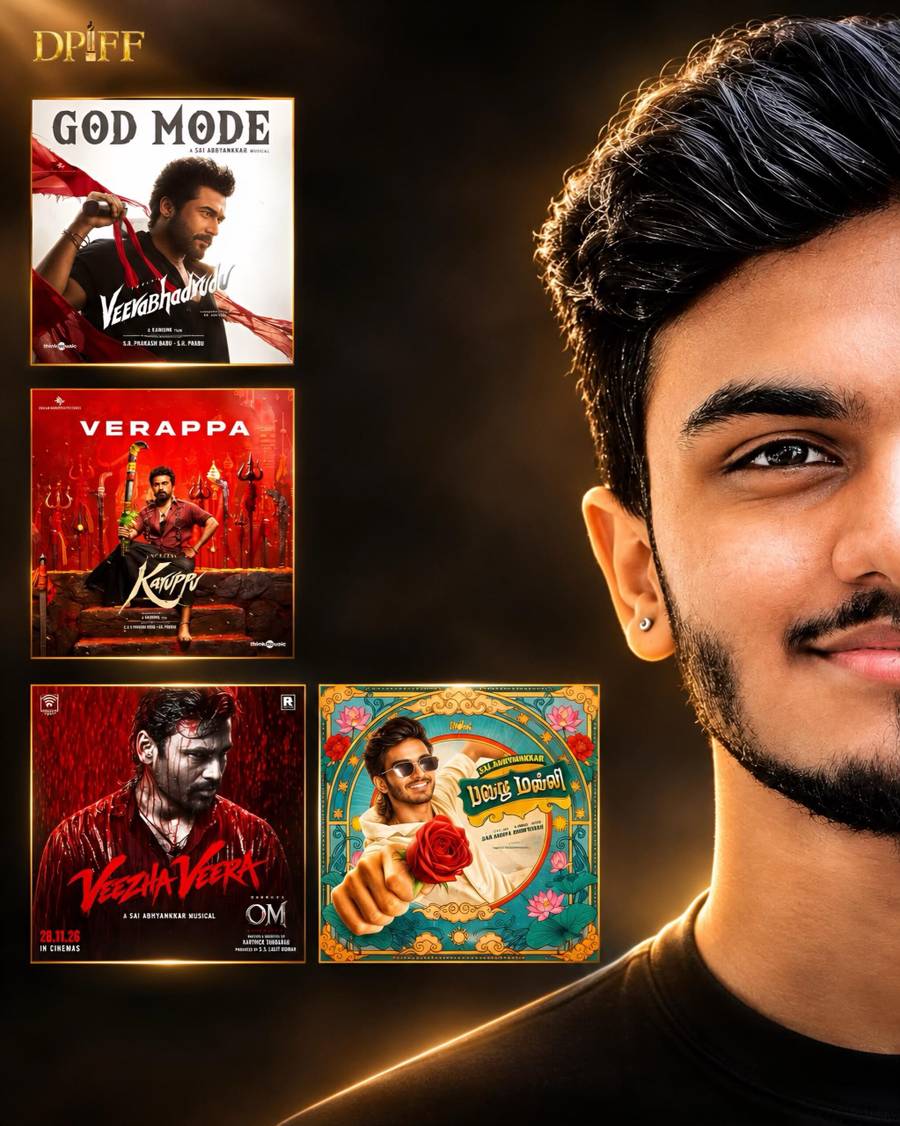
Tamil cinema’s current music conversation brings together two contrasting but equally distinctive creative forces: the emerging Sai Abhyankkar and the established Anirudh Ravichander. A recent DPIFF Instagram post places their music side by side, highlighting Sai’s rising wave through tracks such as Veezha Veera, FA FA FA and Senjudare, alongside Anirudh’s high-energy catalogue, represented by One Name, One Sun One Moon and Raga of Revenge.
The comparison is not about declaring one composer more important than the other. It is about recognising how Tamil music is being shaped by different creative identities at the same time. Sai Abhyankkar represents a newer, digitally accelerated route into the industry, while Anirudh continues to occupy a central position in the large-scale, theatrical sound of contemporary Tamil cinema.
Two musical identities, two routes to audience connection
Sai Abhyankkar’s rise reflects the changing relationship between independent music, streaming platforms and film composition. In recent years, young artists have been able to build an audience through original singles and online releases before becoming closely associated with mainstream cinema. That pathway has made discovery faster and has allowed new voices to develop a recognisable sound in public view.
The tracks named in DPIFF’s post point to the variety within Sai’s emerging musical identity. Rather than being defined only by conventional film-song formats, his work is part of a wider Tamil music ecosystem that includes independent releases, digital-first audiences and collaborations connected to cinema. This gives newer composers an opportunity to establish mood, rhythm and vocal identity before their work reaches an even larger theatrical audience.
Anirudh Ravichander’s career follows a different but equally influential trajectory. He became widely known after composing for 3, whose song Why This Kolaveri Di became a major international digital phenomenon. Since then, his music has become closely associated with energetic introductions, electronic production, punchy rhythm sections and songs designed to amplify the presence of a film’s leading characters.
His work has helped redefine what a “mass” film song can sound like. The form is not limited to volume or speed; it also depends on arrangement, vocal delivery, repeatable hooks and the anticipation created around a song’s release. Anirudh’s music often functions both as part of a film’s narrative and as an independent cultural moment beyond the screen.
Why this contrast matters to Tamil cinema
The significance of the DPIFF comparison lies in the coexistence of these approaches. Tamil cinema is not moving towards one single musical formula. It is making space for composers who build intimate, contemporary or independent-led sounds, while also continuing to value the scale and immediacy of music created for major theatrical releases.
This diversity is important for audiences. A song may now find its first audience through a short video, a streaming playlist or a live performance before its film context becomes widely known. At the same time, songs created for cinema continue to carry substantial cultural weight, particularly when they are linked to a star, a character introduction or a highly anticipated release.
For the industry, the development also underscores the importance of musical branding. A composer’s identity can influence how a project is positioned, how its promotional campaign is designed and how audiences understand its emotional or commercial tone. The sound of a film increasingly becomes part of its public identity well before release.
Readers can explore more about Anirudh Ravichander’s career and filmography through established reference material, while Sai Abhyankkar’s growing body of work can be followed through official and artist-led music releases on YouTube. Streaming platforms such as Spotify’s artist search also show how digital discovery has become an important part of the contemporary music journey.
A generational conversation in sound
Placing Sai Abhyankkar and Anirudh Ravichander in the same conversation also reflects a generational shift. Anirudh’s work demonstrates how a composer can become one of the defining public faces of a film’s musical campaign. Sai’s emergence shows how the next generation can arrive with an audience already familiar with its sound, aesthetics and digital presence.
These developments are not mutually exclusive. The Tamil music industry benefits when established composers continue to experiment and when newer artists are given room to develop beyond imitation. The result is a broader musical vocabulary: one capable of supporting intimate storytelling, large-scale spectacle, independent expression and the fast-moving culture of online listening.
That is why the two artists make a useful editorial pairing. Sai Abhyankkar and Anirudh Ravichander may occupy different stages of their careers, but both demonstrate the continuing power of a clearly identifiable musical voice. Their contrasting approaches reflect a Tamil cinema audience that is listening across formats, generations and expectations.
DPIFF’s Instagram reference
DPIFF’s carousel post presents Sai Abhyankkar and Anirudh Ravichander as two artists contributing to the vitality of Tamil cinema music. View the original post on Instagram for the complete visual comparison and the tracks highlighted by the festival.
“Two musical powerhouses, two distinctive sounds, one thriving Tamil music scene.”
Recent Coverage from DPIFF
DPIFF’s news and editorial archive carries the festival’s latest published coverage across Indian cinema, artists, awards and film culture. Readers can visit the archive for the three most recently published articles and follow the continuing editorial coverage from DPIFF. This live archive is preferable to listing titles that may change position as new stories are published.
About Dadasaheb Phalke International Film Festival
Dadasaheb Phalke International Film Festival is an Indian film festival and entertainment platform named after Dadasaheb Phalke, widely regarded as the father of Indian cinema. DPIFF recognises creative contributions across cinema and provides editorial coverage of films, filmmakers, performers, music and wider developments in the screen industries. Its work also highlights the cultural and artistic conversations shaping Indian entertainment.
The continuing exchange between emerging voices such as Sai Abhyankkar and established composers such as Anirudh Ravichander shows that Tamil cinema’s musical identity is expanding rather than narrowing. Different sounds can share the same cultural space—and, together, make the industry’s soundtrack more varied.



Share this link via



Share this link via

Share this link via

Share this link via