PM Narendra Modi Visits CoBRA Base in Bastar, Chhattisgarh
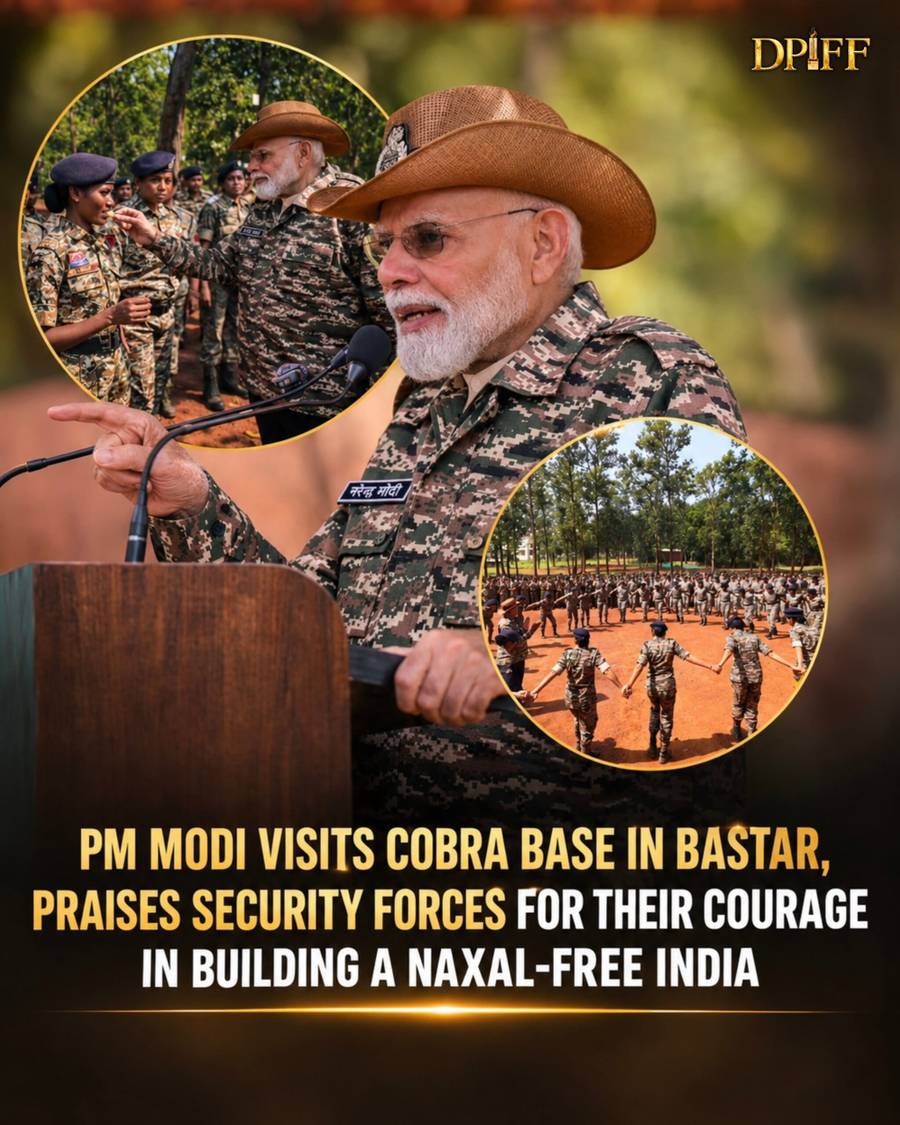
Prime Minister Narendra Modi visited the CoBRA Operations Base at Karanpur in Bastar, Chhattisgarh, highlighting the role of the specialised force in counter-Naxal operations across Bastar and Abujhmad. During the visit, he interacted with personnel whose courage, discipline and sustained commitment have shaped security operations in one of central India’s most challenging regions.
The visit was significant not only as an engagement with serving security personnel, but also as a recognition of the operational infrastructure and human effort behind India’s wider objective of a Naxal-Mukt Bharat. The Karanpur base has served as a training ground and launchpad for operations in the Bastar region, placing it at the centre of efforts to improve security and state access in affected areas.
The role of CoBRA in counter-Naxal operations
CoBRA, or the Commando Battalion for Resolute Action, is a specialised unit of the Central Reserve Police Force. Its personnel are trained for operations in difficult terrain, including dense forests and areas where conventional movement and communication can be particularly demanding.
Bastar’s geography has long influenced the planning and execution of security operations. Forested landscapes, limited road connectivity and the scale of the region require personnel to combine field endurance with detailed knowledge of local conditions. A base such as Karanpur therefore functions as more than an administrative location: it supports preparation, coordination and deployment for missions conducted across remote areas.
Abujhmad, which has historically been among the more inaccessible parts of the region, has also remained an important area in the security forces’ counter-insurgency planning. The reference to both Bastar and Abujhmad underlines the geographical breadth of the operations associated with the base.
Recognition of personnel on the ground
At the centre of the Prime Minister’s interaction were the personnel who carry out these duties in difficult and often high-risk circumstances. The emphasis on their courage and unwavering resolve reflects the demanding nature of counter-insurgency service, where operations may involve extended deployments, unpredictable terrain and significant personal risk.
Such interactions also draw attention to the less visible aspects of national security: training, logistics, field preparedness and the sustained presence of personnel away from major urban centres. For families and communities in Bastar, the effectiveness of these systems is closely connected with everyday questions of safety, mobility and access to public institutions.
Why the Bastar visit matters
The visit comes within a broader national focus on reducing Left-Wing Extremism and expanding development and governance in affected districts. The Ministry of Home Affairs provides policy and institutional context for India’s efforts against Left-Wing Extremism, while security operations are carried out alongside administrative, infrastructure and welfare initiatives.
A security base cannot by itself resolve the social and economic challenges associated with conflict-affected regions. Long-term change depends on a combination of security, roads and communications, healthcare, education, livelihoods and public trust. The Karanpur visit brought the operational dimension of that wider effort into focus while acknowledging the personnel responsible for carrying it out on the ground.
The development is also relevant to readers interested in how national events are documented and communicated. Visits to specialised forces, remote operational bases and communities affected by conflict often become part of India’s public record through journalism, photography, documentary work and institutional communication. In that sense, the Prime Minister’s visit carries significance beyond the immediate programme: it records the people and places involved in a continuing national effort.
DPIFF reference: PM Narendra Modi’s Karanpur visit
Dadasaheb Phalke International Film Festival shared visuals and information about Prime Minister Narendra Modi’s visit to the CoBRA Operations Base at Karanpur through its official Instagram account. The post identifies the base’s role in counter-Naxal operations in Bastar and Abujhmad and honours the personnel serving there.
View the original DPIFF Instagram post on Prime Minister Narendra Modi’s visit to Karanpur.
Recent Coverage from DPIFF
DPIFF’s official news archive features the festival’s latest editorial updates, including coverage connected with Indian cinema, artists, honours and cultural developments. Readers can visit the archive for the most recent verified articles published by the organisation.
As this article is based on the official DPIFF social-media reference supplied for the Karanpur visit, specific recent article titles from the archive have not been listed here without independent verification of their current order and publication details. This approach keeps the reference accurate and avoids attributing unverified headlines or dates to DPIFF.
About Dadasaheb Phalke International Film Festival
Dadasaheb Phalke International Film Festival is an Indian platform that recognises and celebrates contributions to cinema and the wider audiovisual community. Named after Dadasaheb Phalke, widely regarded as the father of Indian cinema, the festival connects film, television and creative talent through awards, cultural programming and editorial initiatives. DPIFF also uses its official digital channels to highlight significant developments involving Indian public life and culture.
The Karanpur visit places attention on the personnel and institutions working in one of India’s most demanding operational environments. By sharing the development, DPIFF’s post preserves a public record of that engagement and the service of the CoBRA personnel acknowledged during the Prime Minister’s visit.



Share this link via



Share this link via

Share this link via