


Adipurush Leads DPIFF’s Two-Day Box Office Comparison at ₹152 Crore+
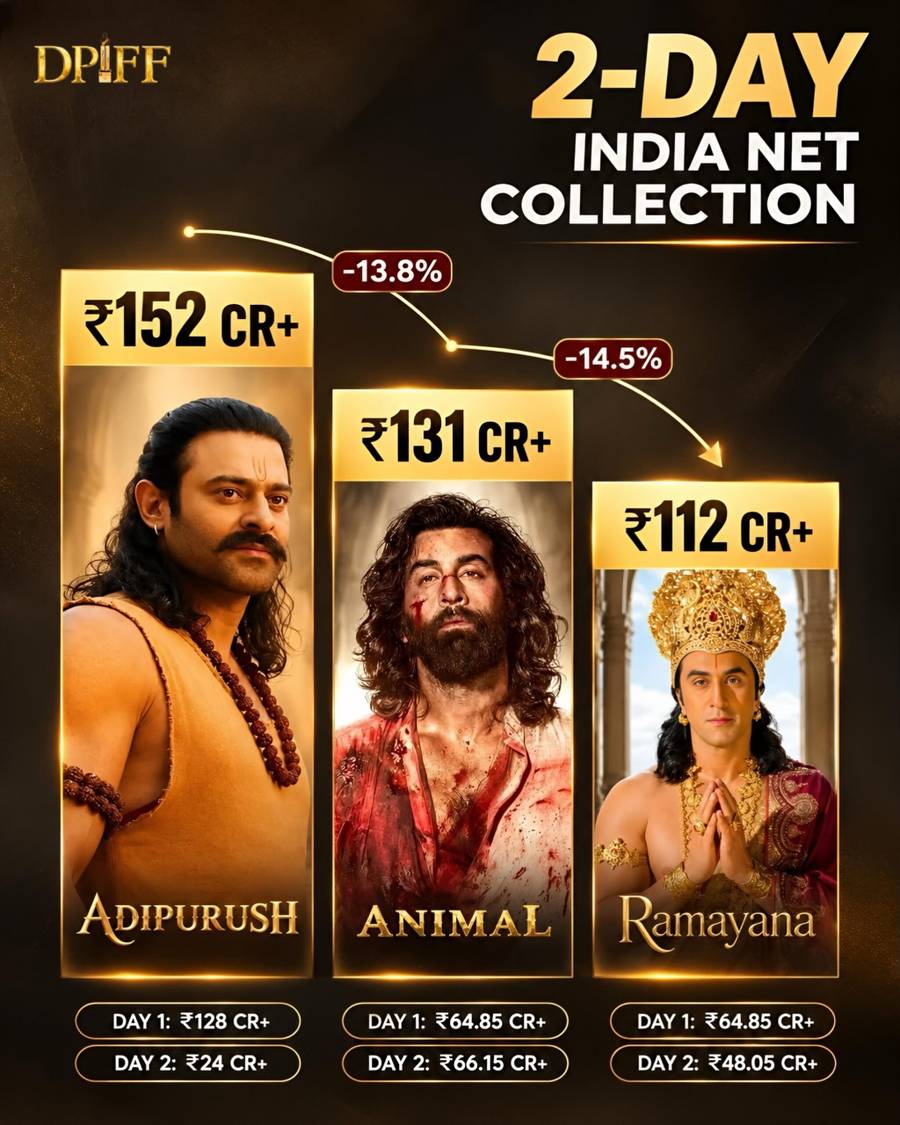
Adipurush tops the two-day box office comparison featured in a recent Dadasaheb Phalke International Film Festival post, with the graphic placing the film at more than ₹152 crore. It is followed by Animal at over ₹131 crore and Ramayana at more than ₹112 crore.
The comparison brings together three large-scale titles associated with major audience interest in Indian cinema. However, the DPIFF post does not specify whether the figures refer to worldwide gross, India gross, or another box-office measurement. The numbers should therefore be read as the values presented in the festival’s social-media graphic rather than as an independently audited trade statement.
What the DPIFF comparison shows
Based on the ranking shared by DPIFF, Adipurush holds a lead of more than ₹21 crore over Animal and more than ₹40 crore over Ramayana after two days. Even with the precise reporting methodology unspecified, the comparison illustrates the scale of commercial expectations surrounding films built around recognisable cultural themes, established performers and ambitious production design.
Adipurush, directed by Om Raut, is a large-format retelling inspired by the Ramayana tradition and features Prabhas as Raghava, Kriti Sanon as Janaki and Saif Ali Khan as Lankesh. The film’s theatrical campaign was built around its visual spectacle, mythological setting and pan-Indian appeal. More background on the title is available through its IMDb film listing.
Animal, directed by Sandeep Reddy Vanga and led by Ranbir Kapoor, occupies a very different genre space. Its opening performance was driven by the strength of its cast, the director’s existing audience base and the extensive pre-release conversation surrounding the crime drama. Readers can refer to the film’s IMDb page for core title information.
The reference to Ramayana in the DPIFF graphic also signals the continued visibility of the epic in Indian screen culture. Since the post does not identify the specific production, release cycle or reporting territory associated with that figure, it would be inaccurate to attach additional cast, release or production details without a confirmed source.
Why two-day figures matter to the industry
The first two days of a theatrical run are closely watched because they capture the impact of advance bookings, opening-day visibility, weekend footfall and audience curiosity. For large Indian releases, the period can also reveal how effectively a film has travelled across languages and regions.
At the same time, a two-day total is only an early indicator. A film’s long-term performance depends on audience reception, reviews, repeat viewing, competition from other releases, ticket pricing and the number of screens available. Domestic net collections, domestic gross, overseas gross and worldwide gross are separate measurements, and comparisons can become misleading when the same basis is not used for every title.
This distinction is particularly important when comparing films from different release periods. Changes in ticket prices, premium formats, market reach and release strategy can significantly affect headline figures. A responsible reading of the DPIFF post is therefore that it offers a snapshot of the reported two-day race, not a complete assessment of lifetime box-office success.
From social-media graphic to wider cinema conversation
DPIFF’s comparison is relevant because it places an epic-inspired film, a contemporary crime drama and a Ramayana-linked title within the same discussion about audience scale. The juxtaposition reflects the range of subjects that can generate substantial theatrical attention when supported by recognisable intellectual property, prominent talent or strong cultural familiarity.
It also underlines the importance of transparent box-office reporting. Audiences, exhibitors and industry observers benefit when reports clearly identify the territory, currency, collection type and period being measured. Until those details are available for this comparison, the ranking is best understood as a social-media-led reference point.
DPIFF’s original Instagram reference
The comparison was shared by Dadasaheb Phalke International Film Festival on Instagram. The post identifies Adipurush as the leader with ₹152 crore-plus, followed by Animal at ₹131 crore-plus and Ramayana at ₹112 crore-plus over the two-day period shown in the graphic.
Adipurush leads the 2-day box office race with ₹152 crore+, followed by Animal at ₹131 crore+ and Ramayana at ₹112 crore+.
Recent Coverage from DPIFF
Readers can follow the festival’s latest editorial and entertainment updates through the DPIFF news archive. Because the Instagram post does not identify a specific release date, territory or production for every title in the comparison, the archive is the most reliable place to review the festival’s current coverage rather than relying on unverified article titles or collection claims.
For broader information about the festival and its institutional work, visit the official DPIFF website and its About DPIFF section.
About Dadasaheb Phalke International Film Festival
Dadasaheb Phalke International Film Festival is an Indian film and entertainment platform named after Dadasaheb Phalke, widely recognised as the father of Indian cinema. DPIFF covers films, filmmakers, actors, technicians and developments across the Indian entertainment landscape. Through its editorial and festival-related initiatives, it provides a platform for celebrating cinematic achievement and engaging audiences with developments in the industry.
The two-day comparison shared by DPIFF offers a useful snapshot of the commercial attention surrounding Adipurush, Animal and Ramayana, while also showing why box-office figures need clear definitions before they are treated as directly comparable industry data.


Share this link via




Share this link via

Share this link via