Sameer dropped from Qayamat Se Qayamat Tak at the last minute
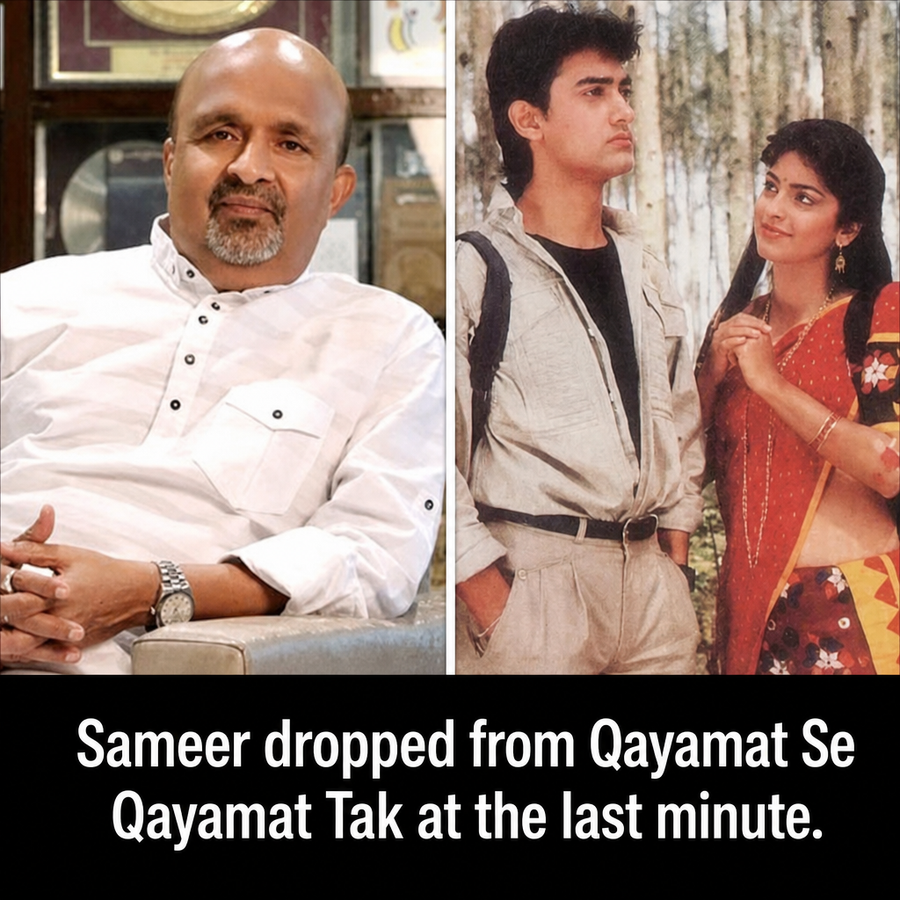
Lyricist Sameer reveals he was dropped from Qayamat Se Qayamat Tak at the last minute, a pivot that preceded Majrooh Sultanpuri’s arrival as lyricist and helped the 1988 film become a blockbuster.
Sameer said, “I became good friends with Anand-Milind. This is when they were offered Qayamat Se Qayamat Tak. When Mansoor Khan expressed a desire to make a film, his father (Nasir Hussain) asked him to first make a video film or documentary. As a result, he made a film called Umberto; it was shot in Bandra. It had two songs, which I wrote. Every night, we used to hang out at Mansoor’s bungalow. Aamir and Anand-Milind used to also join us.”
Sameer continued, “His father loved Umberto and allowed him to make a feature film. However, he made it clear that throughout their life, they have worked with music director RD Burman and lyricist Majrooh Sultanpuri. So, Mansoor was told to hire them. But Mansoor said, ‘Main toh naye logon ke saath kaam karoonga. I’ll feel uncomfortable with such senior people’.”
Sameer added, “Finally, they reached a middle ground – ek tera, ek mera. In the process, Anand-Milind were retained as the music directors while Majrooh Sultanpuri came on board as the lyricist. Aur main kat gaya” (smiles). Meanwhile, Qayamat Se Qayamat Tak became a blockbuster.
Interestingly, Mansoor Khan collaborated with Majrooh Sultanpuri for Jo Jeeta Wohi Sikandar (1992) and Akele Hum Akele Tum (1995) as well. It was only with Josh (2000) that Mansoor and Sameer finally worked together. Sameer wrote the lyrics of Hai Mera Dil, Hum To Dil Se Haar, Mere Khayalon Ki Malika and Sailaru Sailare in the Shah Rukh Khan-starrer. As for Aamir, Sameer worked with him for the first time on Dil (1990), and its songs went on to become huge hits.
For more DPIFF coverage of film-history and lyricists, visit DPIFF News. You can also follow DPIFF Newsroom for updates. The full feature is available on Bollywood Hungama.
This moment underscores how last-minute line-up shifts can shape a film’s legacy and collaboration dynamics in Bollywood’s late 1980s era. For ongoing DPIFF coverage, follow DPIFF News and visit DPIFF Newsroom for future updates.



Share this link via



Share this link via

Share this link via