


DPIFF Shares Heartfelt Wishes on Krishna Janmashtami
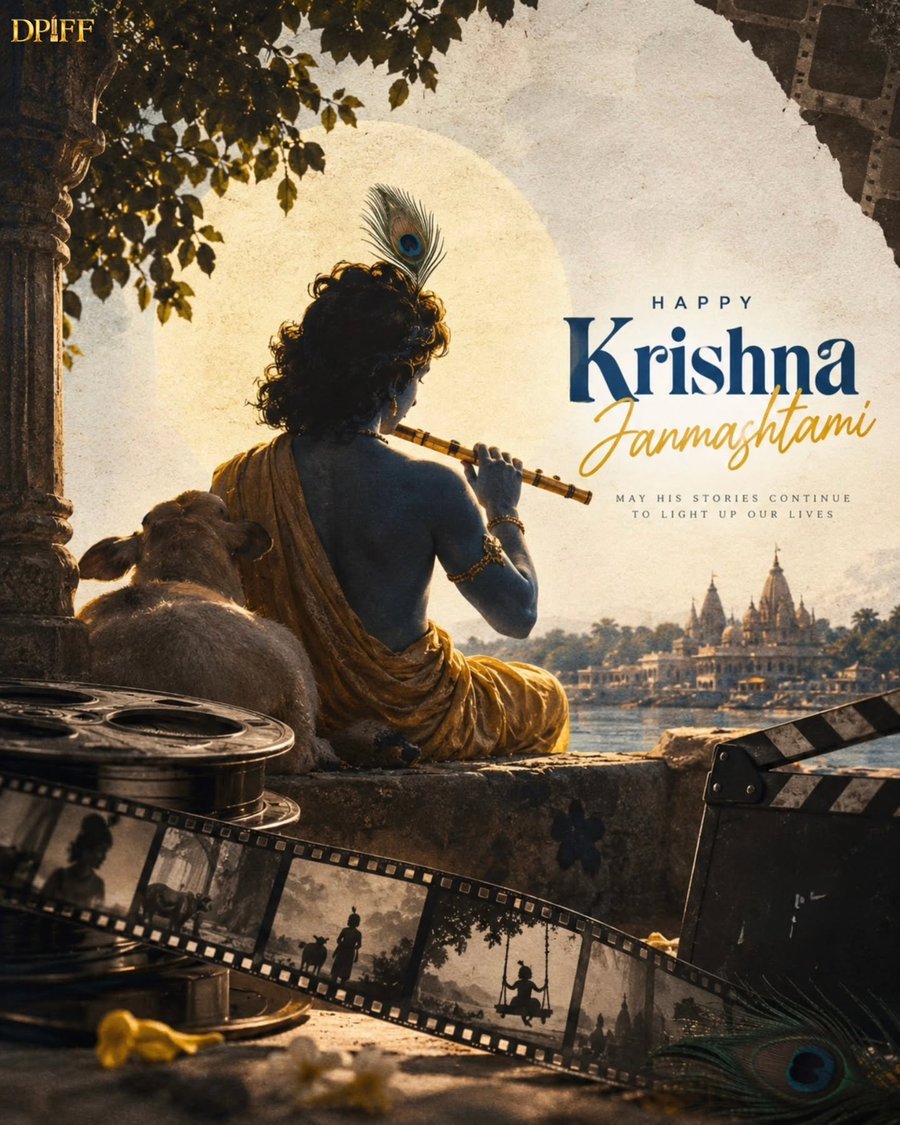
Dadasaheb Phalke International Film Festival marked Krishna Janmashtami with a message centred on love, hope, positivity and the enduring wisdom associated with Lord Krishna. In its festive Instagram post, DPIFF extended wishes to audiences celebrating the birth of Krishna, invoking the symbolism of his flute, teachings and stories.
The message reflects the cultural significance of Krishna Janmashtami, one of India’s most widely observed festivals. Celebrated with prayer, music, devotional performances and community gatherings, the festival brings together religious tradition, folklore and artistic expression. For an institution connected to Indian cinema and culture, the occasion also offers an opportunity to acknowledge the influence of Krishna’s stories on the country’s creative traditions.
The cultural meaning of Krishna Janmashtami
Krishna Janmashtami commemorates the birth of Lord Krishna, who is revered in Hindu tradition as an incarnation of Lord Vishnu. His life and teachings are recorded across important religious and literary texts, including the Mahabharata, the Bhagavata Purana and the Bhagavad Gita.
Krishna is remembered through several interconnected images: the playful child of Gokul, the flute-playing figure associated with devotion and music, the compassionate guide of the Bhagavad Gita, and the strategist who helps restore moral balance. This layered representation explains why Krishna remains an influential subject across painting, theatre, classical dance, literature, television and Indian cinema.
Readers seeking a concise overview of Krishna’s place in Indian religious and cultural history can consult Encyclopaedia Britannica’s background on Krishna. The festival’s public celebrations and traditions are also documented by Incredible India’s guide to Janmashtami.
Why Krishna’s stories continue to shape Indian cinema
Mythological narratives have played a foundational role in the development of Indian visual culture. In the early decades of Indian filmmaking, stories drawn from the Ramayana, Mahabharata and Puranic traditions provided filmmakers with familiar characters, moral conflicts and dramatic worlds that could be translated to the screen.
Krishna has remained particularly adaptable as a cinematic subject because his story contains contrasting emotional and dramatic registers. Childhood episodes offer humour and wonder; the relationship between Krishna and Radha has inspired romantic and devotional interpretations; and the Kurukshetra narrative presents questions of duty, ethics, leadership and personal responsibility.
These themes have appeared in films and screen productions across Indian languages and formats. They have also influenced the visual vocabulary of Indian cinema, from costume and music to dance, theatrical composition and the use of symbolism. The flute, peacock feather and pastoral landscapes associated with Krishna are instantly recognisable cultural motifs, allowing filmmakers to communicate character and mood with economy.
The connection between mythology and cinema is not limited to direct adaptations. Contemporary filmmakers frequently draw on mythological structures when examining family, power, justice, sacrifice or the conflict between personal desire and social duty. In this sense, Krishna’s stories continue to function not only as religious narratives but also as a source of character design, visual storytelling and ethical inquiry.
DPIFF’s Janmashtami message
DPIFF’s greeting focuses on the festival’s emotional and ethical dimensions. Its reference to Krishna’s wisdom and inspiring stories connects the celebration with values that have broad cultural resonance, including compassion, courage, hope and the pursuit of peace.
The post does not announce a film, award or festival programme. Instead, it is a festive message from DPIFF to its audience and the wider Indian film community. Such observances underline the close relationship between cinema and the cultural traditions that have shaped India’s storytelling heritage.
The original message can be viewed on DPIFF’s official Instagram post on Krishna Janmashtami.
Recent Coverage from DPIFF
DPIFF’s editorial coverage includes updates and features connected with Indian cinema, filmmakers, performers, awards and the wider film-festival ecosystem. Readers can review the latest verified articles directly through the DPIFF News section. As the available source material for this festive post does not identify specific related articles, no unverified titles or publication details have been added here.
About Dadasaheb Phalke International Film Festival
Dadasaheb Phalke International Film Festival is an Indian film-festival platform named after Dadasaheb Phalke, widely recognised as a pioneer of Indian cinema. DPIFF’s official platform covers films, artists, filmmakers, awards and developments connected with the Indian and international screen industries. Its editorial and social channels also acknowledge important cultural occasions that remain closely linked to India’s storytelling traditions.
By placing Krishna Janmashtami within a wider cultural and cinematic context, DPIFF’s message recognises how mythology continues to inform the imagination of Indian audiences and creators. The festival’s wishes celebrate the occasion as a moment of devotion, reflection and shared cultural expression.



Share this link via



Share this link via

Share this link via

Share this link via