


Amol Parashar’s OTT Roles Showcase His Range from Chitvan to Bhagat Singh
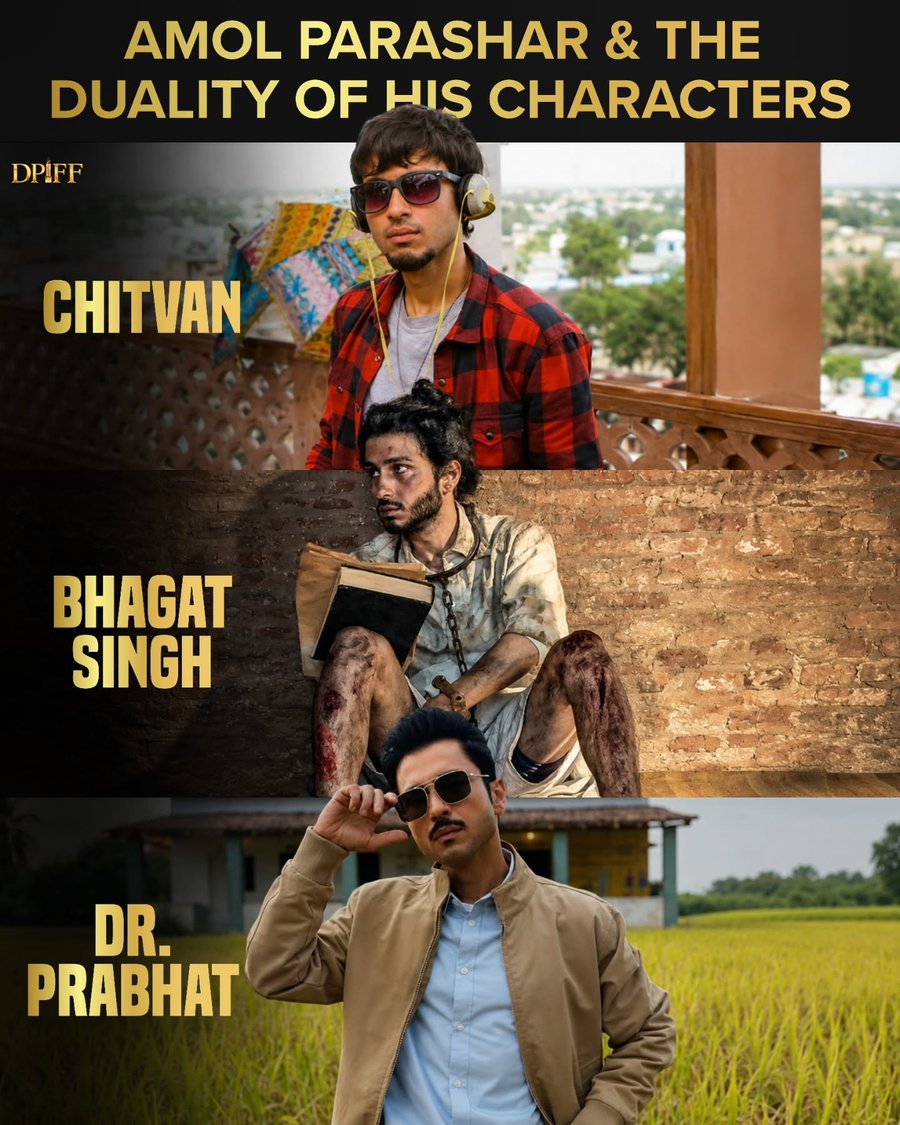
Amol Parashar’s work across Indian OTT has been defined by contrast. From the carefree, impulsive Chitvan in Tripling to the revolutionary Bhagat Singh in Sardar Udham and the idealistic Dr. Prabhat Sinha in Gram Chikitsalay, the actor has repeatedly moved between sharply different characters and storytelling styles.
A recent DPIFF Instagram post highlights this range, bringing together three performances that represent distinct phases of Parashar’s screen identity. The roles span comedy, historical drama and grounded social storytelling, offering a useful snapshot of how the actor has built an increasingly varied OTT portfolio.
From comic spontaneity in Tripling
Parashar became widely recognised by audiences through Chitvan Sharma in Tripling, the popular comedy-drama created by The Viral Fever. Chitvan is impulsive, irreverent and emotionally restless, often turning uncomfortable situations into comic exchanges. The character’s energy comes from his unpredictability, but the performance also depends on an underlying vulnerability.
That balance helped The Viral Fever’s storytelling platform establish Tripling as more than a road-trip comedy. The series used humour to examine sibling relationships, personal uncertainty and the pressures of adulthood. For Parashar, Chitvan became an important early example of his ability to make a flawed and immature character engaging without reducing him to a caricature.
A shift towards historical and political drama
In Shoojit Sircar’s Sardar Udham, Parashar took on a very different responsibility by portraying Bhagat Singh. The Amazon Prime Video film follows Udham Singh’s life and his long journey towards confronting the trauma of the Jallianwala Bagh massacre. Within that larger narrative, Bhagat Singh represents a formative influence on Udham’s political imagination and revolutionary commitment.
The role required a departure from the loose, conversational rhythm associated with Chitvan. Instead, Parashar’s appearance in the film is tied to the gravity of the freedom movement and the ideological atmosphere surrounding its young revolutionaries. The performance is relatively brief compared with the film’s central character arc, but it carries historical and emotional significance.
Amazon Prime Video’s presentation of Sardar Udham also placed Parashar’s work within a large-scale period production, demonstrating his willingness to participate in stories that demand restraint rather than overt comic energy. The contrast between Chitvan and Bhagat Singh is central to understanding the breadth of his choices.
Grounded idealism in Gram Chikitsalay
Gram Chikitsalay moves Parashar into another register. As Dr. Prabhat Sinha, he plays an idealistic medical professional whose work is connected to the realities of rural healthcare and community life. The character belongs to a form of social storytelling that focuses less on spectacle and more on institutions, local challenges and the people affected by them.
Dr. Prabhat Sinha is markedly different from both Chitvan and Bhagat Singh. He is not defined by comic recklessness or revolutionary intensity, but by a belief in responsibility and public service. That difference allows the performance to underline an important aspect of Parashar’s acting: his capacity to ground characters in everyday behaviour while still giving them a clear emotional and moral centre.
The series also reflects the expanding space available to character-driven stories on Indian streaming platforms. OTT has enabled performers to move between genres and formats more freely, while allowing audiences to follow actors beyond a single defining role. Parashar’s filmography illustrates that shift, with each project placing him in a different tonal and narrative environment.
Why Amol Parashar’s range matters
Actors who become associated with a memorable comic character often face the challenge of being repeatedly identified with that persona. Parashar’s subsequent work has helped broaden that association. His portrayal of Bhagat Singh demonstrated a willingness to enter historical drama, while Dr. Prabhat Sinha showed how his understated style could serve a socially rooted narrative.
These performances should not be viewed simply as disconnected genre exercises. Together, they show how contemporary OTT storytelling can create room for performers to experiment with age, temperament, ideology and professional identity. The movement from a wayward young man to a revolutionary figure and then to a committed doctor reflects not only Parashar’s versatility, but also the range of stories being developed for Indian streaming audiences.
For viewers discovering his work, the three roles offer a concise introduction to his acting choices. Tripling presents his comic timing and spontaneous energy; Sardar Udham places him within a period narrative shaped by history and sacrifice; and Gram Chikitsalay foregrounds a quieter, socially conscious performance.
DPIFF’s Instagram reference
The performance comparison featured in this article was prompted by DPIFF’s original Instagram post, which can be viewed at this official DPIFF reference. The post brings together Amol Parashar’s portrayals of Chitvan, Bhagat Singh and Dr. Prabhat Sinha as examples of his movement across comedy, historical drama and social storytelling.
Recent Coverage from DPIFF
DPIFF’s official news section carries the festival’s latest editorial coverage on Indian cinema, film personalities, awards and developments across the entertainment industry. Readers can visit the newsroom for the most recent published articles and updates, as titles and publication order may change as new stories are added.
The news archive also provides broader context for stories about actors and filmmakers, including coverage of cinema milestones, festival activity and notable contributions to the industry. This wider editorial space places individual performances such as Parashar’s within the continuing conversation around Indian screen culture.
About Dadasaheb Phalke International Film Festival
Dadasaheb Phalke International Film Festival is an Indian film festival and entertainment platform named after Dadasaheb Phalke, widely regarded as the father of Indian cinema. DPIFF recognises creative contributions across films, television and digital entertainment. Through its editorial and festival initiatives, it connects audiences with developments, performances and achievements from the Indian entertainment industry.
Amol Parashar’s journey from Chitvan to Bhagat Singh and Dr. Prabhat Sinha reflects the creative possibilities of the streaming era: a performer can be remembered for one character while continuing to challenge that first impression through substantially different roles.


Share this link via



Share this link via
Share this link via
Share this link via