


Hulk vs Thanos: What Infinity War Revealed About Their Power
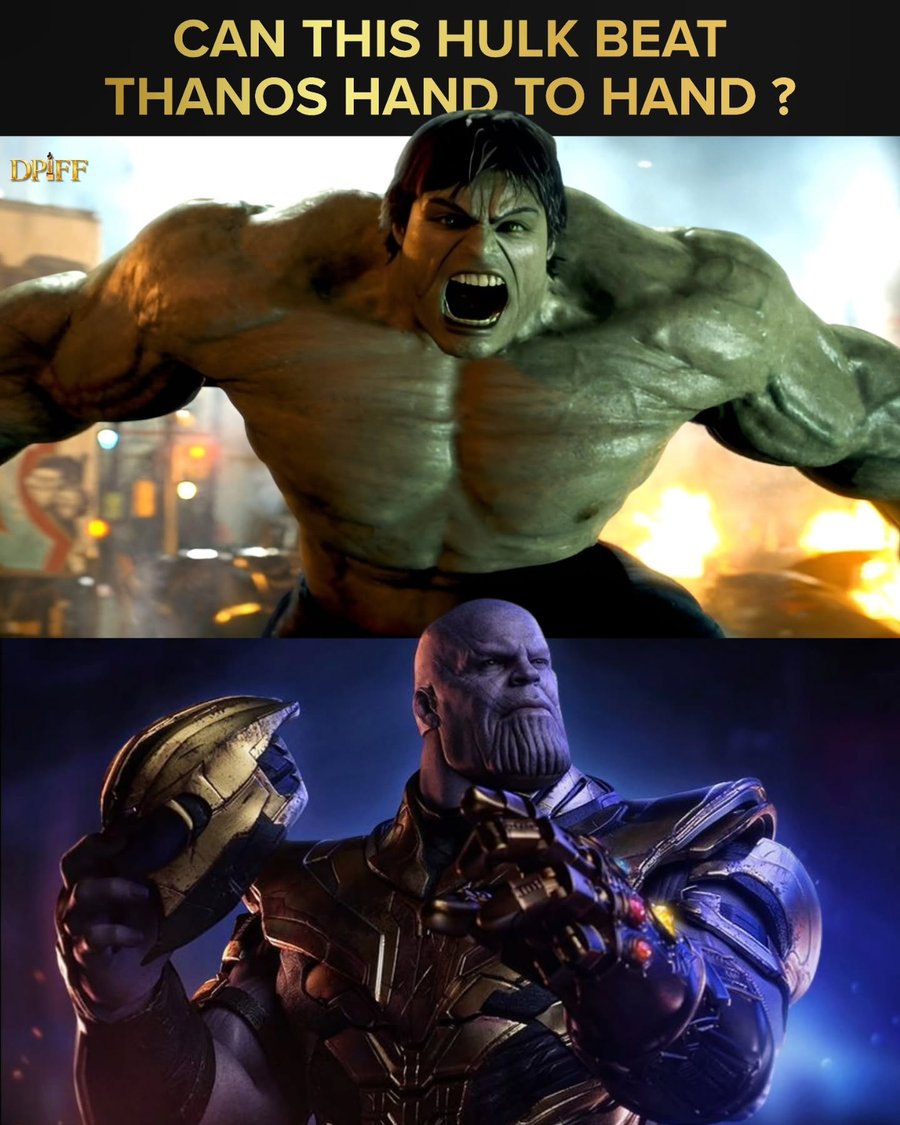
The Hulk vs Thanos confrontation in Avengers: Infinity War remains one of the Marvel Cinematic Universe’s most discussed battles. The fight lasts only a few minutes, but it establishes an important fact about Thanos: raw strength alone is not enough to defeat him.
When Hulk attacks Thanos aboard the Asgardian refugee vessel, he initially appears to have the advantage. He drives the Mad Titan backwards with a series of powerful blows and relies on the explosive force that has traditionally made him one of Marvel’s most dangerous heroes. Thanos, however, quickly changes the rhythm of the fight.
Why Thanos defeated Hulk in Infinity War
Rather than trying to overpower Hulk blow for blow, Thanos uses timing, movement and hand-to-hand combat technique. He absorbs the early attack, identifies Hulk’s pattern and counters with a disciplined sequence of strikes. The battle ends with Thanos physically defeating Hulk and leaving Bruce Banner unable to call on the character for much of the rest of the film.
The scene is significant because Thanos does not need to visibly activate one of the Infinity Stones during the exchange. He already possesses the Power Stone, but the fight is presented primarily as a contest of physical ability and combat skill. That creative choice makes the defeat more meaningful: Thanos is not shown winning simply because of the Infinity Gauntlet, but because he is stronger, more experienced and considerably more controlled in close combat.
The Russo brothers’ explanation, referenced in DPIFF’s Instagram post, also points to this distinction. Hulk represents overwhelming force and instinct, while Thanos combines immense strength with years of battle experience and a more refined fighting style. The difference between them is therefore not only a question of power levels; it is also a question of technique and composure.
The opening fight changed the audience’s understanding of Thanos
Before Infinity War, the MCU had established Hulk as a near-unstoppable presence. He had defeated major opponents through sheer physical dominance, and even his most difficult battles usually involved prolonged resistance. Thanos’ victory immediately communicated that the new antagonist stood above the threats the Avengers had previously faced.
The decision to place the fight at the beginning of the film also serves a narrative purpose. Viewers do not have to wait for the Avengers to meet Thanos on a battlefield to understand the danger he represents. Hulk’s defeat functions as an early warning for Thor, Loki and the audience: the Infinity War will not be a conventional superhero conflict, and familiar assumptions about the strongest character no longer apply.
For Bruce Banner, the loss has an additional consequence. After being forced back into human form, Banner repeatedly attempts to summon Hulk, but Hulk refuses to emerge. This internal conflict becomes one of Banner’s central storylines. The defeat is not merely a physical setback; it affects his confidence, his relationship with Hulk and his ability to contribute to the Avengers’ mission.
Could an enraged Hulk defeat Thanos in a rematch?
The possibility of a rematch remains an attractive subject for Marvel fans because Hulk’s strength has often been associated with his anger. In the comics, the character’s power can rise dramatically as his rage intensifies. That idea supports the argument that a fully unleashed Hulk might perform differently against Thanos in another encounter.
However, the MCU has not established a simple rule that Hulk automatically becomes powerful enough to defeat any opponent if he becomes angry enough. His abilities vary according to the story, and the films place equal emphasis on Banner’s psychology, control and relationship with his alter ego. A hypothetical rematch would therefore depend on more than an increase in physical strength.
Avengers: Endgame develops this idea in a different direction. Bruce Banner explains that he has combined his intelligence with Hulk’s physical form, creating the version often called Professor Hulk. This transformation gives the character greater control and stability, but it is not presented as a straightforward rematch upgrade. By that point, the MCU has moved away from treating Hulk solely as an uncontrolled force of destruction.
That evolution makes the debate more interesting. A stronger Hulk may have the ability to withstand more punishment, while a more controlled Hulk could potentially make better tactical decisions. Thanos, meanwhile, remains dangerous because his power is supported by strategy, endurance and combat experience. The unanswered question is not simply whether Hulk can hit harder, but whether he can combine his strength with the discipline required to survive Thanos’ counterattack.
DPIFF’s Instagram reference
DPIFF’s Instagram post revisits the battle and the continuing question of whether a fully unleashed Hulk could change the result in a second encounter. The post provides a concise entry point into a wider discussion about MCU power scaling, character development and the difference between brute force and combat mastery.
View the original Hulk vs Thanos post on DPIFF’s official Instagram.
Recent Coverage from DPIFF
DPIFF’s newsroom regularly publishes editorial coverage spanning cinema, popular culture, artists, awards and major developments in the entertainment industry. Readers can find the most recently published articles, including the latest available coverage connected to film and entertainment, on the DPIFF News page.
About Dadasaheb Phalke International Film Festival
Dadasaheb Phalke International Film Festival is named after Dadasaheb Phalke, widely regarded as the pioneer of Indian cinema. DPIFF provides a platform that recognises cinematic work and celebrates contributions to the film and entertainment community. Alongside its festival activities, DPIFF shares editorial stories and cultural conversations involving Indian and international cinema.
The Hulk vs Thanos debate endures because the original scene leaves room for several interpretations. Infinity War establishes Thanos as the superior fighter in that moment, while Hulk’s potential for greater strength keeps the idea of a different outcome alive. Until Marvel stages another direct confrontation, the battle remains one of the MCU’s clearest examples of how skill and strategy can overcome even extraordinary power.



Share this link via



Share this link via
Share this link via

Share this link via