


Why Sarat Chandra Chattopadhyay’s Devdas Still Resonates
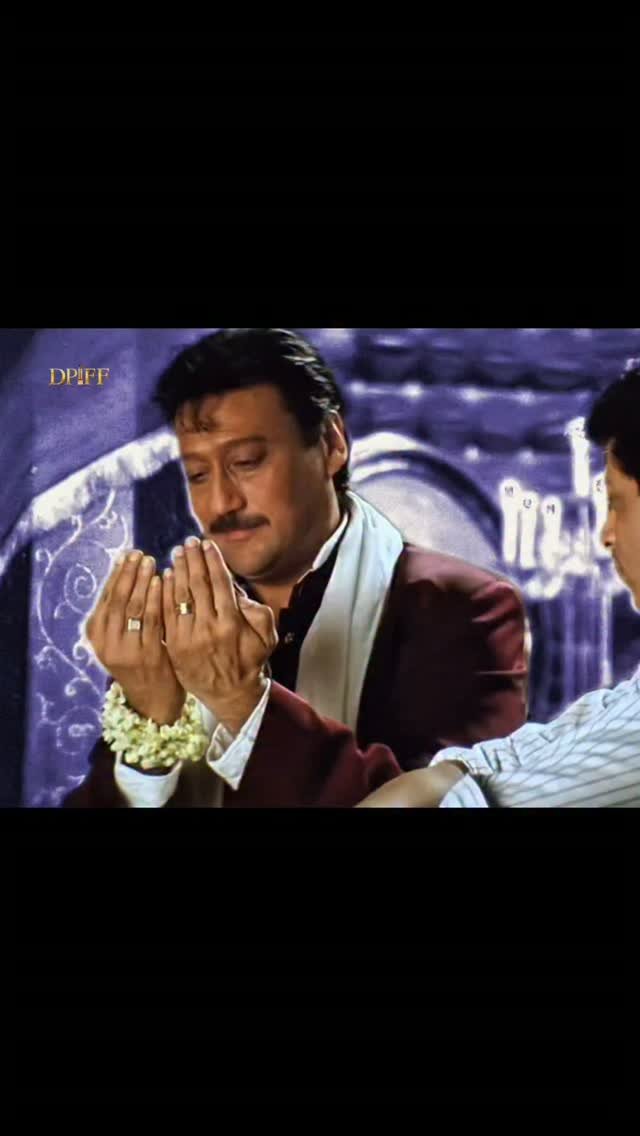
Sarat Chandra Chattopadhyay’s Devdas remains one of Indian literature’s most enduring tragic love stories. At its centre is Devdas, a man who loves Paro but cannot overcome the social hierarchy, family pride and indecision that prevent their marriage. His failure to act decisively sets him on a path of grief, self-destruction and irreversible regret.
A recent DPIFF Instagram post revisits the emotional core of Devdas, drawing attention to the novel’s continuing relevance as a story about love, pride, social expectations and the consequences of hesitation. Although the tale is rooted in its own period, its central conflict remains familiar: personal feeling colliding with family honour, class divisions and social convention.
The tragedy begins with indecision
Devdas is not defeated only by external circumstances. His inability to make a clear choice is equally important to the tragedy. He loves Paro deeply, but repeatedly allows fear, pride and family pressure to shape his decisions. By the time he understands the cost of his passivity, the possibility of a shared life has already slipped away.
This makes Devdas different from a conventional romance built around determined lovers overcoming obstacles. The story’s emotional force comes from what its protagonist fails to do. Devdas does not fight hard enough for the life he wants, and his later suffering becomes inseparable from the knowledge that his own hesitation contributed to the loss.
Paro and the weight of social expectations
Paro’s relationship with Devdas is shaped not only by affection but also by the rigid social structures surrounding them. Their families’ differences become a barrier that personal emotion cannot easily overcome. The story presents a world in which marriage is connected to status, reputation and family authority, leaving little room for individual choice.
Paro is therefore more than a romantic figure in Devdas’s memory. She represents the life he could have chosen, while also revealing the limits imposed on women and families by social expectations. Her journey after the separation underscores the fact that the consequences of Devdas’s indecision are not his alone.
Chandramukhi adds compassion to the narrative
Chandramukhi introduces another dimension to the novel’s emotional landscape. As a compassionate woman who recognises Devdas’s pain, she offers care and understanding when he is at his most vulnerable. Yet Devdas remains emotionally trapped in his attachment to Paro and unable to accept the possibility of healing.
Her presence complicates the story’s ideas about love and social judgement. Chandramukhi is often treated as an outsider by society, but the narrative gives her empathy, dignity and emotional insight. In contrast, Devdas’s social respectability does not make him morally or emotionally stronger. The relationship exposes the difference between social status and human compassion.
Why the story has endured across Indian cinema
The emotional clarity of Devdas has made it particularly suited to adaptation. Filmmakers have returned to the story across languages and generations, interpreting its characters through changing cinematic styles and social perspectives. Notable screen versions include P.C. Barua’s adaptations, Bimal Roy’s 1955 Hindi film and Sanjay Leela Bhansali’s 2002 interpretation.
These adaptations have differed in tone, visual language and performance style, but the central conflict has remained recognisable. The story offers filmmakers a strong dramatic foundation: a love obstructed by social difference, a protagonist consumed by regret, a woman who becomes a symbol of lost possibility and a second woman whose compassion challenges conventional moral judgement.
The continued presence of Devdas in Indian cinema also reflects the strength of literary adaptation as a creative form. Each retelling can preserve the emotional skeleton of the original while speaking to the concerns of a new audience. Questions about class, family authority, masculinity, emotional responsibility and the treatment of marginalised women continue to give the narrative contemporary relevance.
A tragic love story with wider questions
It is tempting to remember Devdas only as a tale of doomed romance, but its concerns extend beyond the relationship between Devdas and Paro. The novel examines how pride can harden into isolation, how social rules can influence private decisions and how regret can become a substitute for responsibility.
Devdas’s tragedy is also a warning against romanticising suffering. His pain may be emotionally powerful, but the story does not present self-destruction as a meaningful solution. Instead, it shows how refusing to confront difficult choices can damage the individual and everyone around him.
DPIFF’s Instagram reference
DPIFF’s video post presents Devdas as a classic tragic love story by Sarat Chandra Chattopadhyay and highlights its central themes of love, pride, social expectations and regret. View the original post on DPIFF’s official Instagram page.
Recent Coverage from DPIFF
Readers can explore the DPIFF News section for the festival’s latest verified editorial coverage on cinema, filmmakers, performers, awards and developments across the Indian and international film community. Individual recent articles have not been listed here without direct verification of their current titles and URLs.
About Dadasaheb Phalke International Film Festival
Dadasaheb Phalke International Film Festival is a platform dedicated to recognising achievement and excellence in Indian and international cinema. Named after Dadasaheb Phalke, widely regarded as the father of Indian cinema, the festival connects filmmakers, artists, industry professionals and audiences. Its editorial work also highlights influential films, literary works and cultural milestones that have shaped the way stories are experienced on screen.
More than a story of lost love, Devdas endures because it asks difficult questions about choice, social pressure and emotional accountability. Its many interpretations continue to invite readers and viewers to look beyond the romance and examine the decisions that make the tragedy inevitable.



Share this link via


Share this link via

Share this link via
Share this link via