Vishnu Manchu Sees Anime as a New Canvas for Indian Mythology
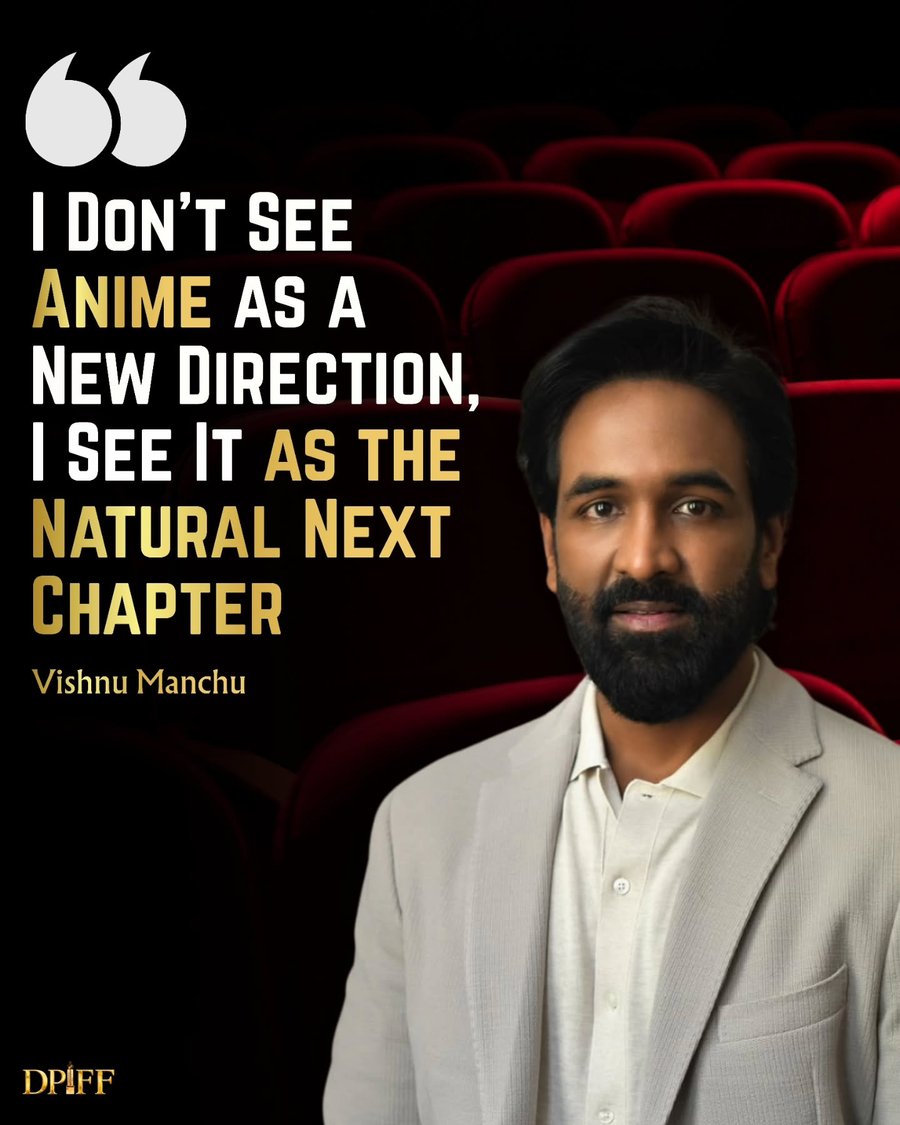
Vishnu Manchu has identified animation and anime as a potential next step for taking Indian mythology to audiences around the world. In a recent post shared by the Dadasaheb Phalke International Film Festival, the actor and filmmaker suggested that animation could provide the creative freedom needed to portray stories of devotion, transformation and the divine on a scale that live-action cinema may not always allow.
The idea comes in the context of Manchu’s work on Kannappa, a mythological film built around a deeply devotional subject. While his comments do not announce a new animated project, they point to a broader creative interest in how Indian stories can be adapted for contemporary, international audiences.
Why animation appeals to mythological storytelling
Indian mythology contains worlds that extend beyond realistic locations, physical performances and conventional production design. Divine transformations, celestial realms, supernatural beings and symbolic imagery can all require extensive visual effects when approached through live action. Animation, by contrast, allows filmmakers to design these elements directly within the visual language of the story.
That flexibility can be particularly useful for narratives shaped by faith and symbolism. A character’s transformation can be expressed through movement, colour and composition, while large-scale mythological settings can be created without the logistical constraints of physical sets or location shooting. The medium also gives artists greater control over how the extraordinary coexists with the human and emotional dimensions of a story.
For Indian mythology, this is more than a technical consideration. Animation can help retain visual elements that are important to the source tradition while presenting them in a form that is accessible to younger viewers and audiences unfamiliar with the original cultural context.
From Kannappa to a wider conversation about Indian stories
Manchu’s reference to Kannappa is significant because it connects the discussion to an existing attempt to bring devotional mythology to the screen on a large scale. A live-action production must balance performance, production design, visual effects and audience expectations around the representation of sacred figures. Animation could offer a different route, allowing creators to build an entire visual world around the spiritual and fantastical qualities of the narrative.
However, the success of such adaptations would depend on more than visual scale. Mythological animation also requires cultural sensitivity, strong writing and a clear understanding of the emotional relationship audiences have with these stories. The form may be limitless, but the storytelling still needs discipline and respect for the traditions being represented.
Why anime is relevant to the Indian entertainment conversation
Manchu also pointed to the growing popularity of anime in India. That audience familiarity matters because it demonstrates that animated storytelling is no longer limited to children’s entertainment or occasional family releases. Viewers increasingly engage with animation as a medium capable of presenting action, drama, fantasy, philosophy and complex character journeys.
Anime’s international reach has also shown how stories rooted in a specific culture can travel across borders when their characters, themes and visual identity are communicated effectively. This creates an opportunity for Indian creators to approach mythology through a format that already has a strong global vocabulary, while developing a style that remains distinctly Indian.
The opportunity should not be understood as a need to imitate Japanese anime. Instead, it lies in recognising the format’s ability to support ambitious world-building and emotionally layered narratives. Indian animation could draw from regional art traditions, temple imagery, folk performance, classical iconography and local storytelling practices while using modern production techniques.
A possible bridge between heritage and global audiences
The appeal of animated Indian mythology is ultimately connected to the question of access. Stories that have traditionally circulated through oral traditions, religious texts, theatre, television and live-action cinema could reach new viewers through platforms and formats that are already familiar to a global audience.
That process would require creators to make careful choices about language, characterisation and adaptation. A visually spectacular production may attract attention, but lasting international interest depends on whether viewers can connect with the central human ideas: sacrifice, duty, devotion, courage, loss and transformation.
Manchu’s comments therefore open up a conversation rather than confirm a specific production plan. They suggest that animation and anime may become important tools for Indian filmmakers seeking to tell mythological stories beyond the limitations of conventional live action. For an industry exploring new ways to combine cultural identity with international reach, that possibility is worth watching.
DPIFF Instagram Reference
The discussion was highlighted in a DPIFF Instagram post discussing Vishnu Manchu’s views on animation, anime and the future of Indian mythology on screen. Read the original post on DPIFF’s official Instagram page.
Recent Coverage from DPIFF
For the latest festival announcements, film-industry features and entertainment coverage published by Dadasaheb Phalke International Film Festival, readers can visit the DPIFF News section. This article does not list individual recent stories without verified access to their current titles and URLs.
About Dadasaheb Phalke International Film Festival
Dadasaheb Phalke International Film Festival is an Indian film festival that celebrates cinematic achievement and recognises contributions across the film and entertainment industries. Named after Dadasaheb Phalke, widely regarded as the father of Indian cinema, the festival provides a platform for celebrating Indian and international film culture. DPIFF also shares editorial coverage, industry developments and conversations with artists through its official digital channels.
As Indian creators consider new ways to present mythological storytelling, animation offers a medium capable of combining cultural specificity with expansive visual imagination. Vishnu Manchu’s perspective places that possibility firmly within the ongoing conversation about the global future of Indian cinema.


Share this link via


Share this link via
Share this link via