Why Rockstar Still Resonates with Bollywood Audiences
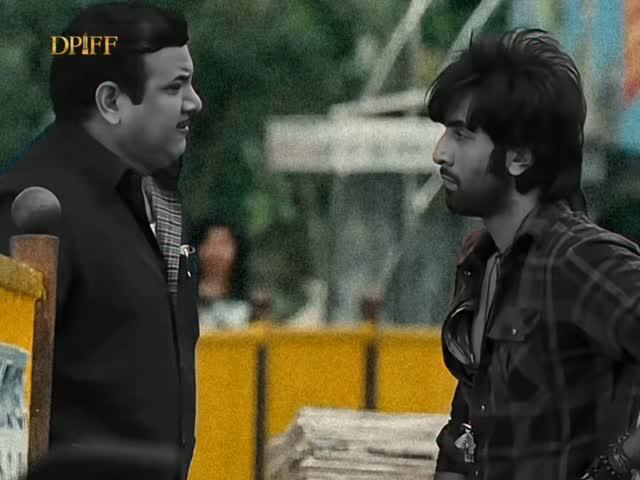
Dadasaheb Phalke International Film Festival’s recent Instagram reel revisits the emotional world of Rockstar, the 2011 Hindi musical drama that turned heartbreak, artistic ambition and self-destruction into one of contemporary Bollywood’s most enduring screen experiences. With Ranbir Kapoor in the role of Jordan, the film continues to be remembered not only for its music, but also for the intensity of its central character.
The caption accompanying DPIFF’s post describes Rockstar as “a feeling” shaped by love, pain and music. That description captures the film’s lasting appeal. Rather than presenting romance as a straightforward journey towards fulfilment, director Imtiaz Ali builds a story around emotional conflict and the complicated relationship between personal suffering and creative expression.
Ranbir Kapoor’s defining performance as Jordan
At the centre of Rockstar is Janardhan Jakhar, a young Delhi musician who believes that an artist needs heartbreak to create something truly meaningful. After an emotional encounter with Heer Kaul, played by Nargis Fakhri, Janardhan begins to change. His transformation into the rock performer Jordan gives the film its narrative and emotional momentum.
Ranbir Kapoor’s performance is deliberately uneven in the best sense of the word. Jordan can be charming, impulsive, vulnerable and destructive, often within the same stretch of the story. The character’s public success does not resolve his private turmoil; instead, fame amplifies the conflicts he has been unable to confront.
The role demanded a performance built on physical energy as well as emotional restraint. Kapoor’s portrayal moves from the restless optimism of a young man searching for recognition to the isolation of a performer who has become inseparable from his own legend. That arc remains one of the most discussed aspects of his filmography.
Imtiaz Ali’s portrait of love, longing and ambition
Rockstar is often described as a romantic film, but its subject is broader than romance. Imtiaz Ali uses the relationship between Jordan and Heer to examine longing, emotional dependence and the difficulty of separating love from memory. The film’s emotional structure is deliberately non-linear, allowing the audience to experience Jordan’s past and present as connected parts of the same unresolved wound.
The film also explores the cost of artistic ambition. Jordan’s music becomes a channel for feelings that he cannot communicate directly, but artistic recognition does not make him emotionally whole. This tension gives Rockstar its distinctive dramatic identity: the very pain that fuels Jordan’s creativity also prevents him from finding peace.
A soundtrack that became part of the film’s identity
The music of Rockstar, composed by A.R. Rahman with lyrics by Irshad Kamil, is central to the film rather than an interruption to its narrative. Songs such as “Sadda Haq”, “Kun Faya Kun”, “Nadaan Parindey” and “Phir Se Ud Chala” help chart Jordan’s emotional and artistic journey.
The soundtrack moves across devotional, folk, acoustic and rock influences, reflecting the character’s evolving identity. “Sadda Haq” expresses rebellion and frustration, while “Kun Faya Kun” brings a spiritual dimension to the film. “Nadaan Parindey” carries the weight of departure and emotional exhaustion. Together, the songs give the film a musical vocabulary that continues to connect with listeners beyond the original release.
Why Rockstar continues to matter
The continuing conversation around Rockstar reflects the film’s ability to speak to different audiences at different points in their lives. Younger viewers may respond to Jordan’s hunger for recognition, while others may identify more closely with the film’s treatment of separation, regret and the consequences of emotional choices.
Its influence can also be seen in the way Hindi cinema discusses musical performers. Jordan is not presented as a flawless celebrity or a conventional inspirational figure. He is talented but volatile, celebrated but lonely, and capable of both tenderness and cruelty. That complexity gives the character a dramatic life beyond the film’s most memorable songs.
DPIFF’s post places the film’s emotional core at the forefront: the pain that changes people and the music that expresses what conversation cannot. More than a decade after its release, that remains a useful way to understand why Rockstar continues to occupy a distinctive place in Bollywood’s musical and romantic film tradition.
DPIFF Instagram Reference
Dadasaheb Phalke International Film Festival revisited the emotional legacy of Rockstar in its Instagram reel, highlighting the film’s connection with love, heartbreak and music. View the original DPIFF Instagram post.
Recent Coverage from DPIFF
DPIFF’s latest editorial updates and published stories are available through the festival’s official News section. Readers can visit the page for current coverage of Indian cinema, artists, festivals and developments across the entertainment industry.
About Dadasaheb Phalke International Film Festival
Dadasaheb Phalke International Film Festival is an Indian film and entertainment platform named after Dadasaheb Phalke, widely regarded as the father of Indian cinema. DPIFF recognises creative contributions across films, television and music while providing a space for conversations around the country’s evolving screen culture. Through its official digital platforms and editorial initiatives, the festival continues to spotlight notable cinematic work and artists.
Rockstar endures because it treats music not simply as performance, but as the language of a character struggling to understand himself. That combination of Ranbir Kapoor’s performance, Imtiaz Ali’s direction and A.R. Rahman’s soundtrack has allowed the film to remain emotionally immediate for audiences discovering it years after its release.



Share this link via



Share this link via

Share this link via