Life of Pi VFX: How Richard Parker Came to Life
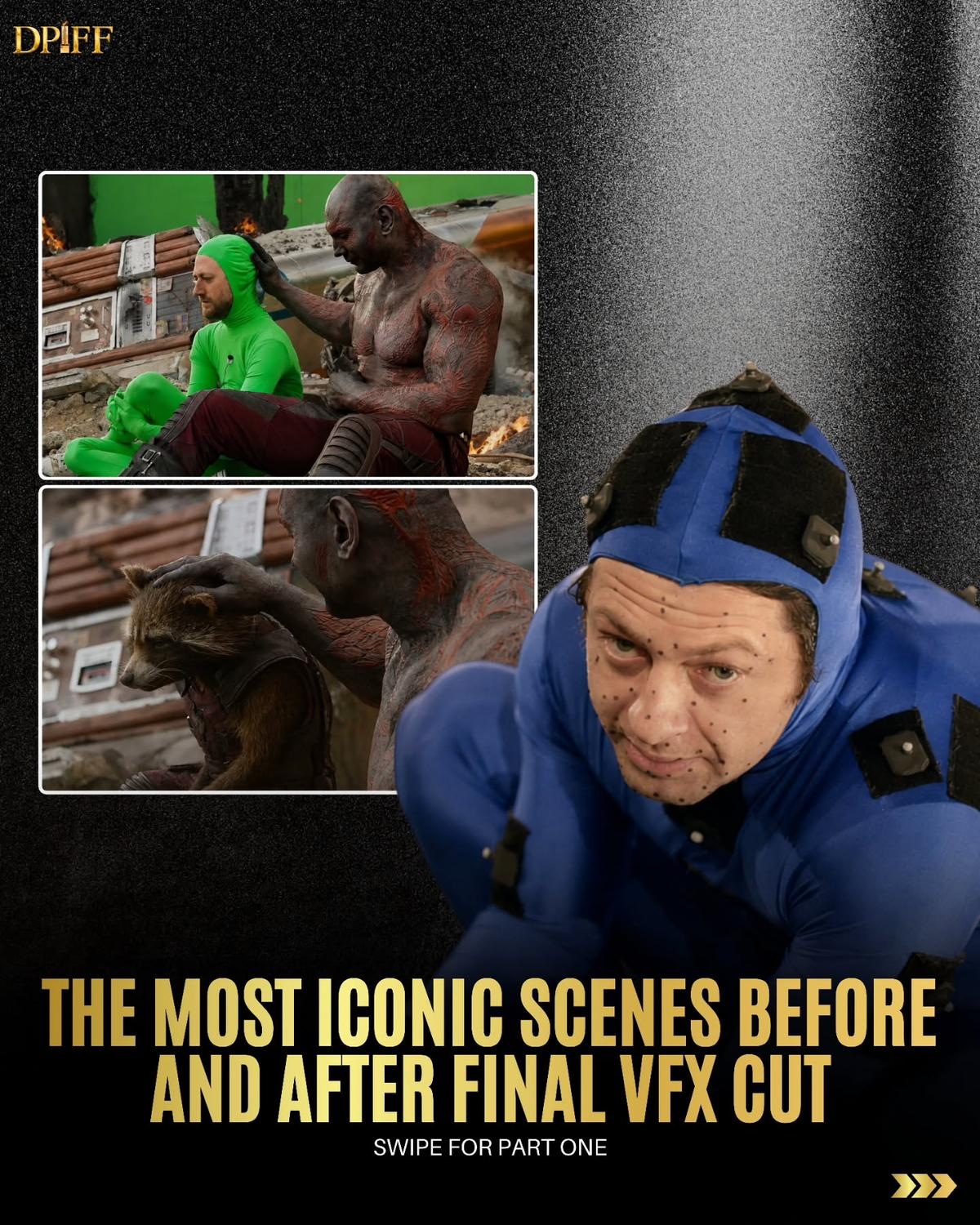
Ang Lee’s Life of Pi remains a defining example of how visual effects can support a deeply human story rather than exist merely as spectacle. The 2012 adventure film’s behind-the-scenes imagery, highlighted in a recent DPIFF Instagram carousel, offers a closer look at the green screens, performance references, motion-capture setups and digital environments that shaped its extraordinary ocean journey.
At the centre of that achievement was Richard Parker, the Bengal tiger who shares a lifeboat with Pi Patel for much of the film. Although the production used live tigers for reference and selected practical material, the tiger seen in the most demanding sequences was created digitally. Rhythm & Hues Studios led the visual-effects work, combining detailed animal animation, realistic fur, lighting, water interaction and compositing to make Richard Parker appear physically present beside the young protagonist.
Why the visual effects in Life of Pi were so demanding
The film’s central challenge was its setting. Much of the story unfolds on open water, where the characters, the boat and the surrounding environment had to remain believable across changing weather, light and waves. Rather than relying on a single technique, the filmmakers built the imagery through a combination of practical production methods and digital effects.
Live-action references helped the performers and animators understand the tiger’s movement, weight and behaviour. Green-screen photography allowed the production to place actors in controlled environments, while digital ocean environments expanded the physical sets into a seemingly limitless sea. Water simulations were especially important because the ocean had to respond convincingly to the lifeboat, the animals and the shifting conditions around them.
The result was not simply a computer-generated tiger placed into live-action footage. Richard Parker had to react to Pi, occupy the same visual space, cast and receive light naturally, and convey changing emotions without human dialogue. His presence drives the tension of the film, making the credibility of the visual effects essential to the audience’s emotional investment.
Richard Parker and the performance problem
One of the film’s most significant creative decisions was treating Richard Parker as a character rather than a visual-effects prop. The tiger’s posture, breathing, gaze and movements communicate fear, aggression, exhaustion and moments of restraint. These details helped the animal feel unpredictable while still serving the dramatic relationship at the heart of the story.
The behind-the-scenes frames associated with the DPIFF post illustrate the layered nature of this process. A frame showing a performer or actor against a green screen may look incomplete on its own, but it represents only one stage of a much larger production pipeline. Animation, digital modelling, texture work, lighting, simulation and compositing were eventually combined to produce the finished image.
This approach also demonstrates why visual-effects filmmaking depends on close cooperation between departments. Direction, cinematography, acting, production design, animation and compositing must be planned together from the beginning. In Life of Pi, the effects were closely tied to the film’s visual language and its intimate focus on survival.
The Academy Award recognition
The scale and sophistication of the work earned Life of Pi the Academy Award for Best Visual Effects at the 85th Academy Awards. The recognition reflected the film’s technical accomplishment, but its importance goes beyond a single awards-season victory. The project showed how computer-generated imagery could be used to create a convincing natural world while preserving the emotional detail of a character-driven film.
The award also forms part of the wider history of Rhythm & Hues, a visual-effects company known for its work on major international productions. Life of Pi is often discussed as a landmark in digital creature work because Richard Parker had to meet a particularly demanding standard: audiences needed to believe in the tiger without losing sight of Pi’s isolation and vulnerability.
How the effects serve the story
What makes the film’s VFX achievement enduring is the way the technology remains largely invisible during the viewing experience. Audiences are not asked to admire a digital ocean in isolation; they are drawn into Pi’s uncertainty, loneliness and struggle to survive. The effects work succeeds because it supports the narrative’s emotional rhythm.
The film also illustrates the changing role of practical and digital filmmaking. Green screens, physical references and controlled sets did not replace artistic decision-making. Instead, they gave the filmmakers a foundation on which digital characters and environments could be built. The final imagery emerged from the relationship between those elements, not from computer generation alone.
DPIFF’s behind-the-scenes reference
DPIFF’s carousel provides a visual reminder of the production stages behind one of modern cinema’s most recognisable digital creatures. Readers can view the original post on DPIFF’s official Instagram account to see the contrast between the on-set setups and the completed imagery from Life of Pi.
Recent Coverage from DPIFF
For the latest editorial updates, film features and festival-related stories, readers can visit the DPIFF News section. The section serves as the festival’s central destination for new coverage and developments across cinema and entertainment.
About Dadasaheb Phalke International Film Festival
Dadasaheb Phalke International Film Festival is a film and entertainment platform named after Dadasaheb Phalke, widely regarded as the father of Indian cinema. DPIFF recognises creative and technical contributions across the moving-image industry while encouraging appreciation for cinematic craft. Its editorial and festival activities cover Indian cinema, international filmmaking and the evolving technologies that shape screen storytelling.
The making of Life of Pi shows that groundbreaking visual effects are most powerful when they remain connected to character, atmosphere and story. Richard Parker’s realism was not an end in itself; it was the foundation that allowed the film’s emotional journey to feel immediate and believable.



Share this link via



Share this link via

Share this link via