Tony Stark’s Sacrifice in Avengers: Endgame Explained
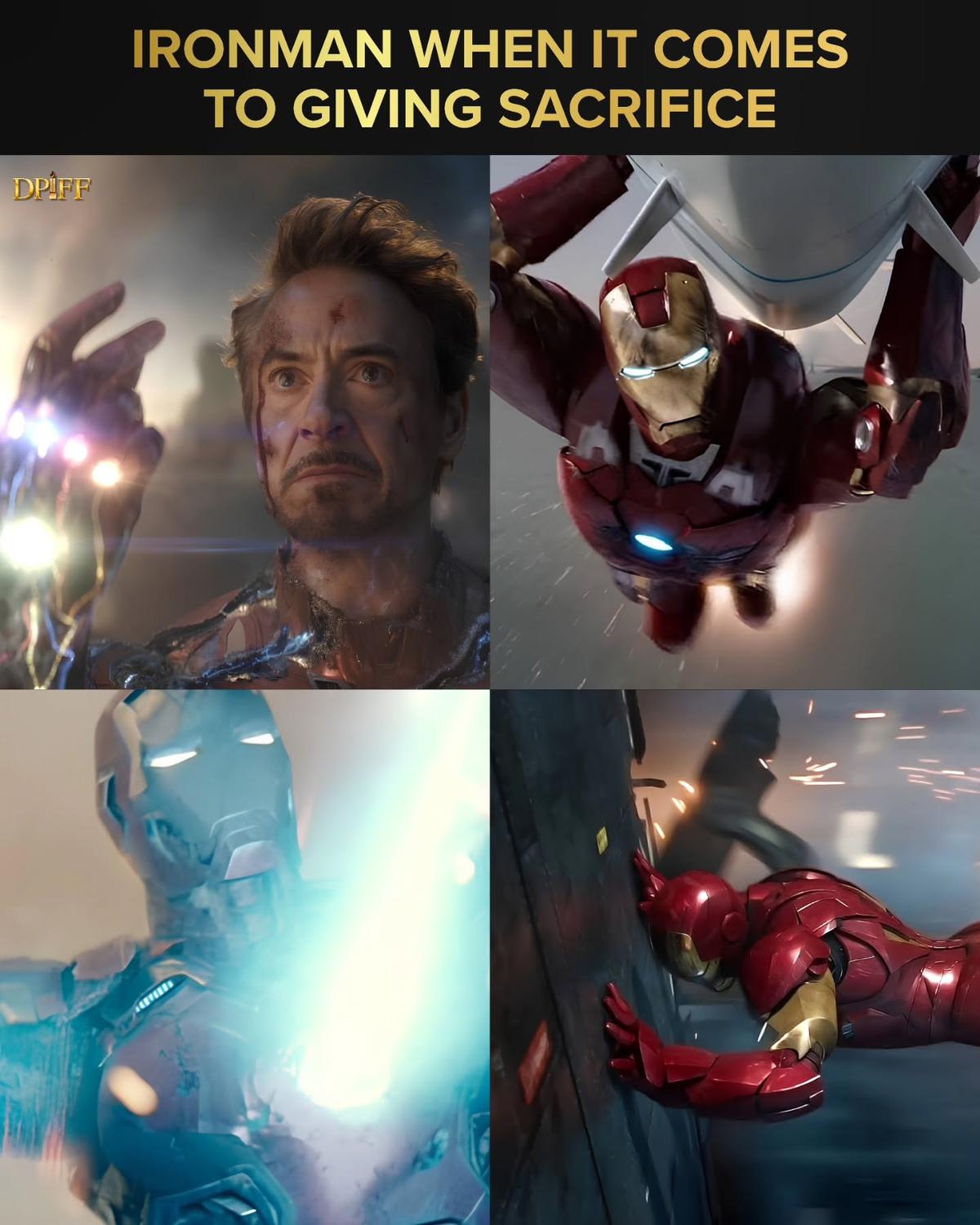
Avengers: Endgame gives Tony Stark one of the Marvel Cinematic Universe’s most consequential endings. In the film’s final battle, Stark takes possession of the Infinity Stones and uses their power to eliminate Thanos and his army, fully aware that the energy will cost him his life. The moment transforms Iron Man’s story from one of personal redemption into a defining example of self-sacrifice in modern superhero cinema.
DPIFF’s Instagram post revisits this decisive act and the emotional journey behind it. Tony Stark does not begin his story as a traditional selfless hero. He is introduced in Iron Man as a brilliant but egocentric industrialist whose weapons business has helped shape his public identity. His transformation unfolds across the Marvel films through repeated confrontations with the consequences of his choices, his responsibilities to others and the limits of technology.
The final battle of Avengers: Endgame
By the time of Avengers: Endgame, the Avengers have already suffered a devastating defeat at the hands of Thanos. The surviving heroes eventually find a way to confront the catastrophe, leading to a final battle in which Thanos and his forces threaten the universe once again.
When the Infinity Stones come within reach, Tony uses the nanotechnology integrated into his Iron Man armour to transfer the Stones to himself. He then activates them, erasing Thanos and the invading army. The act succeeds because Stark understands the danger and chooses to proceed despite knowing that a human body cannot withstand the Stones’ combined power.
His final words, “I am Iron Man,” deliberately echo the line that concluded his first film. In 2008, the statement established Tony’s willingness to claim the Iron Man identity publicly. In Endgame, the same words carry a different meaning: they mark the completion of a character arc shaped by accountability, courage and the decision to place the survival of others above his own life.
How Tony Stark’s character changed
Tony’s sacrifice is significant because it is not an isolated heroic gesture. It follows years of emotional and moral development. His early motivations are closely connected to ego, invention and the desire to control threats through technology. Even when he acts heroically, his decisions often create new dangers or deepen existing conflicts.
That tension remains central to his role in the wider Marvel narrative. Stark’s creation of Ultron, his disagreements with Steve Rogers and his fear of failing to protect the world all reflect the same underlying concern: whether power can be controlled before it causes further destruction. His intelligence remains his greatest tool, but Endgame shows that intelligence alone is not what defines his heroism.
The final choice is meaningful because Tony is no longer acting to protect his reputation or prove that he is the smartest person in the room. He acts to give the surviving heroes and the wider universe a chance to live. His family life and his relationship with Pepper Potts also give the sacrifice a deeply personal dimension. Tony has something tangible to lose, making the decision more difficult and more human.
Why the Iron Man ending continues to resonate
Tony Stark’s death became one of the most discussed moments of the Marvel Cinematic Universe because it brought closure to a character who had anchored the franchise since its beginning. Robert Downey Jr.’s performance helped make Stark’s humour, vulnerability, arrogance and affection equally important parts of the character.
The scene also demonstrates how a large-scale action film can make spectacle serve character. The snap is visually tied to the mythology of the Infinity Stones, but its emotional impact comes from the choices made before it. The audience understands what Tony is doing, why he does it and what the consequences will be before the battle has fully ended.
For audiences who followed the Marvel films across the first major phase of the franchise, the moment functions as both a conclusion and a farewell. Iron Man’s journey begins with survival and self-preservation, but ends with an act that places the lives of countless others above his own. That reversal is what gives the sacrifice its lasting narrative force.
DPIFF Instagram Reference
The original DPIFF reflection on Tony Stark’s final act is available on the festival’s official Instagram page:
View the DPIFF Instagram post on Iron Man’s sacrifice in Avengers: Endgame.
The post highlights the central idea behind the character’s ending: Iron Man’s greatest strength is ultimately not his armour or technology, but his willingness to make an irreversible choice for the protection of others.
About Dadasaheb Phalke International Film Festival
Dadasaheb Phalke International Film Festival is an Indian film festival and entertainment platform named after Dadasaheb Phalke, widely regarded as the father of Indian cinema. DPIFF celebrates contributions across Indian film and entertainment while creating space for discussion around memorable artists, films and cinematic achievements. Through its editorial and social channels, the festival also connects audiences with important moments from Indian and international screen culture.
Tony Stark’s ending remains powerful because it gives a definitive shape to a long-running transformation. The hero who once measured his worth through invention and influence ultimately proves it through sacrifice, making the final chapter of Avengers: Endgame inseparable from the emotional legacy of Iron Man.



Share this link via



Share this link via

Share this link via