


Avengers: Doomsday Signals a New Era for Marvel’s Sentinels
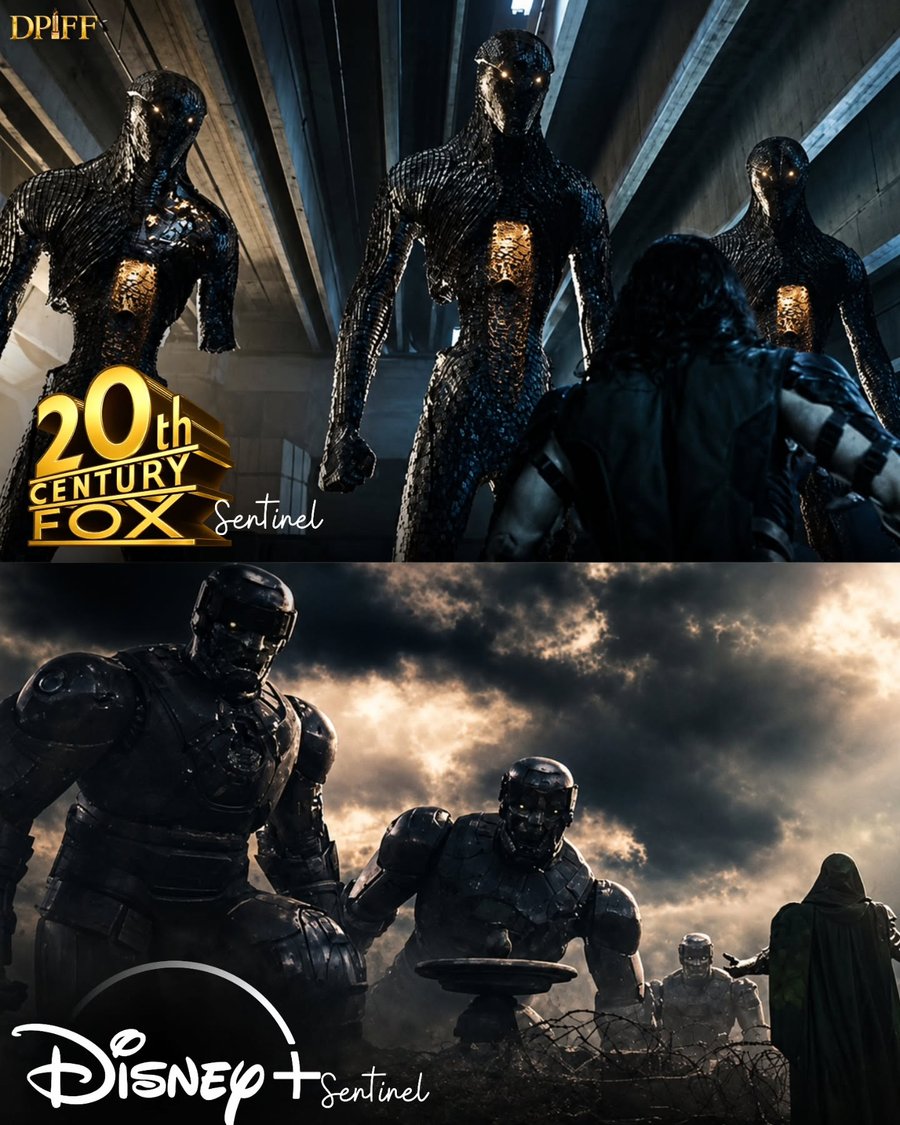
The Sentinels are returning to the centre of the X-Men mythology, but their visual identity appears to be changing with the move from Fox’s X-Men films to the Marvel Cinematic Universe. A recent post by Dadasaheb Phalke International Film Festival highlights the contrast between the sleek, adaptive machines seen in X-Men: Days of Future Past and the more heavily armoured, comic-inspired design associated with Avengers: Doomsday.
That contrast is more than a change in costume or production design. The Sentinel is one of the most recognisable symbols of mutant persecution in Marvel comics, and its reintroduction offers the MCU an opportunity to reinterpret a familiar threat for a new generation of viewers.
How the Sentinels changed in X-Men: Days of Future Past
In X-Men: Days of Future Past, the Sentinels were presented as advanced weapons created to hunt mutants. The film’s future-set machines had a dark, streamlined appearance and were designed to suggest speed, precision and technological adaptability rather than conventional military strength.
Their most distinctive feature was their ability to adapt to mutant powers. The film connects this capability to the DNA of Mystique, whose shape-shifting biology becomes central to the development of the future Sentinels. As a result, the machines could respond to powers such as fire manipulation, ice generation and physical transformation, making them a particularly dangerous opponent for the X-Men.
This design also served the film’s dystopian storytelling. The Sentinels were not simply large robots; they represented a future in which fear of mutants had developed into an organised system of surveillance, weaponisation and extermination.
What makes the Avengers: Doomsday version different
The visual approach associated with the Sentinels in Avengers: Doomsday, as highlighted in DPIFF’s post, moves in a different direction. Instead of emphasising a sleek adaptive body, the newer interpretation appears more mechanical, armoured and closer to the traditional comic-book image of a giant mutant-hunting machine.
That distinction may reflect the different storytelling environment of the Marvel Studios film. The Sentinels in Days of Future Past were part of a contained dystopian conflict involving time travel and the survival of the mutant population. In an Avengers-scale story, a more imposing mechanical design can communicate the magnitude of a threat facing multiple superhero teams and worlds.
It is important, however, to separate confirmed visual information from wider fan interpretation. The DPIFF post presents the design comparison as a discussion point, while the full role, capabilities and story context of the Sentinels in Avengers: Doomsday depend on the film’s official material and eventual release.
Why the Sentinel redesign matters to the MCU
The return of the Sentinels carries particular significance because Marvel Studios is expanding the X-Men and mutant corner of its cinematic universe. The franchise has already established a long history of mutant storytelling through the earlier Fox films, while Marvel Studios now has the opportunity to connect those characters and ideas with the wider MCU.
That transition creates a creative challenge. Audiences recognise the X-Men, Magneto, Mystique, Wolverine and the Sentinels from previous films, but a new continuity needs to establish its own visual language. Reworking the Sentinels allows Marvel to acknowledge the legacy of the earlier films without simply repeating their designs.
The choice also reflects the enduring flexibility of comic-book technology. In Marvel stories, the Sentinels have appeared in multiple forms, from enormous humanoid machines to advanced systems capable of tracking and neutralising mutant abilities. Their appearance can therefore change according to the period, tone and scale of the story while preserving their central function as instruments of anti-mutant control.
A visual bridge between two X-Men eras
The comparison between the two designs illustrates how superhero franchises use production design to mark a change in ownership, continuity and tone. The Sentinels of Days of Future Past were shaped by a story about a possible authoritarian future. The more armoured interpretation associated with Avengers: Doomsday suggests a version built for a larger crossover setting, where the threat must stand alongside established Avengers-level conflicts.
For viewers, the design evolution also makes the transition between the Fox era and Marvel Studios’ mutant storytelling visible before the broader narrative has fully taken shape. Whether audiences prefer the adaptive sophistication of the earlier machines or the imposing comic-book armour of the newer version, the debate shows how strongly the Sentinel has remained connected to the identity of the X-Men.
DPIFF’s Instagram reference
Dadasaheb Phalke International Film Festival shared the design comparison and invited audiences to discuss which version they prefer. The original post can be viewed on DPIFF’s official Instagram page.
About Dadasaheb Phalke International Film Festival
Dadasaheb Phalke International Film Festival is an Indian film festival and entertainment platform named after Dadasaheb Phalke, widely regarded as the father of Indian cinema. DPIFF recognises contributions across Indian cinema and presents film-related stories, industry developments and popular culture to audiences through its official platforms. Its editorial and social channels also examine notable developments in international entertainment and screen culture.
The Sentinel redesign is therefore not only a question of which machine looks more intimidating. It reflects the visual and storytelling choices involved in bringing the X-Men into a new cinematic universe.



Share this link via



Share this link via

Share this link via

Share this link via