


Why Daredevil Has Become One of the MCU’s Most Screen-Time-Heavy Heroes
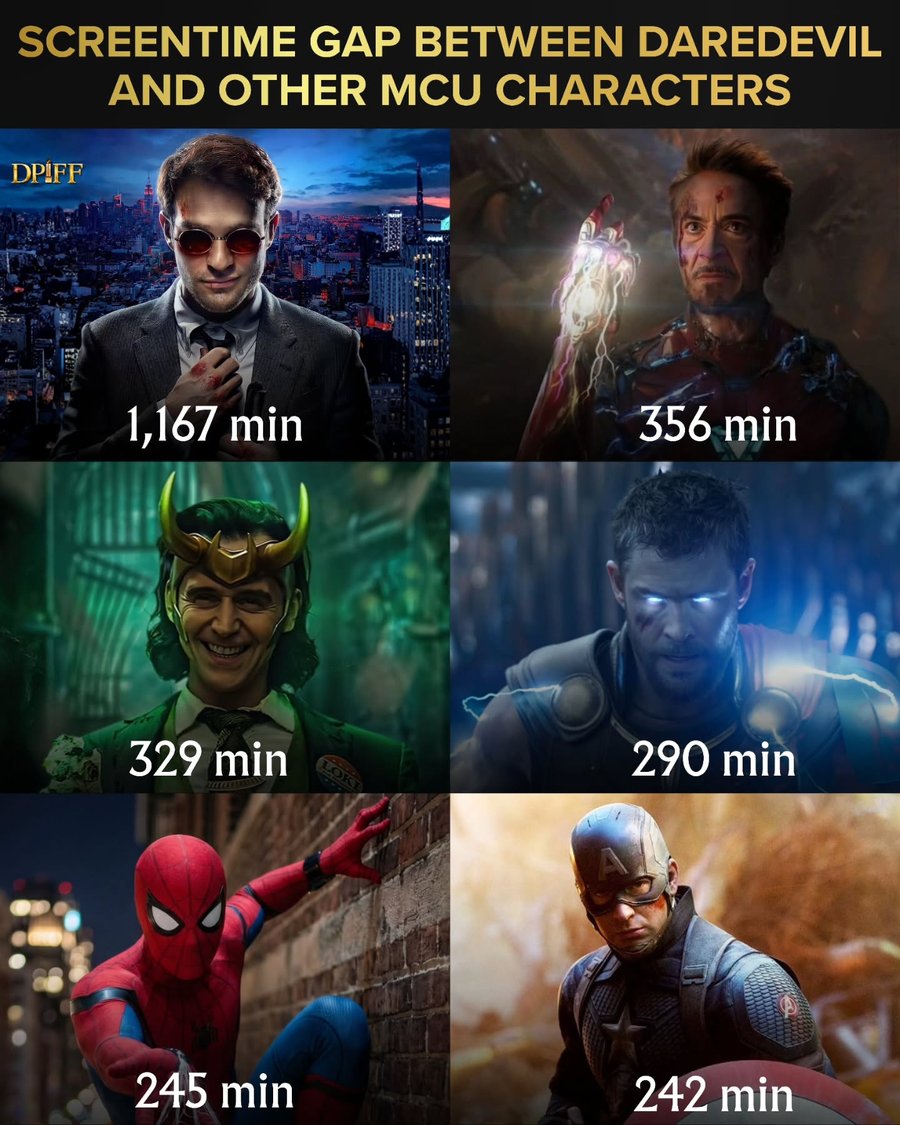
Daredevil’s television journey has given him an unusually large presence in the Marvel Cinematic Universe. Across the original Netflix series and Daredevil: Born Again, Matt Murdock has benefited from the narrative space of long-form storytelling—putting him ahead of several major MCU heroes in screen-time comparisons highlighted by a recent DPIFF post.
The comparison is significant because many of Marvel’s most recognisable characters have been built primarily through feature films. Iron Man, Thor, Captain America and Spider-Man have each played central roles in major cinematic releases, but their appearances are divided across films with fixed runtimes. Daredevil’s story, by contrast, has unfolded over multiple television seasons and episodes, allowing the character to remain on screen for considerably longer stretches.
Television gave Daredevil room to develop
Played by Charlie Cox, Matt Murdock was introduced as a blind lawyer who protects Hell’s Kitchen as the masked vigilante Daredevil. The Netflix series, which ran for three seasons, explored the relationship between his legal work, Catholic faith, friendships and violent double life in much greater detail than a conventional superhero film typically allows.
That extended format also gave supporting characters and opposing forces more room to develop. Figures such as Wilson Fisk, played by Vincent D’Onofrio, became important parts of Daredevil’s continuing story rather than being confined to a single film arc. The result was a character whose screen presence was built gradually through sustained dramatic storytelling.
How Daredevil’s MCU presence expanded
Daredevil’s place within the wider MCU grew after the original series ended. Charlie Cox reprised the role as Matt Murdock in Spider-Man: No Way Home, while the character also appeared in Marvel television projects including She-Hulk: Attorney at Law and Echo. These appearances connected the street-level hero to the broader Marvel universe without removing the grounded qualities that defined his original series.
Daredevil: Born Again extended that screen journey further. The Disney+ series brought Cox back in the lead role and reunited him with key elements of the character’s established world. Its arrival under the Marvel Studios banner underlined how streaming series have become an important part of the MCU’s storytelling structure, rather than serving only as supplementary material to theatrical releases.
Why screen-time rankings need context
Screen-time comparisons are useful indicators, but they are not official measures of a character’s importance. Results can change depending on whether a comparison includes only live-action MCU projects, television episodes, post-credit scenes, cameos or appearances in which a character is present briefly. The definition of the MCU era being measured can also affect the order.
Even with those qualifications, the broader point remains clear: television offers a structural advantage when screen presence is measured across a franchise. A character who leads several seasons can accumulate more time than a hero who appears in a series of two-hour films, even when both are equally important to the overall mythology.
Daredevil’s position is especially notable because his story combines superhero action with courtroom drama, crime fiction and character-driven conflict. The format allows audiences to see Matt Murdock not only as a masked fighter, but also as a lawyer, friend and flawed individual dealing with the consequences of his choices.
A changing model for MCU storytelling
The comparison also reflects the changing balance between cinema and streaming in franchise entertainment. Marvel’s feature films remain central to the MCU, but series such as Daredevil: Born Again can build character familiarity through a longer narrative runway. This creates opportunities for more detailed world-building while giving established performers additional space to shape their roles.
For viewers, Daredevil’s screen-time advantage is therefore more than a numerical curiosity. It illustrates how the same character can evolve differently when developed across episodes rather than only through theatrical instalments. His expanded presence has helped make him one of Marvel’s most extensively explored street-level heroes.
DPIFF Instagram Reference
The screen-time comparison and its broader context were highlighted in DPIFF’s Instagram post. View the original post on DPIFF’s official Instagram account.
About Dadasaheb Phalke International Film Festival
Dadasaheb Phalke International Film Festival is an institution dedicated to recognising and celebrating achievements in Indian cinema, television and entertainment. Inspired by the legacy of Dadasaheb Phalke, the festival brings attention to creative and technical contributions across the screen industries. DPIFF also uses its editorial and digital platforms to share film-related developments, cultural context and stories from the wider entertainment landscape.
Daredevil’s screen-time milestone is ultimately a reflection of how modern franchises are being built across formats. His journey demonstrates the lasting impact a television-led character can have when a long-running story is given room to grow within a larger cinematic universe.



Share this link via



Share this link via

Share this link via

Share this link via