


How James Cameron Filmed the Titanic Sinking Scene Without Modern CGI
More than 25 years after its release, Titanic (1997) is still remembered for its ending. The sinking sequence looked so real that many people believed most of it was created using computers. In reality, director James Cameron relied on large practical sets, real water, miniatures and limited CGI to bring the disaster to the screen.
Here’s how the film’s climax was made.
A 90% Scale Titanic Was Built
Instead of using only visual effects, the team built a 775-foot replica of the Titanic at Fox Studios Baja in Rosarito, Mexico. It was almost 90% the size of the real ship and was placed inside a 17-million-gallon water tank.
This became the main set for many of the sinking scenes.
The Ship Was Actually Tilted
The ship wasn’t kept still.
The front section was slowly pulled down into the water using hydraulic systems to recreate the ship sinking into the ocean.
For the final moments, the back section was lifted almost straight up to create the famous vertical shot before the ship disappeared underwater.
Hundreds of stunt performers were part of these scenes. To keep everyone safe, many parts of the steel set were covered with rubber so people could slide and fall without getting seriously injured.
The Grand Staircase Was Really Flooded
The famous Grand Staircase wasn’t created on a computer.
It was built on an indoor set and then flooded using large water pumps. The filmmakers shot the water rushing through the staircase in a controlled way before the set was completely submerged.
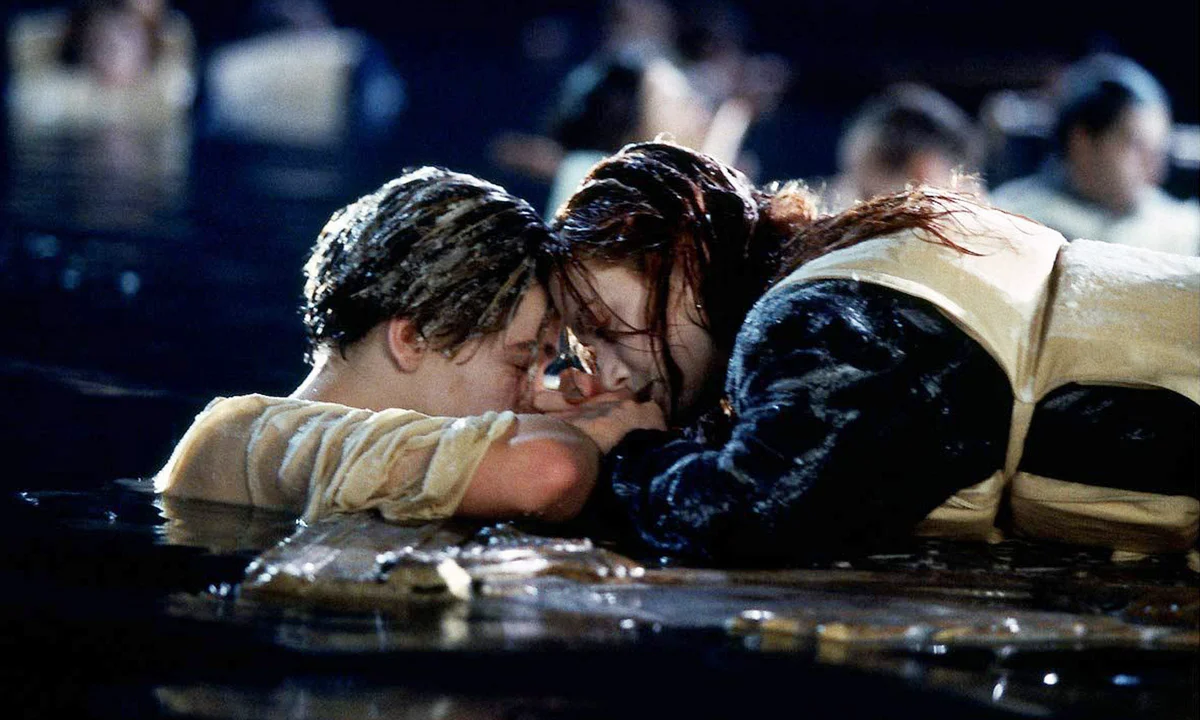
Jack and Rose’s Final Scene Was Shot in a Studio Tank
The final scene with Jack and Rose floating on the wooden panel was filmed in a smaller indoor water tank.
The water wasn’t as cold as the real Atlantic Ocean, but the actors still spent long hours inside it.
Kate Winslet later revealed that she developed hypothermia after filming these scenes because she stayed in the water for so long.
To make everyone look frozen, the makeup team added ice effects to the actors’ hair and skin.
One detail many viewers don’t notice is the actors’ breath. Since the studio wasn’t cold enough to create real breath vapour, the visual effects team added it later during post-production.
Miniature Models Helped Create the Big Shots
Not every scene used the full-size ship.
For wide shots showing the Titanic breaking apart and sinking into the ocean, the team used smaller models of the ship.
These miniatures were filmed with high-speed cameras so the movement of the water looked heavier and more realistic.
CGI Was Used Only Where It Was Needed
Computer graphics were used carefully.
Some scenes showing passengers falling from the ship, people swimming in the ocean and distant crowd shots were created using early CGI and digital extras.
The actors were also filmed on small sections of the ship against green screens. Later, these shots were combined with miniature models and digital backgrounds.
Why the Scene Still Works Today
The sinking sequence still looks convincing because most of what appears on screen was physically built and filmed.
Instead of depending completely on CGI, James Cameron combined practical sets, real water, miniature models and visual effects. That mix helped create one of the most remembered sequences in film history, and even today, many viewers find it difficult to tell where the real set ends and the visual effects begin.



Share this link via



Share this link via

Share this link via

Share this link via