


Remembering Saroj Khan: The Woman Who Changed Dance In Hindi Cinema
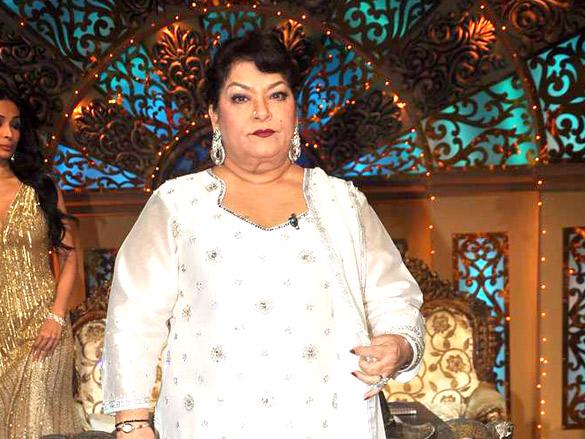
Saroj Khan’s story was never just about dance. It was about survival, responsibility, loss and continuing to move forward no matter what life brought her way.
She was born as Nirmala Nagpal on November 22, 1948, she came from a family that moved to India after Partition. Her parents left Pakistan and lived in India, where life was not easy. Money was limited and there were days when the family struggled to even arrange food.
In interviews, Saroj Khan often spoke about those years. She recalled how her mother would sometimes place empty pots on the stove and pretend to cook so the children could sleep believing food was on the way.
Because of the family’s financial situation, Saroj entered films at just three years old as a child artist. She appeared in the film Nazrana and started earning at an age when most children were still learning how to read and write.
The responsibility became even bigger after her father passed away. As the eldest earning member, she helped support her brothers and sisters. School, household expenses and family responsibilities became part of her life very early.
As she grew older, work as a child artist became less frequent. She then entered the world of dance as a background dancer. One of her early appearances was in the song Aaiye Meherbaan from Howrah Bridge.
During this period, she met choreographer B. Sohanlal, who taught her dance. Saroj was only 13 when she married him. Years later, she revealed that she did not fully understand what marriage meant at that age. She also discovered later that Sohanlal was already married and had children.
Life became difficult once again. She became a mother at a very young age. One of her daughters died as an infant. Later, another daughter, Kuku, also passed away. These losses stayed with her throughout her life.
After separating from Sohanlal, Saroj focused completely on work. Dance became both her profession and her support system.
She started as an assistant choreographer and gradually got opportunities to choreograph songs on her own. Her first major break came with Geeta Mera Naam in 1974.
For years she worked quietly behind the scenes before audiences started noticing her work.
Then came the songs that changed everything.
With Sridevi, she created songs like Main Teri Dushman, Hawa Hawai and Mere Haathon Mein.
With Madhuri Dixit, she gave Hindi cinema some of its most remembered dance numbers including Ek Do Teen, Tamma Tamma Loge and Dhak Dhak Karne Laga.
These songs evolved as part of popular culture and established Saroj Khan as one of the most sought-after choreographers in the film industry.
She worked with generations of actors and choreographed thousands of songs. She won three National Film Awards and eight Filmfare Awards, coming to be one of the most awarded choreographers in Indian cinema.
Apart from films, she also became a familiar face on television through dance reality shows like Nach Baliye, Boogie Woogie and Jhalak Dikhhla Jaa, where she mentored and judged new talent.
In 1975, she married businessman Roshan Khan and converted to Islam. Together they had a daughter, Sukaina Khan. Her son Raju Khan also followed her path and became a choreographer. For her, dance was never only about steps. It was about expression, emotion and storytelling.
In June 2020, she was admitted to a hospital in Mumbai after experiencing breathing problems. On July 3, 2020, she passed away due to cardiac arrest at the age of 71.
Saroj Khan’s life was filled with moments that could have made anyone give up. She lost her family members, came across financial struggles, came into the industry as a child and carried responsibilities from a young age. Yet she continued working and built a place for herself in Hindi cinema.
Today, many people may remember her through songs like Ek Do Teen, Hawa Hawai or Dhak Dhak Karne Laga. But behind those songs was a woman who spent her entire life working, learning and finding a way forward through every difficult chapter.
And perhaps that is her biggest legacy, not just the dances she created, but the life she lived.


Share this link via



Share this link via
Share this link via

Share this link via