


OTT Commissioning Slows as Independent Filmmakers Face Tighter Access Despite Rising Viewership
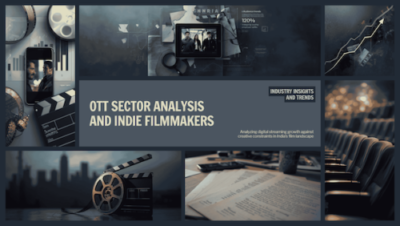
Industry data shows reduced content spend, increased selectivity and growing pressure on non-mainstream creators
India’s OTT streaming industry is entering a consolidation phase marked by slower content commissioning and tighter gatekeeping, even as overall digital viewership continues to expand across the country. Multiple industry reports and platform disclosures indicate that this shift is reshaping opportunities for independent filmmakers, who now face higher entry barriers despite the medium’s growing audience base.
According to estimates compiled from annual reports of leading streaming platforms, media consulting firms such as FICCI–EY and KPMG, and industry disclosures, original content commissioning by major OTT platforms declined by 15–20% year-on-year in 2024, following aggressive expansion between 2020 and 2022. The slowdown reflects a strategic recalibration as platforms prioritise cost discipline, profitability and retention over rapid library expansion.
Viewership grows, spending tightens
The contraction in commissioning contrasts sharply with audience growth. Telecom and media measurement data indicates that India’s OTT audience crossed 550 million users in 2024, up from approximately 450 million in 2022. More than 55% of new OTT users are estimated to come from Tier-2 and Tier-3 cities, driven by affordable data, smartphone penetration and regional-language programming.
Despite this expansion, platform investment has become more selective. Industry trackers note that content costs account for nearly 55–60% of total operating expenditure for major OTT services in India, prompting a shift towards fewer, higher-assurance projects.
“Platforms are no longer in land-grab mode,” said a senior media analyst associated with a Mumbai-based consulting firm. “The focus has moved from volume to predictability—star value, franchise potential and proven formats.”
Independent filmmakers feel the impact
For independent filmmakers, the change is significant. During the pandemic years, OTT platforms emerged as alternative gateways, commissioning short films, documentaries and experimental narratives that struggled to find theatrical release. That window has narrowed.
Data aggregated from independent cinema collectives and festival submissions shows that over 70% of Indian short films released digitally in 2024 were self-funded, compared to around 55% in 2021. Commissioning-led projects have declined, with platforms increasingly preferring acquisitions of completed films rather than funding production upfront.
“Audience reach is there, but access has tightened,” said a Mumbai-based independent producer whose recent projects were declined at the commissioning stage. “Platforms now ask for market proof before the film is made, which defeats the purpose for first-time creators.”
Gatekeeping shifts, not disappears
Industry professionals argue that OTT has not eliminated gatekeeping but transformed it. Algorithm-led commissioning, data-driven content forecasts and reliance on established production houses have replaced traditional theatrical barriers.
A Delhi-based filmmaker pointed out that while digital platforms were once perceived as democratising, nearly 65% of OTT original series commissioned in 2023–24 were produced by repeat collaborators, according to industry tallies.
“This concentration makes it harder for new voices to break through,” the filmmaker said. “Discovery exists for audiences, not always for creators.”
Short films and documentaries pushed back to festivals
The slowdown has had a pronounced effect on short films and documentaries, formats that traditionally operate on modest budgets. With limited commissioning, filmmakers are once again relying heavily on film festivals for validation, visibility and international exposure.
Festival data from India and abroad indicates a 30–35% rise in short film submissions since 2022, suggesting that creators are redirecting their work towards festival circuits amid reduced OTT backing.
“Festivals are filling the gap left by platforms,” said a Bengaluru-based documentary filmmaker. “But festivals offer recognition, not sustainability.”
Structural funding gaps persist
Analysts note that India lacks a robust institutional funding framework for independent digital cinema. Public funding avenues remain limited, while private capital continues to favour scalable, commercial formats.
Even bodies such as the National Film Development Corporation, which provide selective support, face demand far exceeding available resources. As a result, independent filmmakers often absorb financial risk personally.
“The OTT pullback has exposed structural weaknesses,” said a media policy expert. “Without grants, co-production markets or tax-backed incentives, independent creators remain vulnerable.”
Outlook
Most analysts agree that OTT platforms are unlikely to revert to their earlier high-spend phase. Instead, the sector is expected to mature into a more studio-like system, while independent cinema navigates a hybrid path involving festivals, self-distribution, international markets and niche platforms.
For filmmakers, the challenge ahead lies in balancing creative ambition with financial viability. For platforms, the test will be whether efficiency-driven strategies can coexist with diversity and innovation.
As India’s digital entertainment market stabilises, the future of independent cinema may depend less on scale and more on the credibility of ecosystems that support it beyond viewership numbers.



Share this link via


Share this link via

Share this link via

Share this link via