


Celebrating Indian Cinema: From Dadasaheb Phalke’s Vision to a Global Powerhouse
Indian cinema has undergone a remarkable transformation over the years. Today, Indian cinema is known as one of the largest,…
Dadasaheb Phalke International Film Festival


Explore the journey of Indian Cinema from Dadasaheb Phalke to global blockbusters. Discover its evolution, legendary actors, iconic films and worldwide impact.

Indian cinema has undergone a remarkable transformation over the years. Today, Indian cinema is known as one of the largest, most effective, and most powerful film industries in the world. It is now world cinema. Thousands of films are produced in India every year, and they are viewed not only in India but also in many countries around the world. Beyond entertainment, cinema has influenced society, culture, fashion, thinking, and even lifestyles. Today, Bollywood and Indian films have established their own global presence, but this vast industry began with a small dream.
Ever wondered where it all began?
Introduction: The Rise of Indian Cinema
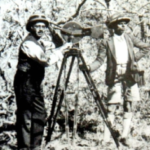
Dadasaheb Phalke who is regarded as the father of Indian cinema. He was born as Dhundiraj Govind Phalke in Maharashtra’s Trimbakeshwar in 1870. From childhood, he had a deep curiosity about art and creativity. He studied art at the prominent Sir J.J. School of Art in Mumbai and later trained in photography, printing, and visual arts. He began his career in the field of printing and photography. One day, he saw a foreign film, “The Life of Christ,” which completely changed his thinking. It was this film that inspired him to believe that if foreign countries could showcase their religious and historical stories through films, then India’s rich mythological and cultural stories could also be brought to the world through films.
India’s First Film: Raja Harishchandra (1913)
This laid the foundation for Indian cinema. In 1913, Dadasaheb Phalke made India’s first feature film, “Raja Harishchandra.” At that time, India lacked filmmaking technology and a film industry. He struggled to make this film, even selling his wife’s jewellery to raise money for its production. The film was a silent film, meaning it had no sound. At that time, women working in films was socially unacceptable, so even the female characters in the film were played by male actors. The film’s first screening took place on May 3, 1913, at Mumbai’s Coronation Cinema, marking the beginning of Indian cinema.

The Silent Era (1913–1930)
After this, Indian cinema gradually began to develop. The initial phase, known as the silent film era, lasted from 1913 to 1930. During this time, many filmmakers made films based on mythological and historical stories. A major change in Indian cinema occurred in 1931 when India’s first talking film, “Alam Ara,” was released. This film completely transformed the world of cinema. It included dialogue and songs for the first time, and music subsequently became an important part of Indian films.
Golden Age of Indian Cinema (1950–1970)
The period between 1950 and 1970 is considered the golden age of Indian cinema. During this period, many great actors and filmmakers made films that brought Indian cinema international recognition. Prominent stars of this era include Raj Kapoor, Dilip Kumar, and Dev Anand. Raj Kapoor’s films became extremely popular in the Soviet Union and many Asian countries. During this period, actresses like Nargis, Madhubala, and Waheeda Rehman also took Indian cinema to new heights. The stories of these films were based on social issues, human emotions, and the realities of life.
The Angry Young Man Era (1970s–1980s)
Indian cinema has constantly changed and evolved. In the 1970s and 1980s, actors like Amitabh Bachchan reshaped cinema with the image of the “angry young man.” During this period, action- and drama-filled films became extremely popular with audiences. This was followed by the era of romantic films in the 1990s, in which actors like Shah Rukh Khan, Salman Khan, and Aamir Khan attracted a new generation of audiences.
Rise of Regional and Pan-India Cinema
Today, Indian cinema is not restricted to Hindi films alone. Films are produced in many languages in India, with the main film industries being Telugu, Tamil, Malayalam, Kannada, Marathi, Punjabi, and Bengali. South Indian cinema has earned significant popularity globally in recent years. Films like Dhurandhar, URI, Baahubali, KGF, and RRR have broken box office records and further strengthened the recognition of Indian films worldwide. Indian cinema is not just limited to entertainment. Films have played a major role in bringing about changes in society. Many films have highlighted the topics of education, women’s empowerment, justice, patriotism, and sports.
Talking about Taare Zameen Par this film raised awareness about children’s education and mental health, while Dangal strongly presented the story of women’s empowerment to the world. Both films made the audience think and brought about changes.
Major Film Hubs and Shooting Locations
The craze for film watching is huge in India. Mumbai, Delhi, Hyderabad, Chennai, Uttar Pradesh and Bengaluru are considered major hubs of the film industry. Mumbai is called the capital of the Indian film industry because it is the main centre of ‘Bollywood’. Ramoji Film City in Hyderabad is one of the biggest film studio complexes in the world, where many Indian and international films are shot. Places like Ladakh, Kashmir, Rajasthan, Kerala, and Himachal Pradesh are also popular locations for filming. Indian film shooting is not limited to India. Numerous films are also shot in countries like Switzerland, London, Dubai, Spain, and Thailand. This further enhances the majesty and global allure of Indian films.
In today’s time, the biggest stars of Indian cinema include Shah Rukh Khan, Salman Khan, Aamir Khan, Ranveer Singh, Ranbir Kapoor, Prabhas, Allu Arjun, Ram Charan, Jr. NTR, and Yash the South Indian stars have become popular not just here but worldwide.
Conclusion: A Journey That Continues
The journey that began with ‘Raja Harishchandra’ in 1913 has now grown into a global sensation. This journey of Indian cinema continues to grow stronger, and in the coming years, it is only foreseen to become more influential, bigger and even more remarkable and memorable.