


Breaking Down The Iconic Train Scene From Dilwale Dulhania Le Jayenge
Dilwale Dulhania Le Jayenge is one of those films that never really gets old. Even after so many years, people still talk about its songs, dialogues, and especially its unforgettable moments. And among all of them, the train scene stands out as truly iconic.
Some films in Hindi cinema aren’t just films, they become an era. Dilwale Dulhania Le Jayenge is one such film. DDLJ was released in 1995 and still, this love story feels as fresh today as it did then. Directed by Aditya Chopra and the pairing of Shah Rukh Khan and Kajol gave a new dimension to the love saga. The story of Raj and Simran wasn’t just about love, but also about the balance between tradition and independence.
The film begins with a trip to Europe, where two strangers meet and gradually grow closer. Simran is a girl from a traditional family, whose future has already been decided by her father. On the other hand, Raj is carefree, carefree, and pure at heart. The journey ends, but the story that began in their hearts never ends. When Simran returns to India, her father takes her to Punjab, where her marriage is arranged with his friend’s son. But Raj isn’t one to give up. Instead of running away with Simran, he decides to win over her family. This is the film’s greatest beauty here, love triumphs not through rebellion, but through respect.
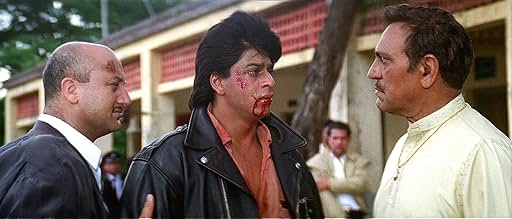
The train scene at the end of the film has become one of the most memorable scenes in Hindi cinema history. Simran runs to the station, extends her hand to Raj, who is standing on the moving train, and then utters that famous line, “Jaa Simran Jaa, Jeele Apni Zindagi.”
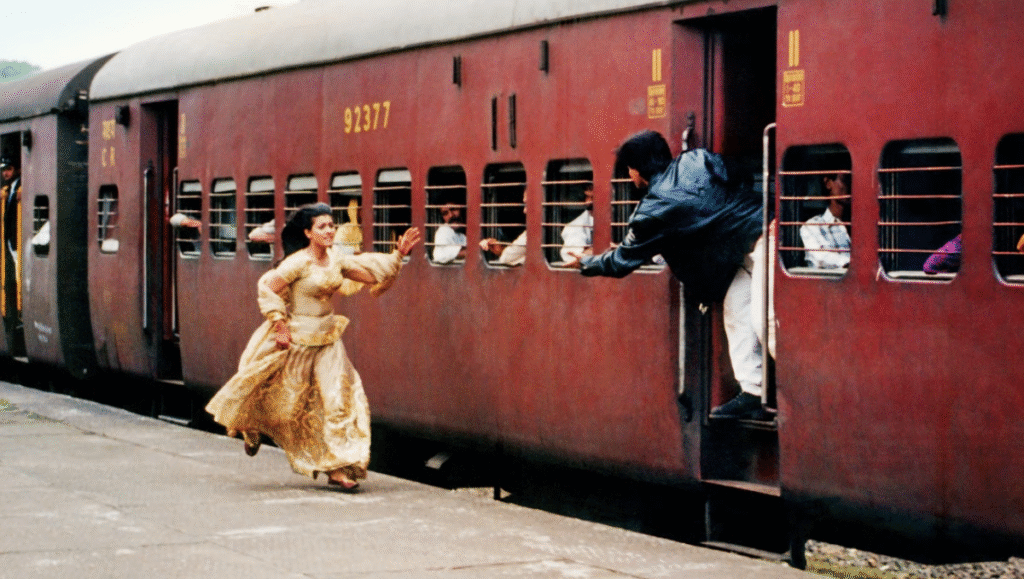
This scene became so popular that it was referenced or parodied in many subsequent films. But one question always lingers in many people’s minds, when Simran’s father finally accepts their relationship, why does Simran run to get on the train? And why doesn’t Raj get off?
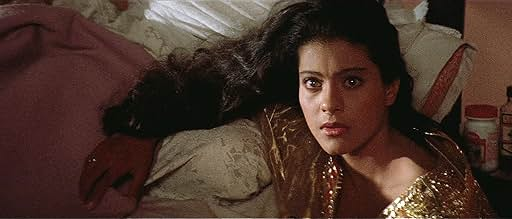
In reality, this wasn’t an escape, but a symbol.
If we examine this scene carefully, it symbolises not escape, but freedom. Throughout the film, Simran remains silent in the face of her father’s decisions. She is never able to express her feelings openly. But in that final moment, for the first time, her father allows her to go on her own. Her father, played by Amrish Puri, who appears strict and bound by tradition throughout the film, finally lets go of his daughter’s hand. This wasn’t just a father’s decision, it was a shift in the mindset that always dictated children’s lives. Simran’s running toward the train is actually a run toward the freedom she has found for the first time. Raj’s staying on the train is also part of the story.
Raj getting off the train would have weakened the emotion of the scene. Raj’s one principle throughout the film, he wouldn’t take Simran without her family’s consent. So he stands on the train, waiting. Raj doesn’t take any action until Simran’s father personally permits him to leave. That’s why, at the last moment, when Simran runs away, Raj grabs her hand and pulls her up. This moment is truly a moment of triumph, a triumph of love, a triumph of faith, and a triumph of family acceptance.
Released on October 20, 1995, the film was made on a budget of approximately 4 crore and grossed over 102 crore worldwide. In terms of its time, it was one of the biggest successes of its time. The film won several Awards and a National Award. Its songs, “Tujhe Dekha To Yeh Jaana Sanam,” “Mehndi Laga Ke Rakhna,” and “Ho Gaya Hai Tujhko” are still popular. What’s more, the film continues to be screened regularly at Mumbai’s Maratha Mandir, a record in itself.
Interestingly, this famous train scene wasn’t originally part of the script. The director later realised the film needed a more emotional impact at the end, so the scene was added. Due to the intense heat and the frequent train movements during the shoot, this scene wasn’t easy to film. It took about 20 minutes for the train to return after each retake. But once this scene was on screen, it forever secured its place in the history of cinema. And perhaps that’s why whenever someone sees a hand from a moving train, the same image comes to mind, Raj’s outstretched hand and Simran’s determination to take it.


Share this link via


Share this link via
Share this link via
Share this link via